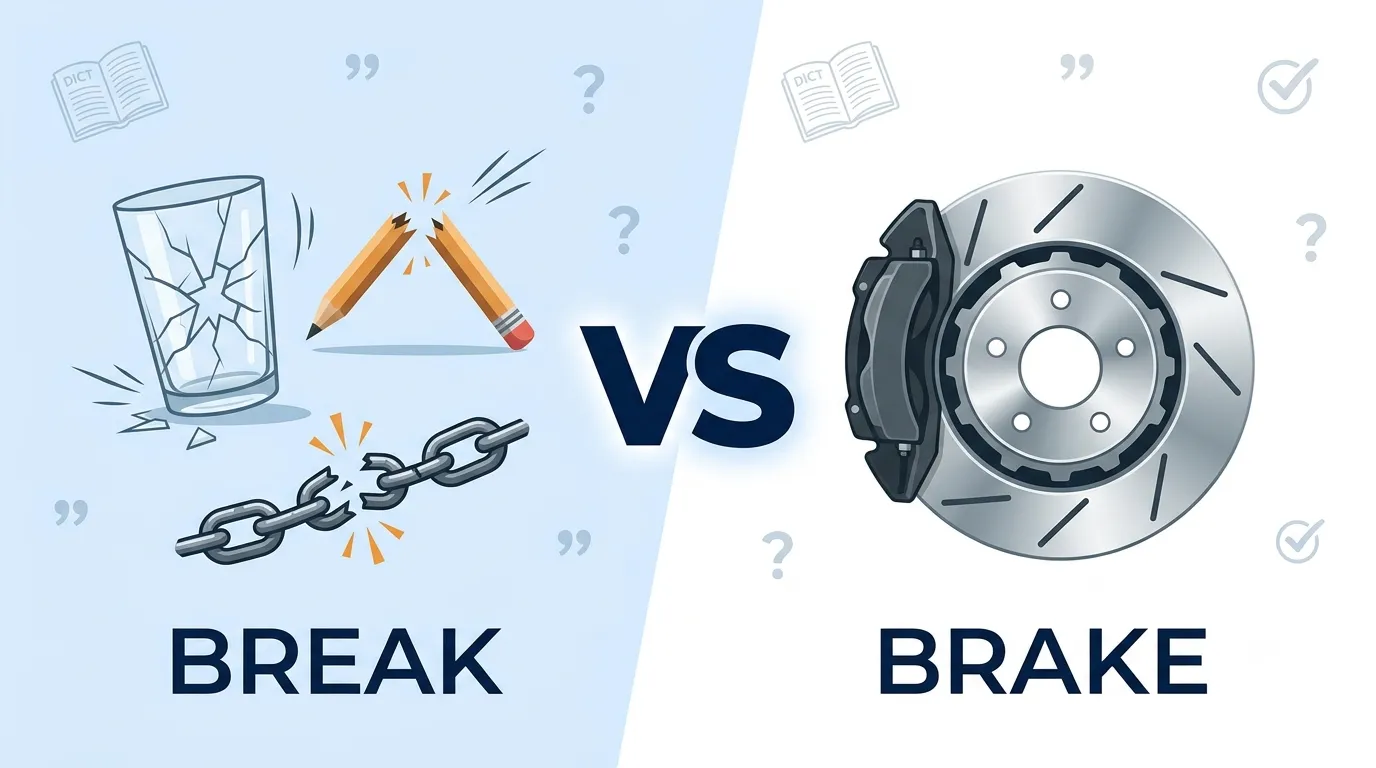
Break means to damage or pause something, while brake is a device used to slow or stop a vehicle.
A few years ago, I was proofreading an article when I noticed a sentence that said, “Always press the break pedal before turning.” I smiled because it was a mistake I had seen hundreds of times. The writer knew how to drive. They simply mixed up two words that sound exactly alike.
If you have ever wondered whether to write break or brake, you are not alone. Even native English speakers confuse these words. Spell check often misses the mistake because both words are spelled correctly. The problem is choosing the right one.
The good news is that the difference is simple once you understand it. By the end of this guide, you will know exactly when to use each word. You will also learn where these words came from, see real-life examples, avoid common mistakes, and remember the correct spelling with confidence.
Let’s clear up the confusion once and for all.
Break or Brake: Quick Answer
The easiest way to remember the difference is this:
- Break means to separate, damage, interrupt, rest, or pause.
- Brake means to slow down or stop a moving vehicle.
Examples
- I need a break after working all day.
- The driver hit the brake before the red light.
If you are talking about cars, bikes, buses, or trains, you almost always need brake.
If you are talking about stopping work, damaging something, or taking time off, use break.
The Origin and Background of Break or Brake
The word break comes from Old English brecan, which meant “to divide” or “to smash apart.” People have used this word for over a thousand years.
The word brake has a different history. It originally referred to a tool used for crushing or pressing things. As transportation developed, the word became the name for the device that slows or stops a vehicle.
So why do people confuse them?
Because they are homophones. That means they sound exactly the same but have different spellings and meanings.
Since English has many homophones, this is a common spelling mistake.
Break or Brake Explained
Although they sound alike, these words belong in very different situations.
| Term | Meaning | When to Use | Region/Context |
| Break | Stop, damage, separate, pause | Everyday writing | Worldwide |
| Brake | Device or action that slows a vehicle | Driving and transportation | Worldwide |
Break Examples
- Don’t break the glass.
- Let’s take a lunch break.
- The machine may break if you overload it.
- She needed a break from social media.
Brake Examples
- Press the brake gently.
- The car’s brakes need replacing.
- Always check your brakes before a long trip.
- The cyclist used the front brake.
Which Version Should You Use?
The answer depends on what you mean.
For students
Use break when writing about school holidays, damaged objects, or taking a rest.
Example:
- Spring break starts next week.
For drivers
Use brake whenever you are talking about vehicles.
Example:
- Tap the brake before the curve.
For business writing
Most workplace situations use break.
Examples:
- Coffee break
- Lunch break
- Break time
For mechanics and automotive professionals
Always use brake when discussing vehicle parts or repairs.
Example:
- Replace the rear brake pads.
Best choice for general writing
Ask yourself one simple question:
Am I talking about stopping a vehicle?
- Yes → Brake
- No → Break
That simple rule works almost every time.
Common Mistakes with Break or Brake
Many writers make the same errors.
| Mistake | Correct Version | Why It Is Wrong |
| Press the break pedal. | Press the brake pedal. | Pedals control brakes. |
| My car needs new breaks. | My car needs new brakes. | Vehicle parts are brakes. |
| I need a brake from work. | I need a break from work. | Rest is a break. |
| Don’t brake the toy. | Don’t break the toy. | Damage means break. |
| Winter brake starts Monday. | Winter break starts Monday. | School holiday is break. |
Why these mistakes happen
- The words sound identical.
- Spell check accepts both words.
- People remember pronunciation but forget spelling.
Break or Brake in Real World Examples
Professional Email
We will take a short break at 2:00 PM before continuing the meeting.
News Headline
Driver avoided an accident after hitting the brake just in time.
Social Media Post
Finally taking a weekend break. Time to relax!
Formal Report
The technician inspected the vehicle’s brake system and found worn brake pads.
These examples show that context always tells you which word belongs.
Break or Brake: Data, Trends & Usage
Many people search for break or brake because it is one of the most confusing English homophones.
Most common search intent
Informational
People want to know:
- Which spelling is correct
- What each word means
- How to remember the difference
- Which word belongs in a sentence
Who searches most?
- English learners
- Students
- Bloggers
- Writers
- Job applicants
- Drivers
- Teachers
Why it matters today
Online communication has made spelling more visible than ever. A simple mistake like writing break pedal instead of brake pedal can make professional writing look less trustworthy.
Learning the difference helps your emails, reports, school assignments, and social media posts look polished.
Standalone Comparison Table
| Term/Variant | Meaning | Region/Context | Best Used When |
| Break | Pause, stop, damage, separate | General English | Talking about rest or damage |
| Brake | Vehicle stopping device | Automotive English | Talking about driving or vehicles |
Frequently Asked Questions
Q: What does break mean?
A: Break means to separate, damage, interrupt, or pause something. It can also mean taking time to rest.
Q: What does brake mean?
A: Brake is the system that slows or stops a moving vehicle. It can also be used as a verb, meaning to slow down.
Q: Break vs brake: what is the difference?
A: Break relates to stopping, resting, or damaging something. Brake relates only to slowing or stopping vehicles.
Q: Is brake acceptable in formal writing?
A: Yes. Brake is the correct formal word whenever you discuss vehicles, transportation, or automotive systems.
Q: Which version is correct: break or brake?
A: Both are correct. The right choice depends entirely on the meaning of your sentence.
Q: Where does break come from?
A: It comes from the Old English word brecan, meaning to split or divide.
Q: Can break or brake be used in business writing?
A: Yes. Business writing usually uses break, such as coffee break or break time. Automotive businesses often use brake when discussing repairs or vehicle safety.
Conclusion
The difference between break and brake is much easier than it first appears.
Remember these key points:
- Break means pause, damage, separate, or stop.
- Brake means the system that slows or stops a vehicle.
- The words sound the same but have different meanings and spellings.
- Always think about the context before choosing one.
A simple memory trick can help:
You take a break. You press a brake.
Once you remember that rule, you will rarely make this mistake again.
Now you know exactly how to use break and brake with confidence. Bookmark this guide whenever you need a quick reminder, and share it with someone who has mixed these words up before.

I have been writing about English spelling and word usage for the past five years. My goal is to give readers a clear answer without overwhelming them with complicated rules. At WordsCombo, I focus on making everyday English easier for everyone.