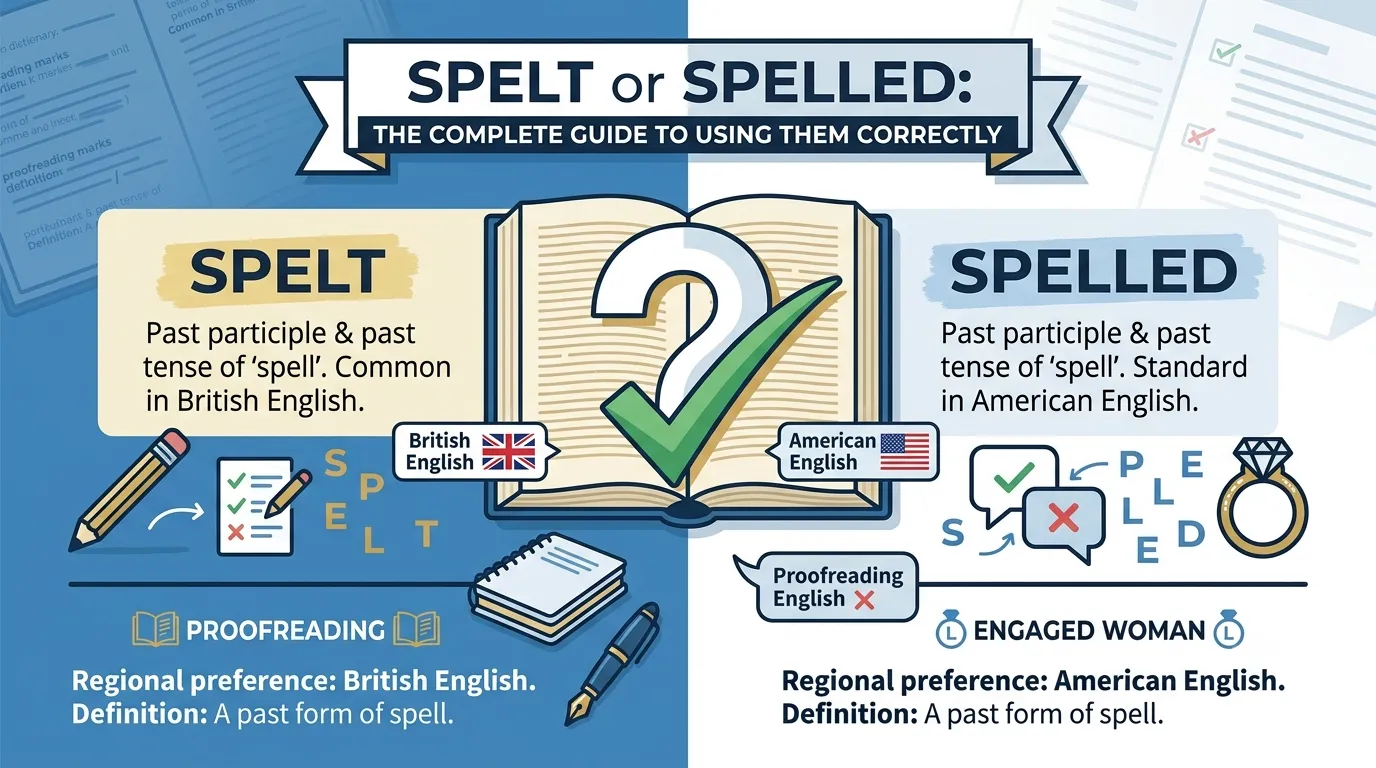
Spelt or spelled are both correct past tense forms of spell. Spelled is the standard choice in American English, while spelt is more common in British English, though both are widely understood.
Have you ever paused while writing an email and wondered, Is it spelt or spelled? I have. Years ago, while editing content for readers in different countries, I noticed that the same sentence looked “wrong” depending on where it was published. An American client always changed spelt to spelled, while a British editor happily switched it back.
That small difference taught me an important lesson. English changes from one region to another. Words that are perfectly correct in one country may seem unusual in another.
Many people search for spelt or spelled because they want to sound natural and avoid mistakes. Students want better grades. Writers want polished articles. Professionals want clear emails. The good news is that this question has a simple answer once you understand the rules.
By the end of this guide, you’ll know when to use each version, why both exist, and how to choose the right one with confidence.
Spelt or Spelled: Quick Answer
Both spelt and spelled are correct.
The difference is mainly regional.
- Spelled is the preferred form in American English.
- Spelt is more common in British English, Australian English, and New Zealand English.
Examples
American English:
- She spelled my name correctly.
- I spelled every word on the test.
British English:
- She spelt my name correctly.
- He spelt the address without any mistakes.
If you’re writing for an international audience, spelled is usually the safest choice because it is accepted almost everywhere.
The Origin and Background of Spelt or Spelled
The verb spell has been part of English for hundreds of years. Like many English verbs, it developed more than one past tense over time.
Long ago, English borrowed words and grammar from several languages. As pronunciation and spelling changed, different versions appeared. Some verbs kept two accepted past tense forms.
Examples include:
| Verb | Form 1 | Form 2 |
| Burn | Burned | Burnt |
| Dream | Dreamed | Dreamt |
| Learn | Learned | Learnt |
| Smell | Smelled | Smelt |
| Spell | Spelled | Spelt |
British English often keeps these shorter -t endings.
American English usually prefers the regular -ed endings.
Neither choice is wrong. They simply reflect different language traditions.
Spelt or Spelled Explained: Key Differences
The meaning never changes.
Both words mean:
- wrote the letters of a word correctly
- formed a word letter by letter
- described something using letters
The only real difference is where people usually use them.
| Term | Meaning | When to Use | Region/Context |
| Spelled | Past tense of spell | Everyday writing | American English, Canada, international writing |
| Spelt | Past tense of spell | Everyday writing | British English, Australia, New Zealand |
Example 1
American:
She spelled “necessary” correctly.
British:
She spelt “necessary” correctly.
Both sentences are correct.
Example 2
American:
I spelled your last name wrong.
British:
I spelt your surname wrong.
Again, only the regional style changes.
Why Do People Get Confused?
There are three main reasons.
- English has many regional differences.
- Schools teach different standards.
- People read books and websites from many countries.
As a result, readers often see both versions online.
Which Version Should You Use?
The best choice depends on your audience.
If you write for Americans
Use spelled.
It matches dictionaries, schools, businesses, and most American publications.
Example:
She spelled every answer correctly.
If you write for British readers
Use spelt or spelled.
Both are accepted.
However, spelt often sounds more natural in British writing.
Example:
He spelt every difficult word correctly.
If you write for Australians or New Zealand readers
Spelt appears more often, although spelled is also understood.
Choose one style and stay consistent throughout your writing.
If you write for a global audience
Choose spelled.
International companies, websites, universities, and businesses usually prefer spelled because it is familiar to readers around the world.
A Simple Rule to Remember
Use this quick guide:
- American English → spelled
- British English → spelt or spelled
- Australian English → spelt is common
- International writing → spelled
Consistency matters more than the choice itself.
If you begin with spelled, keep using spelled throughout your document.
If you begin with spelt, don’t switch halfway through.
That simple habit makes your writing look polished and professional.
Common Mistakes with Spelt or Spelled
Even native English speakers mix these words up. The good news is that the mistakes are easy to fix.
| Mistake | Correct Version | Why It Happens |
| I spelt it correctly. (American paper) | I spelled it correctly. | American English prefers spelled. |
| She spelled it correctly. (British style guide using -t forms) | She spelt it correctly. | British English often prefers spelt. |
| Using both forms in one article | Pick one style and stay consistent. | Mixing styles looks unprofessional. |
| Thinking one version is wrong | Both are correct. | The difference is regional, not grammatical. |
| Using spelt because of the grain | Remember the context. | Spelt is also the name of a type of wheat. |
Tips to Avoid Mistakes
- Know who will read your writing.
- Follow one style guide.
- Stay consistent from start to finish.
- Check your spelling tool’s language setting.
- When unsure, spelled is the safest choice for international readers.
Spelt or Spelled in Real World Examples
Seeing both words in context makes the difference much easier to remember.
Professional Email
American English
Thank you for your message. I noticed that my last name was spelled incorrectly in the document.
British English
Thank you for your message. I noticed that my surname was spelt incorrectly in the document.
News Headline
- Student Spelled Every Word Correctly to Win National Contest. (American style)
- Young Pupil Spelt Difficult Words Perfectly During Competition. (British style)
Social Media Post
I finally spelled “entrepreneur” without using spell check!
British version:
I finally spelt “entrepreneur” right on the first try!
Formal Report
The customer’s company name was spelled correctly in all official records.
British version:
The customer’s company name was spelt correctly throughout the report.
Spelt or Spelled: Data, Trends & Usage
People search for spelt or spelled because they want to know which version is correct. Most searches come from students, writers, teachers, and professionals.
Search Intent
Primary intent: Informational
Readers want a quick answer before using the word in writing.
Where Is It Most Common?
- United States: Spelled dominates.
- United Kingdom: Both forms appear, but spelt is more common.
- Australia and New Zealand: Spelt is widely used.
- International websites: Spelled is often preferred because it reaches a broader audience.
Why This Matters Today
People read content from all over the world. A British blog, an American university, and an Australian news site may all use different spelling styles. Understanding regional differences helps you write naturally for your audience.
Spelt or Spelled Comparison Table
| Term/Variant | Meaning | Region/Context | Best Used When |
| Spelled | Past tense of spell | American English, international writing | Writing for U.S. readers or a global audience |
| Spelt | Past tense of spell | British, Australian, New Zealand English | Writing for readers who use British English |
Frequently Asked Questions
Q: What does spelt or spelled mean?
A: Both words are the past tense and past participle of spell. They mean writing or saying the letters of a word in the correct order.
Q: How do you use spelt or spelled correctly?
A: Choose the version that matches your audience. Use spelled for American English and spelt if you prefer traditional British English.
Q: Spelt vs. spelled: what’s the difference?
A: The meaning is exactly the same. The only difference is regional preference. American English favors spelled, while British English often uses spelt.
Q: Is spelt acceptable in formal writing?
A: Yes. Spelt is perfectly acceptable in formal British English. In American formal writing, spelled is the standard choice.
Q: Which version is correct: spelt or spelled?
A: Both are correct. The right choice depends on the English style you are following.
Q: Where does spelt come from?
A: Spelt developed as one of the historical past tense forms of spell. English has several verbs with both -ed and -t endings, such as dreamed/dreamt and learned/learnt.
Q: Can I use spelt in business emails?
A: Yes, if your readers use British English. For international business communication, spelled is usually the safer and more familiar option.
Conclusio
Choosing between spelt or spelled is much easier once you know the rule. Both forms are correct. They carry the same meaning and follow the same grammar. The real difference is where they are commonly used.
If your audience is in the United States, use spelled. If you write for readers in the United Kingdom, Australia, or New Zealand, spelt is a natural choice. When your audience comes from many countries, spelled is usually the safest option.
The most important habit is consistency. Pick one spelling style and use it throughout your document. That simple step makes your writing clearer and more professional.
Now you know exactly how to use spelt or spelled with confidence. Bookmark this guide for future reference, and share it with anyone who has ever paused over this common spelling question.

I studied English literature and have spent years editing content for blogs and digital platforms. I noticed most people struggle with choosing between two similar words. At WordsCombo, I make that choice simple and clear.








2 thoughts on “Spelt or Spelled: The Complete Guide to Using Them Correctly”