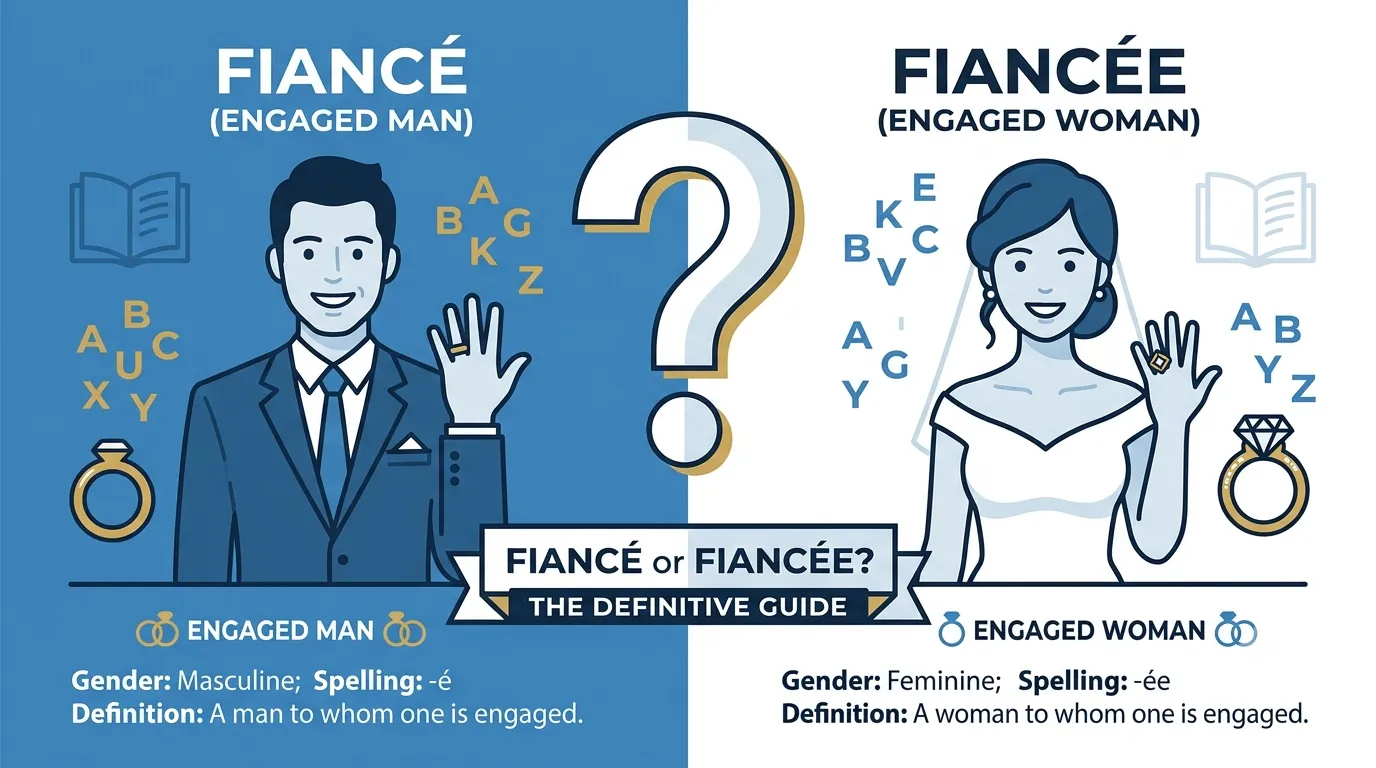
Fiancé is the correct word for an engaged man, while fiancée refers to an engaged woman. The only difference is the extra “e”, but choosing the right spelling shows accuracy and respect.
A few years ago, I was writing a wedding congratulations message for a close friend. I confidently wrote, “Congratulations to you and your fiancé!” Then someone quietly pointed out that my friend was a woman talking about her future husband. Luckily, I had used the correct word. But that small conversation reminded me how often people hesitate over fiancé and fiancée.
You’re not alone if you’ve searched for the difference. These two words look almost identical. They sound nearly the same in English. Even experienced writers pause before typing them.
The good news is that the rule is simple once you know it. After reading this guide, you’ll never have to guess again. You’ll learn what each word means, where they come from, how to use them in everyday writing, and how to avoid the mistakes that confuse so many people.
Let’s make this easy.
Fiancé or Fiancée: Quick Answer
Fiancé means an engaged man.
Fiancée means an engaged woman.
Examples
- Sarah introduced her fiancé to her family.
- David proudly spoke about his fiancée at work.
A simple trick is to remember that fiancée has an extra “e”, just like many French feminine words.
The Origin and Background of Fiancé or Fiancée
Both words come from the French language.
The French verb fiancer means to promise in marriage.
In French:
- Fiancé is masculine.
- Fiancée is feminine.
English borrowed both spellings and kept the gender difference.
Today, many English speakers pronounce both words almost the same. Because the pronunciation is nearly identical, spelling mistakes happen often.
Some modern writers also use fiancé as a gender-neutral option. However, many style guides still recommend using the traditional spellings because they clearly identify the person’s gender.
Fiancé or Fiancée Explained: Key Differences
Although these words are very similar, they refer to different people.
| Term | Meaning | When to Use | Region/Context |
|---|---|---|---|
| Fiancé | An engaged man | Referring to a future husband | Standard English worldwide |
| Fiancée | An engaged woman | Referring to a future wife | Standard English worldwide |
Easy Examples
Fiancé
- Emma’s fiancé proposed during their vacation.
- My fiancé loves cooking.
Fiancée
- Jake surprised his fiancée with flowers.
- Her fiancée works as a doctor.
Which Version Should You Use?
Choosing the correct spelling depends on who you’re talking about.
If you’re referring to a man
Use fiancé.
Example:
My fiancé is planning our wedding.
If you’re referring to a woman
Use fiancée.
Example:
His fiancée chose the wedding venue.
For gender-neutral writing
Some publications prefer partner, future spouse, or simply engaged partner when gender is unknown or not relevant.
These choices work well in:
- Inclusive writing
- Business communication
- Government documents
- Online forms
Common Mistakes with Fiancé or Fiancée
These errors appear every day on social media, blogs, and even business websites.
| Mistake | Correct Version | Why It Happens |
|---|---|---|
| My fiancée is a man. | My fiancé is a man. | Confusing the extra “e”. |
| Her fiancé is getting married. (when referring to a woman) | Her fiancée is getting married. | Mixing up gender. |
| fiance | fiancé | Missing the accent mark. |
| fiancee for every situation | Use the correct gender-specific word. | Assuming both spellings are interchangeable. |
Should You Use the Accent?
Technically, yes.
- Fiancé
- Fiancée
However, many English websites skip the accent and write:
- fiance
- fiancee
Both are commonly understood, especially online, although the accented versions are considered more formal.
Fiancé or Fiancée in Real World Examples
Professional Email
We are pleased to invite you and your fiancé to our annual company dinner.
News Headline
Actress Announces Engagement to Her Fiancé During Live Interview
Social Media Post
I said yes! I can’t wait to marry my amazing fiancé!
or
So excited to begin this journey with my beautiful fiancée!
Formal Document
The applicant listed their fiancée as the emergency contact.
These examples show how naturally both words fit into different types of writing.
Fiancé or Fiancée: Data, Trends & Usage
Search interest in these words rises every year around:
- Wedding season
- Valentine’s Day
- Engagement announcements
- Holiday proposal season
Search Intent
This keyword is mainly informational.
People usually want to know:
- Which spelling is correct.
- What each word means.
- Whether the words are interchangeable.
- How to use them in writing.
Who Searches Most?
Common audiences include:
- Students
- Bloggers
- Wedding planners
- Journalists
- Business writers
- English learners
- Couples preparing wedding invitations
Why This Matters Today
Digital communication moves fast. A small spelling mistake can spread quickly on social media or appear in printed invitations. Knowing the correct word helps your writing look polished and professional.
Quick Comparison Table
| Term/Variant | Meaning | Region/Context | Best Used When |
|---|---|---|---|
| Fiancé | Engaged man | Worldwide English | Referring to a future husband |
| Fiancée | Engaged woman | Worldwide English | Referring to a future wife |
| Partner | Gender-neutral significant other | Global | When gender isn’t important |
| Future spouse | Person you will marry | Formal writing | Legal or professional documents |
Tips to Remember the Difference
Here are a few memory tricks.
- Fiancée has an extra “e” for a female.
- Fiancé has one “e” for a male.
- Think of fiancée = she because both have an extra letter.
The more you write them correctly, the easier they become to remember.
Frequently Asked Questions
Q: What does fiancé or fiancée mean?
A: Both words describe someone who is engaged to be married. Fiancé refers to a man, while fiancée refers to a woman.
Q: How do you use fiancé or fiancée correctly?
A: Use fiancé when talking about an engaged man. Use fiancée when talking about an engaged woman. Make sure the spelling matches the person’s gender.
Q: Fiancé vs husband: what’s the difference?
A: A fiancé is engaged but not yet married. A husband is already married.
Q: Is fiancé acceptable in formal writing?
A: Yes. Both fiancé and fiancée are standard English words and are perfectly acceptable in formal documents, books, newspapers, and business writing.
Q: Which version is correct: fiancé or fiancée?
A: Both are correct. The right choice depends entirely on whether you’re referring to a man or a woman.
Q: Where do fiancé and fiancée come from?
A: They come from French, where masculine and feminine nouns use different spellings. English borrowed both forms and kept the distinction.
Q: Can fiancé or fiancée be used in legal documents?
A: Yes. These words appear in legal papers, immigration forms, insurance documents, and official records when describing an engaged partner.
Conclusion
The difference between fiancé and fiancée is small, but knowing it can make your writing more accurate and professional. Remember these key points:
- Fiancé refers to an engaged man.
- Fiancée refers to an engaged woman.
- Both words come from French and remain standard English today.
- When gender isn’t important, words like partner or future spouse are excellent alternatives.
Once you remember that fiancée has an extra “e” for a female, you’ll rarely make the mistake again.
Now you know exactly how to use fiancé and fiancée with confidence. Bookmark this guide so you never second-guess the spelling again, and share it with someone planning a wedding or learning English.
Read more: Compliment or Complement: Complete Guide

I started writing about English word differences after years of teaching students who kept making the same mistakes. My focus is on making spelling rules feel simple and easy to remember. At WordsCombo, I turn confusing word pairs into clear comparisons.