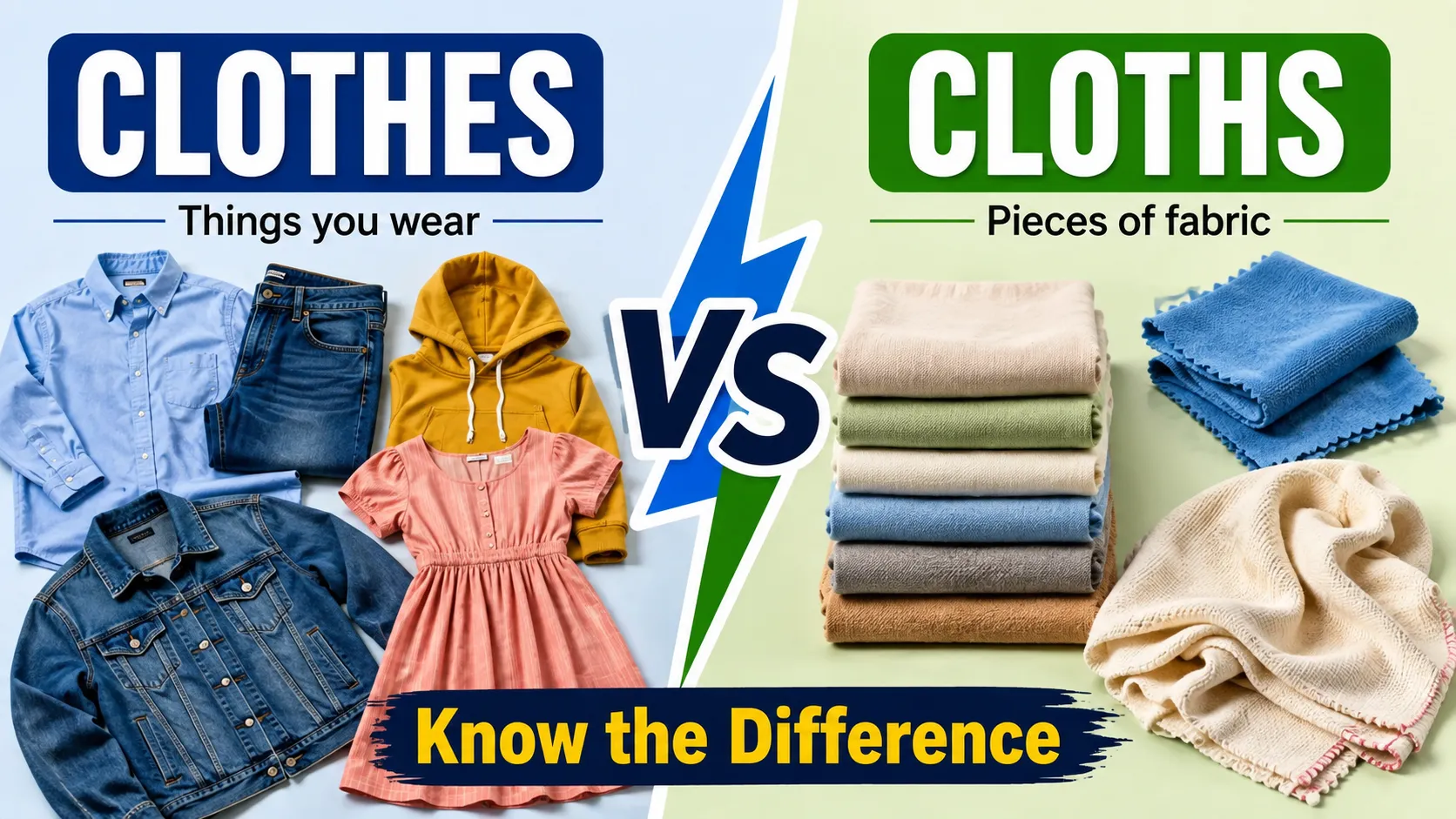
Cloths or clothes have different meanings. Clothes means things you wear, while cloths means pieces of fabric, usually used for cleaning or other purposes.
Have you ever typed “cloths” when you meant “clothes”? You are not alone.
I have seen this mistake many times while helping students improve their English writing. It often happens because the two words look and sound almost the same. Yet, they do not mean the same thing.
If you are talking about shirts, trousers, dresses, jackets, or other things you wear, the correct word is clothes. If you mean pieces of fabric, the correct word can be cloths.
This small spelling difference can change the meaning of a sentence.
For example, “I bought new clothes” means you bought things to wear. But “I bought new cloths” usually means you bought pieces of fabric.
So, which word should you use? The answer is simple once you know the difference. Let’s break it down with clear examples, common mistakes, and easy rules you can remember.
Cloths or Clothes
The difference is easy:
- Clothes = things that people wear.
- Cloths = pieces of cloth or fabric.
Examples
Clothes:
I need to buy some new clothes.
This means you need new things to wear.
Cloths:
The cleaner used several cloths to wipe the table.
This means the cleaner used pieces of fabric.
Easy memory trick
Think:
Clothes = wear
Cloths = fabric
If you can wear it, use clothes.
If you can wipe, clean, cover, or make something from it, you may mean cloths.
The Origin and Background of Cloths or Clothes
The confusion between cloths and clothes is not new.
The word cloth refers to a material or fabric. It can mean cotton, wool, silk, linen, or another material used to make things.
The plural of cloth is cloths when you mean separate pieces or types of cloth.
For example:
The shop sells cleaning cloths.
The word clothes, however, developed from an older word related to clothing and dress.
Today, clothes means the items people wear on their bodies.
That is why the words look so similar. Their history is closely connected to fabric and clothing.
The spelling can still confuse English learners because clothes has an unusual pronunciation. It is usually pronounced like “klohz,” not like “clothes.”
Cloths or Clothes Explained: Key Differences
Here is the easiest comparison:
| Term | Meaning | When to Use | Region/Context |
|---|---|---|---|
| Clothes | Things worn on the body | Shirts, pants, dresses, jackets | Standard English |
| Cloth | Material or fabric | Cotton, silk, wool, fabric | Standard English |
| Cloths | Separate pieces of cloth | Cleaning cloths, fabric pieces | Standard English |
| Clothing | Clothes as a general category | Formal or general writing | Standard English |
| Garments | Individual items of clothing | Formal or professional writing | Standard English |
Example 1: Clothes
She packed her clothes for the trip.
You are talking about things she will wear.
Example 2: Cloth
This shirt is made from soft cloth.
Here, cloth means the material.
Example 3: Cloths
The mechanic keeps several cloths in the workshop.
These are pieces of fabric used for a purpose.
Example 4: Clothing
The store sells winter clothing.
Clothing is a useful general word for clothes.
Which Version Should You Use?
Your choice depends on what you mean.
For students
Use clothes when you are writing about things people wear.
My favorite clothes are jeans and a T shirt.
This is the safest choice for everyday English.
For beginners
Remember the simple rule:
Wear = clothes.
Fabric = cloth.
Pieces of fabric = cloths.
This rule will solve most spelling problems.
For professional or formal writing
Clothing can sound more natural than clothes in some formal contexts.
For example:
The company sells protective clothing.
You can also use garments when talking about individual items in a professional setting.
For global or neutral English
Use clothes for everyday items that people wear.
It is simple, natural, and widely understood.
Common Mistakes With Cloths or Clothes
These words cause a few common errors.
| Mistake | Correction | Why? |
|---|---|---|
| I bought new cloths. | I bought new clothes. | You mean things to wear. |
| Please wash my clothes with the table. | Please wash the cleaning cloths. | Cleaning pieces are cloths. |
| She has beautiful cloths. | She has beautiful clothes. | She means outfits or garments. |
| This clothes is soft. | These clothes are soft. | Clothes is plural. |
| I need a new clothes. | I need new clothes. | Clothes is not used with “a.” |
Mistake 1: Using “cloths” for clothing
❌ I bought three new cloths.
If you mean shirts, trousers, or dresses, this is wrong.
✅ I bought three new clothes.
Even better:
✅ I bought three new pieces of clothing.
Mistake 2: Using “clothes” for cleaning fabric
❌ Use these clothes to clean the window.
If you mean pieces of fabric used for cleaning, say:
✅ Use these cloths to clean the window.
Mistake 3: Saying “a clothes”
Clothes is normally treated as a plural noun.
❌ I bought a clothes.
✅ I bought some clothes.
You can also name the item:
✅ I bought a shirt.
Cloths or Clothes in Real World Examples
Knowing the meaning is useful. Knowing how people actually use the words is even better.
1. Professional Email
Please make sure all staff bring suitable clothes for the outdoor event.
Here, clothes means clothing that people will wear.
2. News Headline
Local Families Donate Warm Clothes to People in Need
The word clothes is correct because the story is about things people wear.
3. Social Media Post
Cleaning day! I finally replaced my old cleaning cloths.
Here, cloths means pieces of fabric used for cleaning.
4. Formal Report
The company provides protective clothing for workers.
In this case, clothing is a strong choice because the writing is formal.
5. Everyday Conversation
I need to wash my clothes before tomorrow.
This is a normal everyday use of clothes.
Cloths or Clothes: Data, Trends & Usage
People often search for “cloths or clothes” because English learners notice that the words look almost identical.
The search is mainly informational. Readers usually want to know which spelling is correct and how to use each word.
The confusion is especially common among:
- English learners
- School students
- People writing online
- Non native English speakers
- People preparing for English tests
The key lesson is that spelling alone does not tell you the meaning.
The final es in clothes is part of the word. You should not replace it with cloths simply because the pronunciation can sound similar.
This matters in school work, emails, social posts, and professional writing. One small spelling mistake can make a sentence mean something very different.
Cloths or Clothes: Standalone Comparison
| Term/Variant | Meaning | Region/Context | Best Used When |
|---|---|---|---|
| Clothes | Things people wear | General English | Talking about shirts, pants, dresses, etc. |
| Cloth | Fabric or material | General English | Talking about material |
| Cloths | Separate pieces of fabric | General English | Talking about cleaning or fabric pieces |
| Clothing | Clothes as a general category | General and formal English | Formal descriptions |
| Garment | One item of clothing | Formal/business English | Referring to a specific clothing item |
Frequently Asked Questions About Cloths or Clothes
Q: What does “clothes” mean?
A: Clothes means things people wear on their bodies. Shirts, trousers, dresses, coats, and jackets are all examples of clothes.
Q: What does “cloths” mean?
A: Cloths is the plural of cloth when you mean separate pieces of fabric. For example, cleaning cloths are pieces of fabric used to clean surfaces.
Q: Which is correct: cloths or clothes?
A: Both are correct words, but they have different meanings. Use clothes for things you wear and cloths for separate pieces of fabric.
Q: Is “clothes” acceptable in formal writing?
A: Yes. Clothes is correct English and can be used in formal writing. However, clothing may sound more formal in some reports or professional documents.
Q: Is “cloths” another word for clothes?
A: No. Cloths does not normally mean clothing. It means separate pieces of cloth or fabric.
Q: Where does the word “clothes” come from?
A: Clothes comes from the older history of English words related to clothing and covering the body. Its spelling and pronunciation developed over many centuries.
Q: Can I say “a clothes”?
A: No. Clothes is normally used as a plural noun. Say some clothes, my clothes, or a piece of clothing instead.
Q: What is the difference between cloth and clothing?
A: Cloth means fabric or material. Clothing means things made to be worn. For example, cotton is a type of cloth, while a cotton shirt is clothing.
A Simple Trick to Never Confuse Them Again
Here is the rule worth remembering:
Clothes are worn. Cloths are used.
If you put it on your body, it is usually clothes.
If you use it to wipe, clean, polish, cover, or handle something, it may be a cloth. More than one is cloths.
Remember these examples
- Clothes → shirt, trousers, dress, jacket
- Cloth → cotton, silk, wool, fabric
- Cloths → cleaning cloths, polishing cloths
- Clothing → a general term for things people wear
- Garment → one item of clothing
Once you learn this small difference, the confusion becomes much easier.
Conclusion
The difference between cloths or clothes is simple once you connect each word with its meaning.
Clothes are things you wear. You wear clothes to school, work, parties, and everyday activities.
Cloths are separate pieces of cloth. You may use them for cleaning, polishing, wiping, or other tasks.
There is also an important middle word: cloth. It means fabric or material. Clothing is another useful word when you want a general or slightly more formal term for clothes.
So, remember this quick rule:
Clothes = wear.
Cloth = fabric.
Cloths = pieces of fabric.
You do not need to memorize a long grammar rule. Just ask yourself what you mean before choosing the spelling.
Bookmark this guide so you never second guess “cloths” and “clothes” again.
Read more: Cringy or Cringey: The Easy Spelling Guide

I started writing about English word differences after years of teaching students who kept making the same mistakes. My focus is on making spelling rules feel simple and easy to remember. At WordsCombo, I turn confusing word pairs into clear comparisons.