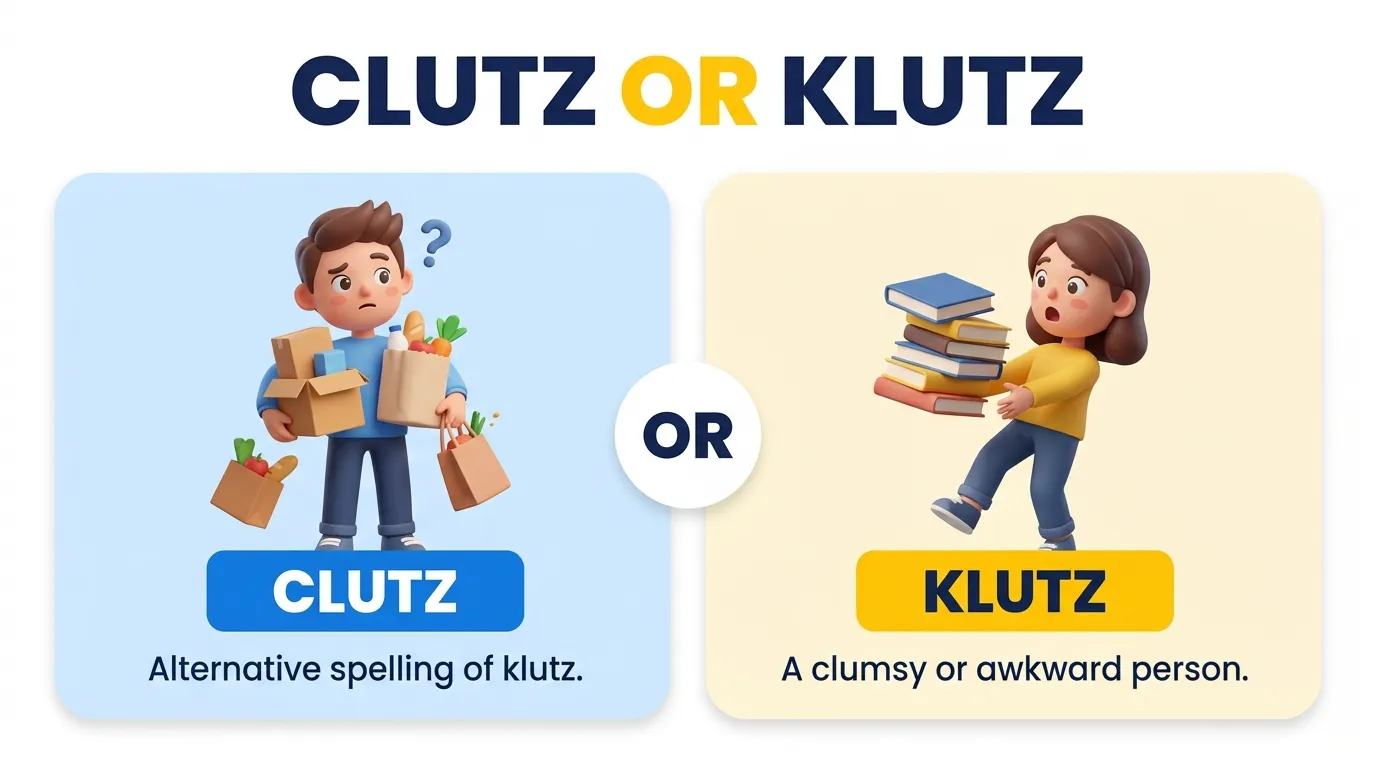
Clutz or klutz refers to a clumsy or awkward person, but klutz is the standard spelling in English. Clutz is a less common variant spelling.
A red squiggly line appears under your word just before you send an email. You meant to write clutz, but suddenly klutz looks more familiar. This small spelling mix-up is common because both forms sound the same.
The good news is simple. Klutz is the spelling to use in normal English writing, while clutz may appear as an alternative form.
Clutz or Klutz: Quick Answer
Klutz is the standard spelling for a person who is clumsy, awkward, or often drops and bumps into things. It is an informal noun, especially common in American English.
For example:
- I am such a klutz.
- Tom felt like a klutz after dropping his phone twice.
However, clutz does appear in English writing. It is listed as an alternative spelling in some language references, but klutz is the safer choice for everyday and edited writing.
The Origin of Clutz or Klutz
The unusual K in klutz can make the word feel strange. That spelling makes more sense when you know where the word came from.
The word entered English from Yiddish klots, meaning a wooden beam or block. It is also linked to the German word Klotz, which has a similar sense.
Over time, English speakers began using klutz for a clumsy or awkward person. The word became part of American English and is now widely understood.
Meanwhile, clutz likely feels natural because English has many familiar words that begin with cl, such as class, clean, and clumsy. The sound of klutz does not give you much help with its spelling.
That is why people can know the word well but still type it with a C.
Clutz or Klutz Explained: Key Differences
The main difference is spelling rather than meaning. Both forms are used to describe the same idea, but klutz is the established standard form.
| Term | Meaning | When to Use | Region/Context |
| Klutz | A clumsy or awkward person | Normal English writing | Especially common in US English |
| Clutz | Alternative spelling of klutz | When discussing the spelling variant | Less common in English writing |
Both forms are usually pronounced the same way, /klʌts/. So, hearing the word does not tell you whether the first letter should be C or K.
For example, you could say, “I am a klutz when I cook.” The word describes someone who often makes small physical mistakes.
Likewise, “She is such a klutz with fragile things” sounds natural in casual speech.
Which One Should You Use?
For most readers, klutz is the word to choose.
For students, use klutz because it is the standard spelling you are most likely to see in dictionaries and edited English.
For writers, use klutz because it is the more established form and is widely recognized.
For professional emails, use klutz if the informal word fits the tone. However, consider a neutral word such as clumsy when talking about another person’s work.
For casual conversations, use klutz when you want a light and familiar word for someone who often drops, bumps, or breaks things.
For spelling discussions, mention both clutz and klutz because the whole point is to explain the difference.
In short, write klutz when you need the normal English spelling.
Common Mistakes with Clutz or Klutz
Writing “clutz” because it sounds right
The first mistake happens when people spell the word by sound. Because clutz and klutz sound the same, the wrong form can look perfectly natural.
Correction: Write klutz in standard English.
Treating clutz and klutz as two different words
Some writers think the two spellings have different meanings. They generally do not.
Correction: Both forms point to the idea of a clumsy or awkward person, but klutz is the established spelling.
Using klutz in a formal judgment
The word is informal. So, calling a coworker a klutz in a formal review may sound too casual or personal.
Correction: Use a neutral description such as clumsy, careless, or a specific description of the problem when a formal tone is needed.
Assuming the word is only American
The word is strongly associated with American English, but it is also understood elsewhere. Collins lists it as US and Canadian slang in its British English entry.
Correction: Use klutz when the word fits your audience, but remember that it is informal.
Forgetting the plural form
The plural of klutz is klutzes.
Correction: Write three klutzes, not three klutz.
Clutz or Klutz in Real-World Examples
Professional Email
I felt like a klutz after I spilled coffee on the printed report.
This works in a friendly email between coworkers. However, a formal business message may sound better with clumsy or a direct description of what happened.
News Headline
Local Klutz Turns Kitchen Mistake Into a Funny Story
Here, the word can add a casual and playful tone. Still, headline writers should consider whether the label fits the person and the story.
Social Post
I dropped my phone, spilled my drink, and locked myself out. What a klutz!
This is a natural casual use. In fact, people often use the word about themselves when joking about a small mistake.
Formal Document
The employee was described as a klutz during the meeting.
This sentence is grammatically possible, but the word may sound too informal for a formal report. Instead, describe the exact behavior when precision matters.
Clutz or Klutz: Data, Trends & Usage
Searches for clutz or klutz usually come from people who know the spoken word but are unsure about the spelling. The search intent is therefore mainly informational and spelling-focused.
Common searches include clutz or klutz, clutz vs klutz, is it clutz or klutz, how do you spell klutz, and what does klutz mean.
Students may search the term before an assignment. Writers may check it before publishing a sentence. English learners may also search it because the K spelling is not obvious from pronunciation.
Meanwhile, the word itself remains useful in casual English because it gives a short way to describe someone who is physically awkward or accident-prone. Dictionaries continue to mark it as informal, with a strong US connection.
The key search insight is simple: people usually do not need a long grammar lesson here. They want a clear spelling answer, a meaning, a few examples, and help deciding whether the word fits their context.
Clutz or Klutz: Comparison at a Glance
| Term/Variant | Meaning | Region/Context | Best Used When |
| Klutz | Clumsy or awkward person | Mainly US, informal | Normal English writing |
| Clutz | Alternative spelling of klutz | Less common variant | Discussing the spelling itself |
| Clumsy | Lacking physical skill or care | General English | Formal or neutral writing |
| Klutzy | Clumsy or awkward | Informal English | Describing a person, action, or style |
FAQs About Clutz or Klutz
Is it clutz or klutz?
The standard spelling is klutz. The spelling clutz also appears as an alternative form, but klutz is the safer choice for standard English writing.
Is clutz a real word?
Yes, clutz appears as an alternative spelling in some English references. Still, klutz is the more established form, so use it when you want the standard spelling.
What does klutz mean?
A klutz is a person who is clumsy or awkward and often drops, bumps, or breaks things. The word can also carry a sense of foolishness, but the physical meaning is very common.
Is klutz acceptable in formal writing?
Klutz is a real English word, but it is informal. Therefore, a formal report, business review, or academic paper may be better with a neutral word such as clumsy.
Are clutz and klutz pronounced the same?
Yes, the two spellings are normally pronounced the same. The common pronunciation is /klʌts/, which sounds roughly like “kluts.”
Where did the word klutz come from?
Klutz came into English from Yiddish klots, meaning a wooden beam or block. It is also related to German Klotz, which has a similar meaning.
Can I call myself a klutz?
Yes. People often use klutz about themselves in a playful way after a small accident. For example, you can say, “I am such a klutz today” after dropping your keys or spilling a drink.
Final Thoughts on Clutz or Klutz
The main point is easy to remember: klutz is the standard spelling, while clutz is an alternative form that appears less often. Both forms refer to a clumsy or awkward person, and they are normally pronounced the same way.
Also, klutz is informal, so it fits best in casual speech, friendly messages, and light writing. For formal work, a neutral word such as clumsy may fit better.
Most importantly, remember the K in klutz. When you need the normal spelling, choose klutz. Keep this simple rule in mind, and you will not have to stop over the spelling the next time you use the word.
Curious about similar confusing words? Explore Barbeque or Barbecue.

I started writing about English word differences after years of teaching students who kept making the same mistakes. My focus is on making spelling rules feel simple and easy to remember. At WordsCombo, I turn confusing word pairs into clear comparisons.