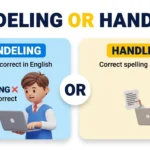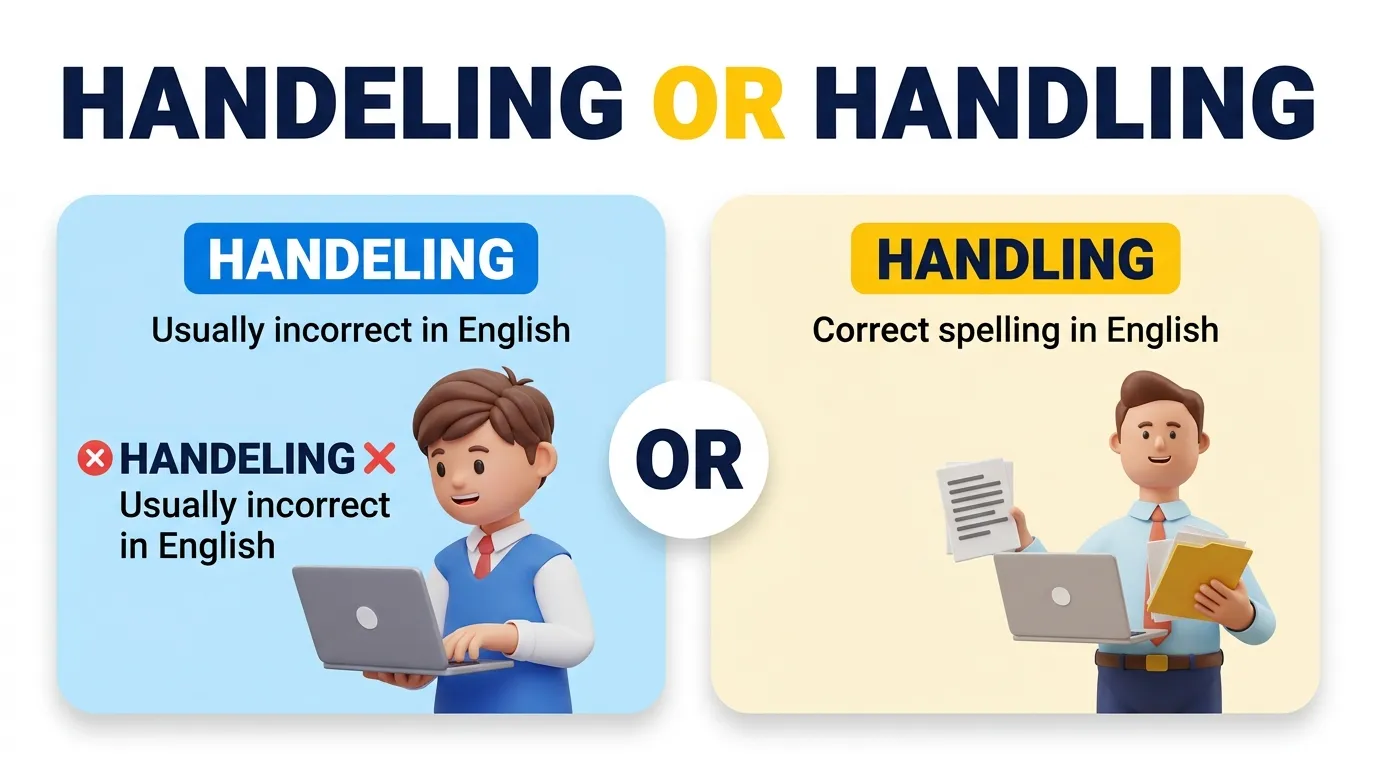
Handling is the correct spelling in standard English when you mean dealing with, managing, or taking care of something. Handeling is usually a misspelling of handling.
When you type an email, finish a school assignment, or write a work report, a red spelling line under handeling can make you stop and wonder which word is right. The correct choice is usually handling, but the meaning depends on how you use it.
Both words look similar, so the mistake is easy to make. However, learning the difference will help you write clear English, avoid spelling errors, and choose the right word for school, work, and everyday messages.
Handling: The Correct Spelling and Meaning
The correct spelling is handling, not handeling, when you mean dealing with something or taking care of it.
For example:
- Correct: She is handling customer complaints.
- Incorrect: She is handeling customer complaints.
In simple words, handling means managing a task, moving an object, or dealing with a person or problem.
The Origin of Handling
The word handling comes from the English verb handle, which is linked to the word hand. It first related to touching, holding, or working with something by hand.
Over time, its meaning grew. Today, handling can also mean managing a problem, caring for an animal, or controlling a vehicle.
So, why do people write handeling? The main reason is that they may think the final letter e must stay when they add -ing. However, English spelling often drops a silent e before this ending.
For example:
- Make becomes making.
- Write becomes writing.
- Take becomes taking.
- Handle becomes handling.
As a result, handling follows a common English spelling rule.
Handling Explained: Key Differences
Although handling and handeling look almost the same, they do not have the same status in standard English.
Handling is the correct form when you use the word handle with an -ing ending. Meanwhile, handeling is generally a spelling mistake when used with this meaning.
Consider these examples:
- Handling: He is handling the office work today.
- Handeling: He is handeling the office work today.
The first sentence is correct because the word follows the normal spelling rule.
Handling vs. Handeling Comparison
| Term | Meaning | When to Use | Region/Context |
| Handling | Managing or dealing with something | Standard English writing | American and British English |
| Handeling | Usually a misspelling of handling | Avoid when writing in English | Standard English spelling |
| Handle | To manage something or hold it | When using the base verb | American and British English |
| Handled | Managed or dealt with something in the past | When describing a past action | American and British English |
For everyday English, choose handling whenever you need the -ing form of handle.
Which One Should You Use?
The best choice depends on your sentence, but in standard English, handling is the correct spelling for the action of managing or dealing with something.
- For students: Use handling in essays, homework, and exams because handeling is not the standard spelling.
- For office workers: Write handling in emails, reports, and work messages so your writing looks clear and professional.
- For business owners: Use handling when talking about customer service, orders, delivery, or complaints.
- For social media users: Choose handling in captions and comments because the same spelling rule applies online.
- For formal documents: Always use handling when you mean managing, moving, or taking care of something.
If you are unsure, remember this simple rule: handle + ing = handling. The final e is dropped before adding -ing.
Common Mistakes with Handling
People often make spelling mistakes because English words can change when an ending is added. Here are some errors to watch for.
Adding -ing Without Dropping the Final E
Incorrect: She is handeling the report.
Correct: She is handling the report.
This mistake happens when you keep the final e in handle. However, the correct spelling drops that letter before adding -ing.
Using Handling Instead of Handle
Incorrect: I can handling this task.
Correct: I can handle this task.
After the word can, use the base form of the verb. So, handling is not right in this sentence.
Using Handeling in a Formal Email
Incorrect: Thank you for handeling my request.
Correct: Thank you for handling my request.
A spelling mistake can make a professional message look less polished. Therefore, check the word before sending an important email.
Confusing Handling with Handled
Incorrect: She handled the issue right now.
Correct: She is handling the issue right now.
The right form depends on the time and meaning of the sentence. Use handled for a completed past action, but use handling with a suitable helping verb for an action in progress.
Forgetting the Meaning of Handling
Handling does not only mean holding something with your hands. It can also mean managing a situation, treating an animal carefully, or moving goods.
For example, proper food handling helps keep food clean and safe. Likewise, careful handling of a difficult customer can help solve a problem.
Handling in Real-World Examples
The word handling appears in many parts of daily life. Here are examples that show how to use it naturally.
Professional Email
Subject: Customer Request
Hello,
Thank you for handling the customer request so quickly. Your help made the process easier.
Best regards
This example uses handling to describe managing a work task.
News Headline
City Leaders Face Questions About Handling of Public Complaints
Here, handling means the way leaders dealt with complaints.
Social Media Post
Learning the art of handling stress can make daily life easier. Stay calm, think clearly, and take one task at a time.
In this example, handling refers to dealing with stress.
Formal Document
All staff members must follow the rules for safe handling of equipment.
This sentence uses handling to describe the careful use or movement of equipment.
Everyday Conversation
You might say, “I am handling everything at home while my parents are away.”
In this case, handling means taking care of tasks and responsibilities.
Handling: Data, Trends and Usage
The spelling difference between handeling and handling matters because people often search for words when they are unsure how to write them. A short spelling question can affect an email, school assignment, job application, or website article.
Why Do People Search for Handeling or Handling?
Most readers who compare these words want a quick answer. They need to know which spelling is correct and how to use it in a sentence.
Common reasons include:
- Spelling help: Readers want to fix a word marked as incorrect by a spellchecker.
- Grammar learning: Students want to understand why the final e disappears.
- Work writing: Employees want to send clear emails and reports.
- Content writing: Writers want to avoid spelling errors in published text.
- English learning: People want simple examples that make the rule easy to remember.
What Does Search Intent Tell Us?
The main search intent is informational. People are looking for a spelling correction, a simple meaning, and examples they can use right away.
However, the topic also has a practical purpose. A person who learns the rule can apply it to other words, such as making, writing, and taking.
There is no verified search-volume figure included here, so exact monthly searches or growth rates should not be assumed. Still, the topic is useful for spelling guides because it answers a clear question with a simple rule.
Handling: Comparison at a Glance
Use this table when you need to choose the right word quickly.
| Term/Variant | Meaning | Region/Context | Best Used When |
| Handling | Managing or taking care of something | Standard English | Describing an action in progress or an activity |
| Handeling | Usually an incorrect English spelling | English spelling | Avoid this form when you mean handling |
| Handle | To manage, control, or hold something | Standard English | Using the base verb |
| Handled | Dealt with or managed something | Standard English | Describing a past action |
The main rule is simple: handling is the correct spelling for the action of managing or dealing with something.
Frequently Asked Questions
Is it handeling or handling?
Handling is the correct spelling in standard English. The word handle loses its final e before the ending -ing is added.
What does handling mean?
Handling means managing, dealing with, holding, or taking care of something. For example, “She is handling the situation well” means she is dealing with the situation successfully.
Why is handling spelled without an e?
English often drops a silent final e before adding -ing. Therefore, handle becomes handling, just as make becomes making and write becomes writing.
Is handling correct in formal writing?
Yes, handling is correct in formal and informal English. You can use it in business emails, school assignments, reports, and official documents because it is the standard spelling.
Is handling the same in American and British English?
Yes, the spelling handling is the same in American and British English. Neither variety uses handeling as the standard spelling for this meaning.
What is the difference between handle and handling?
Handle is the base verb, while handling is its -ing form. For example, “I can handle this task” uses handle, but “I am handling this task” uses handling.
How do you use handling in a sentence?
You can write, “He is handling the customer complaint with care.” Here, handling means dealing with the complaint. Similarly, “Safe handling of food prevents problems” describes the careful way food is treated.
Conclusion: Choose Handling for Correct English
The difference between handeling and handling is easy to remember once you learn the spelling rule. Handling is the correct standard English spelling when you mean managing, dealing with, or taking care of something. Handeling is generally a misspelling in this context.
Remember these three points: handle is the base verb, handling is the correct -ing form, and handled describes a past action. These simple rules can help you write better emails, school assignments, and professional documents.
Next time you see this spelling mistake, correct it with confidence. Use handling, check your sentence, and keep improving your English one word at a time!
Curious about other confusing English words? Explore Writen or Written to learn more spelling tips and word meanings.

I started writing about English word differences after years of teaching students who kept making the same mistakes. My focus is on making spelling rules feel simple and easy to remember. At WordsCombo, I turn confusing word pairs into clear comparisons.