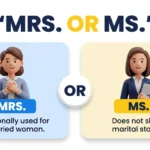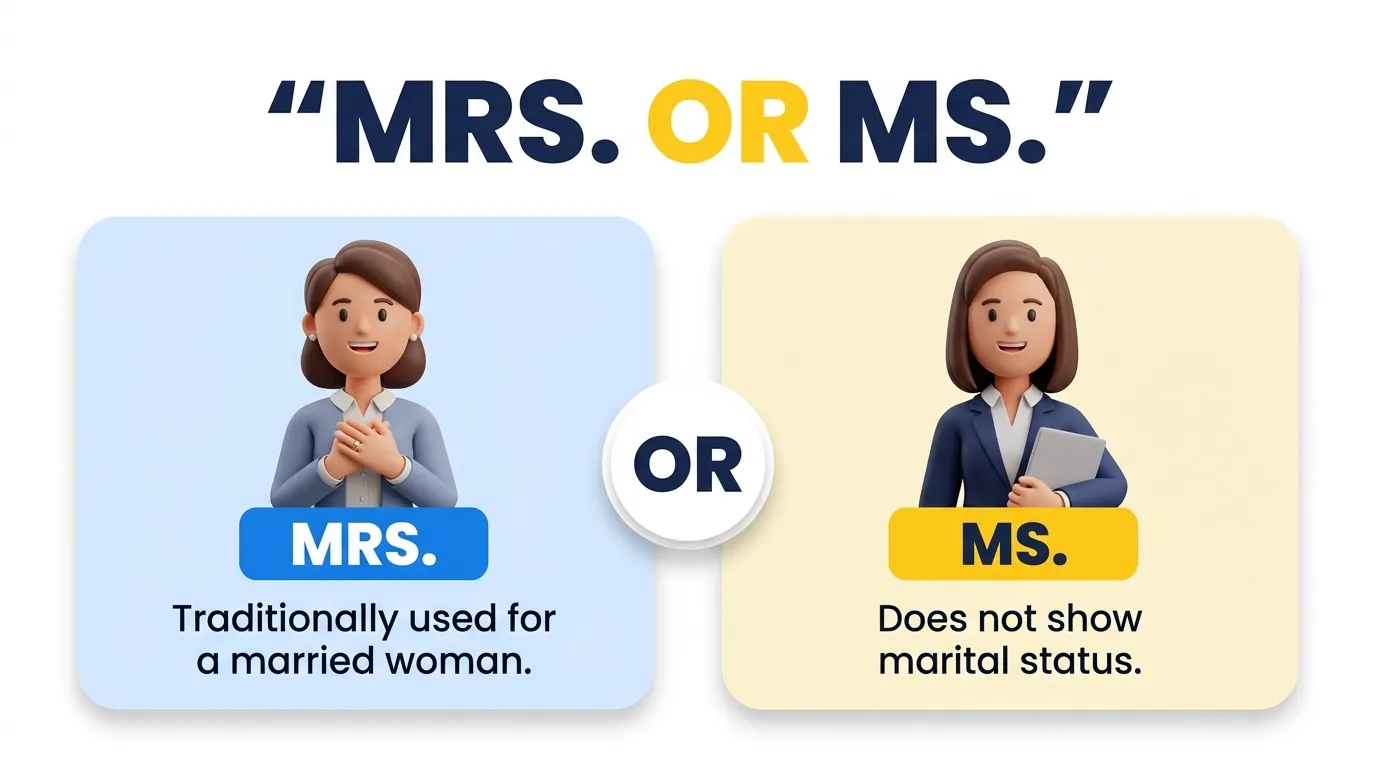
Mrs or Ms refers to titles used before a woman’s name. Mrs. traditionally refers to a married woman, while Ms. is a neutral title that does not show whether a woman is married or single.
When you are writing an email to a teacher, sending a job application, or addressing a client, choosing between Mrs and Ms can feel confusing. Both titles are correct, but they have different uses.
The main difference is simple: Mrs. often shows marital status, while Ms. works for women of any marital status. However, the best choice also depends on personal preference, so knowing when to use each title can help you write with confidence.
Mrs or Ms: Quick Answer
Use Mrs. when a woman prefers the traditional title for a married woman. Choose Ms. when you do not know her marital status or when you want a neutral, professional title.
For example:
- Dear Mrs. Smith, if she uses Mrs. as her title.
- Dear Ms. Smith, if her marital status is unknown or she prefers Ms.
Both titles are polite, but the woman’s own preference is the best guide.
The Origin of Mrs and Ms
The titles Mrs and Ms have a shared history, but their meanings have changed over time.
Mrs. developed from the word mistress, which was once a respectful title for a woman. Over time, its use became linked mainly to married women.
Ms. became more common as women sought a title that did not depend on marriage. It gained wider use in the twentieth century, especially in workplaces and public writing.
Today, both titles are widely understood in the United States. However, Ms. is often the safer choice when you do not know which title a woman uses.
Mrs or Ms Explained: Key Differences
The main difference between Mrs. and Ms. is whether the title tells people about a woman’s marital status.
Mrs. is traditionally used for a married woman. Ms. can be used for a married or unmarried woman because it does not share her marital status.
Both titles are respectful. However, the woman’s choice matters more than the traditional rule.
How to Pronounce Mrs and Ms
- Mrs. sounds like “MIS-iz.”
- Ms. sounds like “MIZ.”
Although the two titles look similar, they sound different when you say them aloud. So, learning the correct pronunciation can help you speak with confidence.
Mrs vs Ms vs Miss
People often mix up Mrs., Ms., and Miss because all three titles appear before a woman’s name. However, each has a different use.
| Term | Meaning | When to Use | Region/Context |
| Mrs. | Traditionally for a married woman | When she prefers this title | Formal and everyday English |
| Ms. | Does not show marital status | When her status is unknown or not relevant | Professional and general use |
| Miss | Traditionally for an unmarried woman or girl | When appropriate and preferred | Schools and everyday use |
For example, a married woman may choose Ms. instead of Mrs. because she does not want her title to show her marital status. Likewise, an unmarried adult woman may prefer Ms. over Miss.
Which One Should You Use?
The right title depends on the person you are addressing and the situation.
- For a married woman: Use Mrs. if you know she prefers it. However, a married woman can also choose Ms.
- For a job application or business email: Use Ms. when you do not know the woman’s preferred title, because it does not assume her marital status.
- For a teacher: Use the title she normally uses at school. For example, write Dear Ms. Khan if that is her preferred title.
- For a wedding invitation: Follow the names and titles chosen by the couple, since preferences can differ.
- For a woman whose title you already know: Use her preferred title rather than guessing.
In short, Ms. is usually the safest choice when you are unsure. Still, if the woman has told you to use Mrs., respect that choice.
Common Mistakes with Mrs or Ms
Even confident writers can make small mistakes when using these titles. Fortunately, the rules are easy to learn.
Using Mrs. for Every Married Woman
Incorrect approach: Assuming every married woman uses Mrs.
Better approach: Use Mrs. only when it fits her preference. A married woman may prefer Ms. because her marital status is private or unrelated to her work.
Thinking Ms. Means an Unmarried Woman
Incorrect: Ms. is only for single women.
Correct: Ms. works for married and unmarried women alike. Therefore, it is useful in formal writing when you do not know someone’s marital status.
Confusing Ms. with Miss
Incorrect: Treating Ms. and Miss as the same title.
Correct: Ms. is pronounced “miz,” while Miss is pronounced “miss.” Also, Miss traditionally refers to an unmarried woman or girl, while Ms. does not show marital status.
Forgetting the Space Before the Name
Incorrect: Mrs.Smith or Ms.Khan.
Correct: Mrs. Smith or Ms. Khan.
Always leave a space between the title and the name so the writing looks clear and professional.
Using the Wrong Punctuation
In American English, Mrs. and Ms. usually take a period because they are treated as abbreviations. However, British English often uses Mrs and Ms without periods.
For example, both Mrs. Smith and Mrs Smith can be correct, depending on the style of English you follow.
Mrs or Ms in Real-World Examples
Seeing these titles in everyday situations makes the difference easier to remember.
In a Professional Email
Suppose you need to email a new client, but you do not know whether she is married.
Example:
Dear Ms. Taylor,
Thank you for your message. I will send the updated report this afternoon.
Here, Ms. is a good choice because it sounds polite without making assumptions about her personal life.
In a News Headline
News writers may use Mrs. when a woman is known by that title.
Example:
Mrs. Wilson Opens a New Community Center
However, Ms. Wilson may be the better choice if that is the title she uses publicly.
In a Social Media Post
A person may write a birthday message or a thank-you post using someone’s preferred title.
Example:
Congratulations to Ms. Ahmed on her new job!
In this case, Ms. keeps the message respectful without saying anything about her marital status.
In a Formal Document
Forms, letters, and business records may ask you to choose a title.
Example:
Name: Sarah Johnson
Title: Mrs.
If Sarah prefers Ms., she can use that instead. The best option is the one that matches her preference and the form’s instructions.
Mrs or Ms: Data, Trends and Usage
People search for “Mrs or Ms” because they want to write correctly in emails, school letters, job applications, invitations, and other formal messages.
The main search intent is practical. Most readers want to know which title is correct and whether one is more polite than the other.
In modern American English, Ms. is a common neutral choice for professional communication. Meanwhile, Mrs. remains widely used by women who prefer the traditional title for married women.
The key point is that marital status does not decide a woman’s title on its own. Personal preference also plays a role, which is why choosing the right form of address still matters in everyday communication.
Mrs vs Ms: Comparison at a Glance
Use this table when you need a quick reminder before sending an email or writing a letter.
| Term/Variant | Meaning | Region/Context | Best Used When |
| Mrs. | Traditional title for a married woman | American English | She prefers Mrs. |
| Ms. | Neutral title for a woman | American English | Her marital status is unknown or irrelevant |
| Miss | Traditional title for an unmarried woman or girl | American English | It fits her preference and the context |
| Mrs | Same meaning as Mrs. | British English | You follow British punctuation rules |
| Ms | Same meaning as Ms. | British English | You follow British punctuation rules |
Remember, the period is mainly a style difference between American and British English. It does not change the meaning of the title.
Frequently Asked Questions About Mrs or Ms
What is the difference between Mrs. and Ms.?
Mrs. traditionally refers to a married woman, while Ms. does not reveal whether a woman is married or single. However, either title may be used by a married woman if it matches her preference.
Is Ms. for married or unmarried women?
Ms. can be used for both married and unmarried women. Therefore, it is a helpful choice when marital status is unknown or does not matter.
Is Mrs. or Ms. more professional?
Both titles are professional and polite. However, Ms. is often the safer choice in business emails when you do not know which title a woman prefers.
Is Ms. correct for a married woman?
Yes, Ms. is correct for a married woman. In fact, many women choose it because it does not connect their title to their marital status.
Which is correct, Mrs or Ms?
Both are correct, but they have different meanings. Use Mrs. when a woman prefers that traditional title, or Ms. when you want a title that does not show marital status.
Where did Mrs. and Ms. come from?
Mrs. developed from the older word mistress. Ms. has a related history and became widely used as a neutral title during the twentieth century, especially in North America.
Should I use Mrs. or Ms. in an email to a woman I do not know?
Use Ms. if you do not know her preferred title and need a formal greeting. However, if she has a professional title or has told you how to address her, follow that preference instead.
Final Thoughts on Mrs or Ms
Choosing between Mrs. or Ms. becomes simple once you understand what each title means. Mrs. traditionally refers to a married woman, while Ms. works for women regardless of marital status.
For professional emails, job applications, and formal letters, Ms. is usually a good starting point when you are unsure. On the other hand, Mrs. is perfectly correct when a woman prefers that title. Also, remember that American English usually uses periods, while British English often leaves them out.
My final recommendation is simple: use Ms. when you are unsure, and always respect the woman’s preferred title. Now you can write your next email or letter with confidence. Keep practicing these small grammar rules to make your writing clearer and more professional.
Curious about similar spelling and grammar questions? Explore Then or Than.

I have been working with English language content for over six years. I specialize in word comparisons and spelling differences that most people overlook. At WordsCombo, I help readers choose the right word every time.