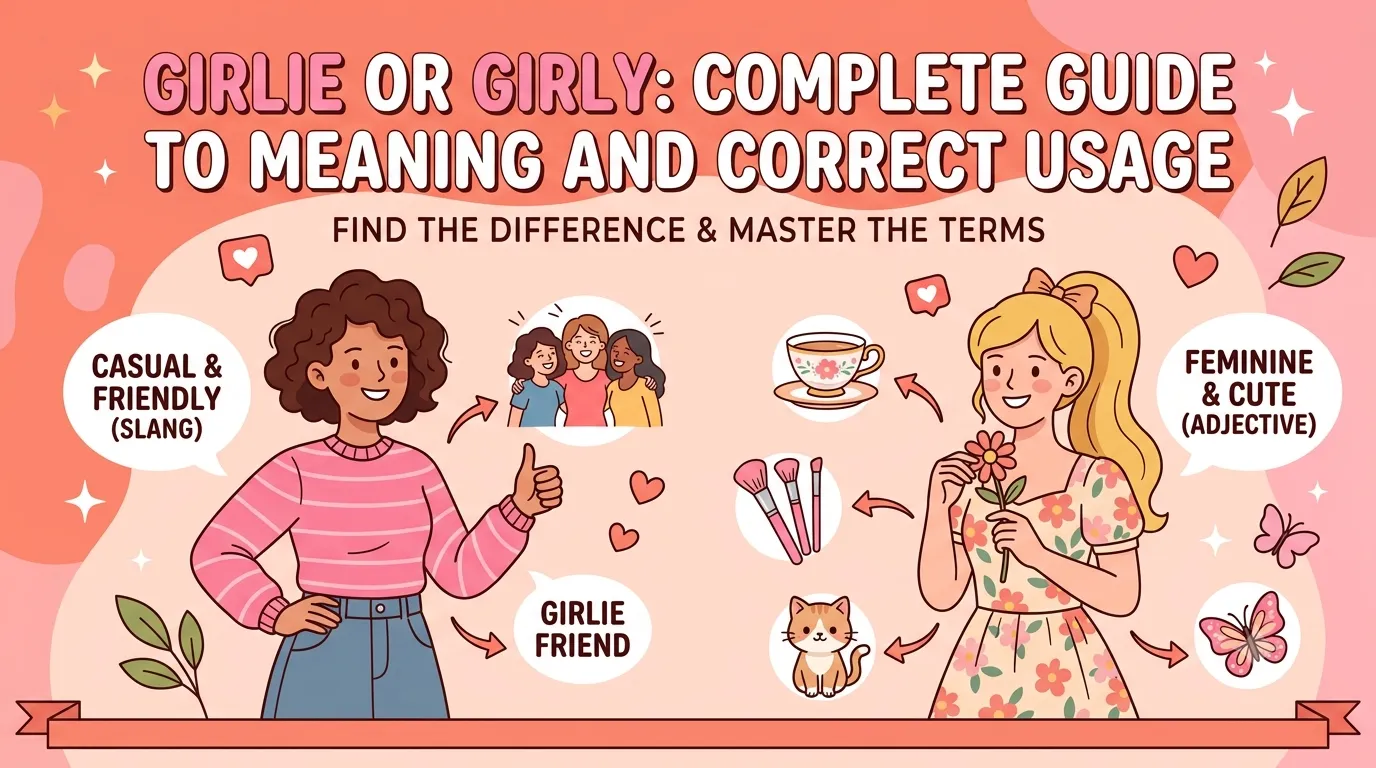
Girlie means something that is traditionally connected with girls, femininity, or a playful feminine style. Girly is the more common spelling used as an adjective to describe things seen as feminine.
Have you ever typed a word online and stopped because you were unsure about the spelling? Many people search for “girlie or girly” because both versions look correct, sound similar, and appear in everyday conversations.
A common writing experience is seeing a phrase like “girly dress” or “girlie magazine” and wondering if one spelling is wrong. The confusion happens because English often keeps older word forms while creating newer, more popular versions. Small spelling changes can also create slightly different feelings or meanings.
The good news is that choosing the right word is simple once you understand the difference. In this guide, you will learn what girlie and girly mean, where they came from, when to use each form, common mistakes to avoid, and real examples from daily English.
By the end, you will know exactly which version fits your sentence and how native speakers usually use these words.
Girlie or Girly : Quick Answer
The difference between girlie and girly is mainly about usage and style.
- Girly is the standard adjective. It describes something feminine, cute, delicate, or associated with traditional ideas about girls.
- Girlie can also describe feminine things, but it often feels more informal, playful, or connected to older expressions.
Simple examples:
- “She loves girly colors like pink and lavender.”
- “The magazine had a very girlie style aimed at young women.”
In most modern writing, girly is the safer and more common choice.
The Origin and Background of Girlie and Girly
The word girl has a long history in English. It originally referred to a young person and later became specifically connected with young females.
The adjective girly developed by adding the suffix -y, which often means “having the quality of” something.
Examples:
- Cloud → cloudy
- Dirt → dirty
- Girl → girly
The form girlie came from adding -ie, a spelling pattern often used to make words sound smaller, softer, or more affectionate.
Examples:
- Dog → doggie
- Sweet → sweetie
- Girl → girlie
Over time, both forms became accepted, but their feelings changed slightly.
Girly became the everyday descriptive word. It is common in fashion, beauty, lifestyle, and casual conversation.
Girlie often sounds more playful, old-fashioned, or affectionate. It may appear in names, branding, entertainment, and informal speech.
The variation exists because English is not always built from strict rules. Many words develop through culture, trends, and the way people naturally speak.
Girlie vs Girly Explained : Key Differences
Although these words are close, they are not always interchangeable.
| Term | Meaning | When to Use | Region/Context |
|---|---|---|---|
| Girly | Feminine, cute, or traditionally associated with girls | Everyday descriptions | Common in modern English worldwide |
| Girlie | Feminine in a playful, affectionate, or informal way | Casual phrases, names, older styles | More common in informal contexts |
Girly examples
Girly usually describes appearance, personality, or style.
Examples:
- “She decorated her room with a girly theme.”
- “That dress has a very girly design.”
- “The brand uses bright, girly colors.”
The word can be positive, but sometimes it may suggest stereotypes if used to describe someone’s personality.
Girlie examples
Girlie often creates a softer or more playful feeling.
Examples:
- “The event had a fun girlie atmosphere.”
- “She collects girlie accessories from the 1990s style.”
It may also appear in phrases like:
- girlie chat
- girlie magazines
- girlie night out
Which Version Should You Use?
Choosing between girlie or girly depends on your audience and purpose.
For students and everyday writers
Use girly.
It is easier to understand and appears more often in modern English.
Example:
- “She likes girly fashion.”
For creative writing or branding
Either word may work.
Choose girlie if you want a playful, cute, or nostalgic feeling.
Example:
- “A girlie boutique filled with handmade gifts.”
Choose girly if you want a simple description.
Example:
- “A girly fashion collection.”
For global or neutral communication
Use girly.
It is more widely recognized and less likely to confuse readers.
Common Mistakes with Girlie and Girly
Many learners make small mistakes with these words. Here are the most common ones.
| Mistake | Correction | Why |
|---|---|---|
| Using girlie in every situation | Use girly for normal descriptions | Girly is more common today |
| Thinking girlie is always wrong | Understand that girlie is still a valid word | It has a different tone |
| Using girly as an insult | Consider the context | It can sound judgmental |
| Writing “girly” when referring to a person’s age | Use “girl” or “young woman” instead | Girly describes qualities, not age |
Why do these mistakes happen?
English has many words with similar endings. Learners often assume one spelling must be incorrect. However, language changes through use, and both forms have a place.
Girlie or Girly in Real-World Examples
Professional email
Example:
“Thank you for sharing the new design ideas. The soft colors create a modern yet girly feeling.”
Here, girly works because the writer is describing a design style.
News headline or article
Example:
“New fashion trends bring back playful, girly styles for spring collections.”
The word describes a trend in clothing and appearance.
Social media post
Example:
“Feeling happy in my new pink outfit. A little girly style never hurts!”
The casual tone makes girly a natural choice.
Formal document or report
Example:
“The survey examined how consumers respond to products marketed with traditionally girly themes.”
In formal writing, girly can be used when discussing culture, marketing, or consumer behavior.
Girlie or Girly : Data, Trends, and Usage
Search interest for “girlie or girly” often comes from people checking spelling, grammar, and meaning before writing.
The topic mainly attracts:
- English learners
- Content writers
- Social media users
- Fashion and lifestyle audiences
- Students improving vocabulary
The search intent is mostly informational. People are not usually looking to buy something. They want a clear answer about correct English usage.
The reason this topic matters today is simple: online communication moves quickly. A single word choice can affect how a brand, caption, or message feels.
For modern writing, girly remains the most practical option. It is familiar, clear, and widely accepted.
Standalone Comparison Table: Girlie vs Girly
| Term/Variant | Meaning | Region/Context | Best Used When |
|---|---|---|---|
| Girly | Feminine, cute, or traditionally feminine | Modern English worldwide | Describing style, colors, fashion, or personality |
| Girlie | Playful, affectionate, or feminine in tone | Informal speech, older expressions, creative names | Creating a cute or nostalgic feeling |
Frequently Asked Questions
Q: What does girlie mean?
A: Girlie means something feminine, playful, or connected with girls. It often has a softer or more informal feeling than girly.
Q: How do you use girly correctly?
A: Use girly as an adjective to describe something with traditionally feminine qualities. For example, “She bought a girly phone case.”
Q: Girlie vs girly : what is the difference?
A: Both words relate to femininity, but girly is the common modern adjective. Girlie often sounds more playful, affectionate, or old-fashioned.
Q: Is girly acceptable in formal writing?
A: Yes, but only when the topic requires it. It works well in reports about fashion, marketing, culture, or consumer behavior.
Q: Which version is correct : girlie or girly?
A: Both are correct. However, girly is usually the better choice for general writing.
Q: Where does girlie come from?
A: Girlie developed from the word “girl” with the softer -ie ending, similar to words like “doggie” or “sweetie.”
Q: Can girly be used in a professional context?
A: Yes. It can be used when describing designs, products, trends, or marketing styles. It may not fit every workplace conversation.
Conclusion
Understanding girlie or girly does not have to be confusing. Both words are correct, but they create different impressions.
Remember these key points:
- Girly is the most common and useful choice today.
- Girlie adds a playful, cute, or nostalgic feeling.
- Your audience and purpose should guide your choice.
If you are writing a simple description, choose girly. If you want a softer or more charming tone, girlie may work better.
Words carry feelings, not just meanings. Choosing the right version helps your writing sound natural and confident.
Now you know exactly how to use girlie or girly, try it in your next piece of writing and never second-guess this word again.
Read more: Planning or Planing: The Easy Spelling Guide

I started writing about English word differences after years of teaching students who kept making the same mistakes. My focus is on making spelling rules feel simple and easy to remember. At WordsCombo, I turn confusing word pairs into clear comparisons.