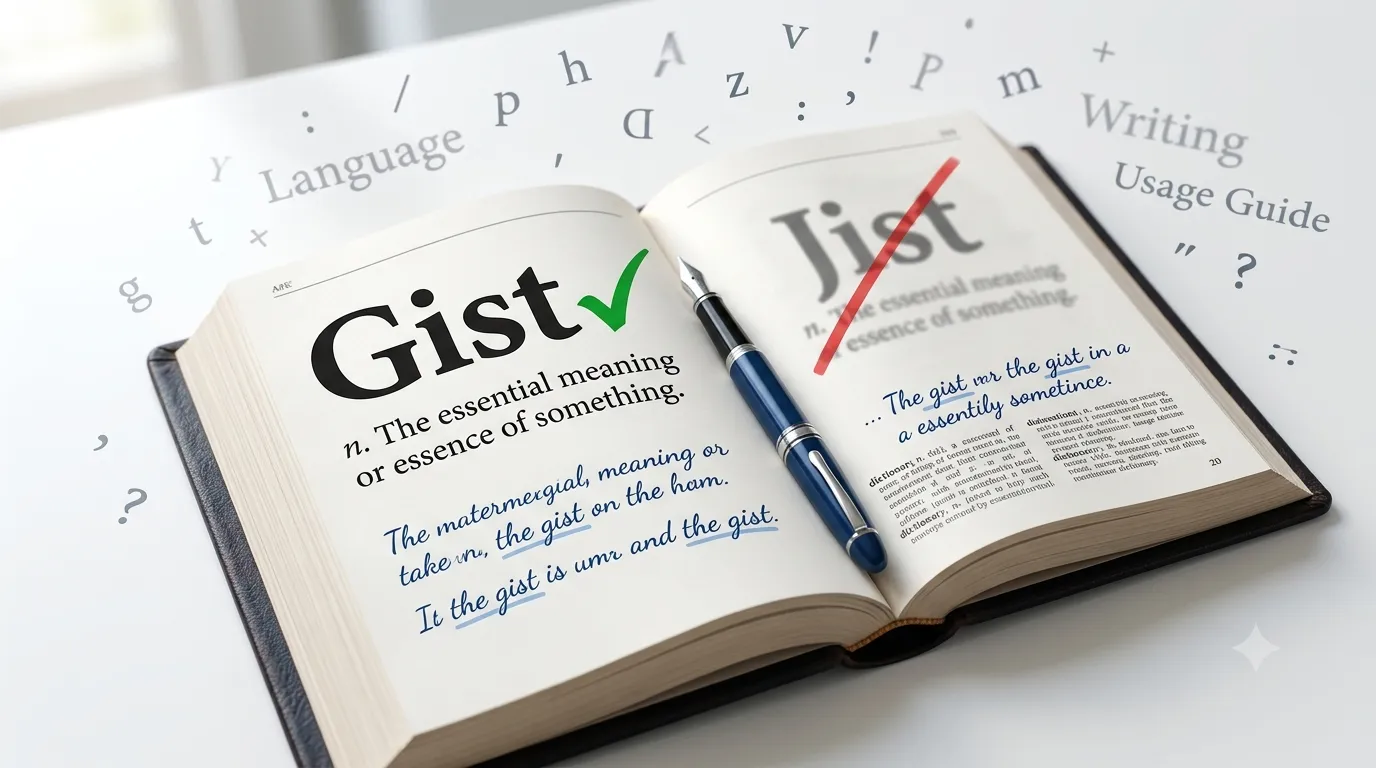
“Gist is the correct spelling, it means the main point or essence of something. Jist isn’t a dictionary word; it’s a misspelling caused by the soft ‘g‘ sounding like ‘j.'”
Have you ever paused while typing and wondered, “Is it jist or gist?” You’re not alone. It is one of those spelling questions that catches many people off guard because both words sound almost the same.
As someone who has spent years writing and editing English content, I’ve seen this mistake appear in emails, blog posts, school assignments, and even business reports. Most people know what they want to say. They simply choose the wrong spelling because English pronunciation can be confusing.
The good news is that the answer is simple once you understand it.
In this guide, you’ll learn what gist really means, why people mistakenly write jist, where the word came from, and how to use it with confidence. You’ll also see real-life examples, common mistakes, and practical tips that will help you remember the correct spelling every time.
Let’s start with the answer everyone is searching for.
Gist or Jist: Quick Answer
The correct spelling is gist.
The word gist means the main point, the central idea, or the most important part of something. It is widely accepted in British English, American English, and other English-speaking countries.
Jist is simply a misspelling. While you may occasionally see it in informal writing or as part of a regional dialect, it is not considered correct in standard English.
Simple examples
✅ Can you tell me the gist of the meeting?
✅ I understand the gist of the article.
❌ Can you explain the jist of the story?
❌ I got the jist of the email.
If you’re writing for school, work, publishing, or online content, always choose gist.
The Origin and Background of Gist
Understanding where a word comes from often makes it easier to remember.
The word gist entered English several centuries ago. It comes from an old legal expression that referred to the essential point of a legal case.
Over time, people began using it outside the courtroom. Today, it simply means the most important idea or meaning.
Why do people write “jist”?
There are two main reasons.
- The letter G in gist makes a soft J sound.
- English contains many words where pronunciation and spelling do not perfectly match.
For example:
- giant
- giraffe
- ginger
- gist
All of these words begin with g, but they sound like they start with j.
Because of this, many people naturally assume the spelling should also begin with j.
That assumption is understandable—but incorrect.
Gist Explained: Key Differences
Although jist and gist sound almost identical, only one is correct in modern English.
| Term | Meaning | When to Use | Region/Context |
| Gist | The main idea or essential meaning | Always in standard English | Worldwide |
| Jist | Misspelling of gist (occasionally appears in dialect writing) | Avoid in formal and everyday writing | Rare, non-standard usage |
Example 1
Correct:
I understood the gist of her presentation.
Incorrect:
I understood the jist of her presentation.
Example 2
Correct:
Please give me the gist of the report.
Incorrect:
Please give me the jist of the report.
Example 3
After reading only the first page, I already understood the gist of the story.
Not:
After reading only the first page, I already understood the jist of the story.
How to Remember the Correct Spelling
A simple memory trick can save you from making this mistake again.
Think of this sentence:
“The G in gist gives you the General idea.”
Both General and Gist begin with the letter G.
Another easy reminder is this:
- Gist = Good spelling
- Jist = Just a mistake
These small memory tricks make the correct spelling much easier to recall when you’re writing.
Key Takeaways So Far
- Gist is the correct English word.
- It means the main idea, essential meaning, or central point.
- Jist is almost always a spelling mistake.
- The confusion happens because gist is pronounced with a soft g, which sounds like j.
- In formal, academic, professional, and everyday writing, always use gist.
Which Version Should You Use?
The answer is simple. In almost every case, you should use gist.
Your choice depends less on your audience and more on whether you’re writing standard English.
- For students: Use gist in essays, homework, and exams. It is the correct spelling your teachers expect.
- For professionals: Use gist in emails, reports, presentations, and workplace documents. It looks polished and accurate.
- For writers and bloggers: Use gist to maintain credibility and avoid spelling errors.
- For global audiences: Always choose gist. It is accepted in both British and American English.
Final recommendation
If you mean the main idea, summary, or essential point, always write gist.
Common Mistakes with Gist
Many people make the same mistakes because the pronunciation can be misleading.
| Mistake | Correct Version | Why It Happens |
| jist | gist | Sounds like it starts with “J.” |
| “Give me the summary gist.” | “Give me the gist.” | The word already means summary. |
| “Main gist” | “Gist” or “main idea” | Often unnecessary repetition. |
| Using jist in business writing | Use gist | “Jist” is not standard English. |
| Assuming both spellings are correct | Only gist is standard | A common internet myth. |
Avoid these errors
❌ I got the jist of the meeting.
✅ I got the gist of the meeting.
Gist in Real World Examples
Professional Email
Hi Sarah,
I didn’t have time to read the full report, but I understand the gist of your proposal. Let’s discuss the details tomorrow.
News Headline
Experts Explain the Gist of the New Tax Rules
Social Media Post
I didn’t watch the whole video, but I got the gist from the comments.
Business Report
The executive summary provides the gist of this quarter’s financial performance before presenting detailed figures.
Gist: Data, Trends & Usage
People often search “jist or gist” after seeing the word in writing or hearing it in conversation. The search intent is mainly informational, as users want to know the correct spelling and meaning.
The topic is especially popular among:
- Students
- English learners
- Bloggers and content creators
- Business professionals
- Job seekers preparing emails or resumes
The confusion exists because gist begins with the letter G but is pronounced with a soft “J” sound. This mismatch between spelling and pronunciation leads many people to type jist into search engines.
As online communication grows, spelling accuracy matters more than ever. Using the correct word helps you communicate clearly and leaves a stronger impression.
Gist vs. Jist: Comparison Table
| Term/Variant | Meaning | Region/Context | Best Used When |
| Gist | Main idea or essential meaning | Standard English worldwide | Always |
| Jist | Misspelling of gist (or rare dialect spelling) | Non-standard | Avoid in normal writing |
Frequently Asked Questions
Q: What does gist mean?
A: Gist means the main idea, central point, or essential meaning of something. It gives you the overall message without every detail.
Q: How do you use gist correctly?
A: Use gist when talking about the main point of a conversation, article, meeting, or story. For example: “I understood the gist of the presentation.”
Q: Gist vs. jist: what’s the difference?
A: Gist is the correct English spelling. Jist is almost always a misspelling and should be avoided in standard writing.
Q: Is gist acceptable in formal writing?
A: Yes. Gist is appropriate in academic papers, business reports, professional emails, and everyday communication.
Q: Which version is correct: gist or jist?
A: Gist is the correct spelling in both British and American English. Jist is not considered standard English.
Q: Where does the word gist come from?
A: The word comes from an older legal term that referred to the essential point of a case. Today, it simply means the main idea.
Q: Can I use gist in everyday conversations?
A: Absolutely. It’s a common and natural word in both spoken and written English. You can say, “I got the gist of what you meant.”
Conclusion
If you’ve ever hesitated between jist and gist, you now have a clear answer. Gist is the correct spelling and the only form you should use in standard English. It refers to the main idea, central meaning, or essential point of something.
The confusion is easy to understand because gist is pronounced with a soft g, which sounds like the letter j. Even so, the spelling never changes. Whether you’re writing an email, completing a school assignment, publishing a blog post, or preparing a business report, gist is the right choice.
Remember these key points:
- Gist is correct.
- Jist is a common misspelling.
- Gist works in both formal and informal writing.
- A simple memory trick is: “The G in gist gives the General idea.”
Now you know exactly how to use gist with confidence. Bookmark this guide so you never second-guess the spelling again, and share it with anyone who’s been confused by “jist” or “gist.”
Read more: Imput or Input: Which Spelling Is Correct?

I started writing about English word differences after years of teaching students who kept making the same mistakes. My focus is on making spelling rules feel simple and easy to remember. At WordsCombo, I turn confusing word pairs into clear comparisons.