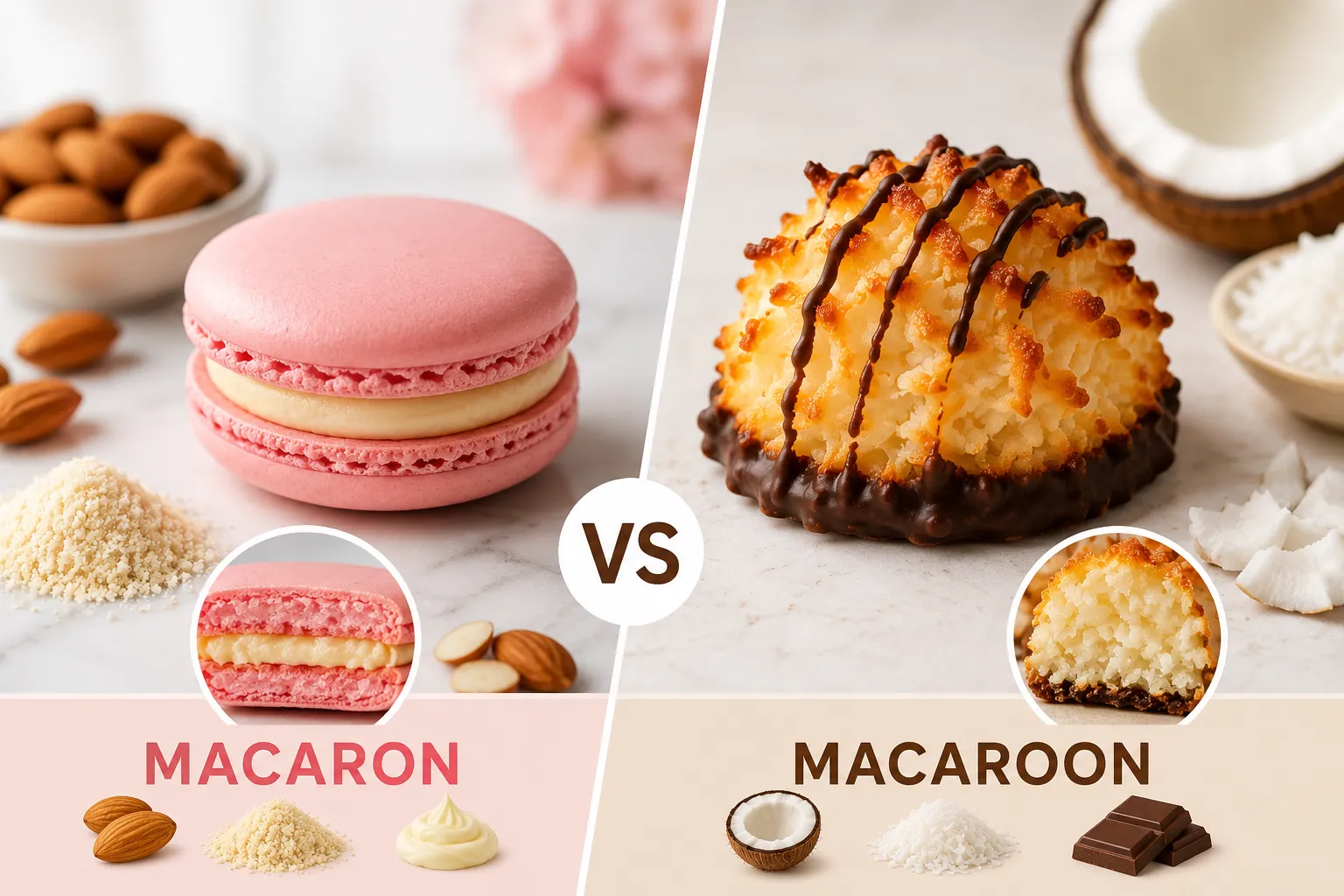
Macaron vs Macaroon refers to two different cookies that many people confuse because their names sound alike. A macaron is a colorful French sandwich cookie made with almond flour, while a macaroon is a chewy coconut cookie.
Have you ever stood in front of a bakery display and wondered if a macaron and a macaroon were the same thing? I have. The first time I visited a French bakery, I confidently asked for a “coconut macaron.” The baker smiled and gently explained that I was actually describing a macaroon. That small moment taught me that these two treats may have similar names, but they are very different.
Many people make the same mistake. It happens in bakeries, grocery stores, recipes, and even on social media. Since the words look and sound alike, it is easy to mix them up.
If you have ever searched for macaron vs macaroon, you are probably trying to learn the real difference. Maybe you want to order the right dessert, bake one at home, or simply avoid using the wrong word.
You are in the right place. This guide explains everything in simple language. By the end, you will know exactly what makes each cookie unique, when to use each name, and why the confusion has lasted for so many years.
Macaron vs Macaroon
The difference is simple.
A macaron is a delicate French cookie. It has two crisp almond shells with a creamy filling in the middle. They come in many bright colors and flavors.
A macaroon is a soft coconut cookie. It is made mainly with shredded coconut, egg whites, and sugar. Some are dipped in chocolate for extra flavor.
Real life examples
- You buy colorful cookies filled with raspberry cream from a French bakery. Those are macarons.
- You enjoy a chewy coconut cookie during a holiday celebration. That is a macaroon.
Although the names are similar, the ingredients, taste, and appearance are completely different.
The Origin and Background of Macaron vs Macaroon
The story behind these cookies is as interesting as their flavors.
The word macaron comes from the Italian word maccherone, which means a fine paste. This name referred to the almond paste used in early recipes. Italian bakers created the first version many centuries ago.
Later, the recipe traveled to France. French pastry chefs improved it by adding two light shells with a creamy filling between them. This is the elegant cookie we know today.
The macaroon has a different journey. It also started from early almond based recipes. Over time, coconut became easier to find in many countries. Bakers replaced almonds with shredded coconut, creating the chewy cookie now known as the macaroon.
Why do people confuse them?
There are several reasons.
- Their names are almost identical.
- Both cookies are sweet desserts.
- Both recipes originally shared similar roots.
- Many people hear the names before seeing the cookies.
- Online recipes sometimes use the wrong word.
Because of this history, confusion still exists today.
Macaron vs Macaroon Explained: Key Differences
Even though these cookies share part of their history, they are very different today.
Ingredients
A macaron uses:
- Almond flour
- Egg whites
- Sugar
- Buttercream, ganache, or jam filling
A macaroon uses:
- Shredded coconut
- Egg whites
- Sugar
- Sometimes vanilla or chocolate
Appearance
Macarons are small, smooth, and colorful. They have two shells with filling in the middle.
Macaroons are rough, rounded, and golden brown. They usually have a textured coconut surface.
Texture
A macaron has a crisp outside and a soft, chewy center.
A macaroon is chewy all the way through with strands of coconut in every bite.
Flavor
Macarons come in many flavors, such as:
- Vanilla
- Chocolate
- Pistachio
- Lemon
- Raspberry
- Coffee
- Salted caramel
Macaroons usually taste like:
- Coconut
- Vanilla
- Chocolate dipped coconut
- Almond
- Orange
Where you will find them
Macarons are common in:
- French bakeries
- Luxury dessert shops
- Weddings
- Afternoon tea
Macaroons are popular in:
- Home baking
- Holiday dessert trays
- Jewish celebrations
- Family gatherings
Comparison Table
| Term | Meaning | When to Use | Region/Context |
|---|---|---|---|
| Macaron | French almond sandwich cookie with filling | French desserts, bakeries, elegant events | France and worldwide |
| Macaroon | Coconut based chewy cookie | Holiday baking, homemade treats | United States, Europe, and many other countries |
Why the Difference Matters
You may wonder if using the wrong word really matters.
The answer is yes.
Imagine ordering a dozen macarons for a birthday party but receiving coconut cookies instead. Or imagine following the wrong recipe because the title used the incorrect name.
Knowing the difference helps you:
- Order the dessert you actually want.
- Follow recipes correctly.
- Speak with confidence in bakeries.
- Understand cooking shows and food blogs.
- Avoid common mistakes on social media.
Professional bakers also care about using the correct term. It shows knowledge, accuracy, and respect for each dessert’s history.
Fun Facts About Macarons and Macaroons
Learning becomes easier when you remember fun facts.
- Macarons are famous for their smooth tops and tiny “feet” around the bottom edge.
- A perfect macaron is considered one of the hardest cookies to bake.
- Macaroons are much easier for beginners because they need fewer ingredients.
- Chocolate dipped macaroons are especially popular during holidays.
- Many luxury bakeries sell macarons in gift boxes because of their colorful appearance.
- Coconut macaroons stay soft for several days, making them great for sharing.
These little facts make it easier to remember which cookie is which.
At this point, you already know the biggest difference between macarons and macaroons. In the next part, you’ll learn which one you should choose, the most common mistakes people make, real world examples, search trends, a second comparison table, seven FAQs, a conclusion, and an SEO friendly meta description.
Which Version Should You Use?
The right choice depends on what you mean.
- For food lovers: Use macaron when talking about the French sandwich cookie made with almond flour.
- For home bakers: Use macaroon when referring to the chewy coconut cookie.
- For bloggers and writers: Always use the correct name. It helps readers and improves trust.
- For global audiences: If you are unsure, add a short description. For example, “French macarons” or “coconut macaroons.”
Quick tip
Think of it this way:
- Macaron = Almond
- Macaroon = Coconut
This simple trick helps many people remember the difference.
Common Mistakes with Macaron vs Macaroon
Many people make these mistakes. The good news is they are easy to fix.
| Mistake | Correct Version | Why It Happens |
|---|---|---|
| Calling a colorful French cookie a macaroon | Call it a macaron | The names sound almost the same. |
| Calling a coconut cookie a macaron | Call it a macaroon | People often guess without knowing the ingredients. |
| Using both words as if they mean the same thing | Use the correct name for each cookie | They are different desserts. |
| Ordering the wrong dessert | Read the menu carefully | Bakery menus usually use the correct names. |
| Following the wrong recipe | Check the ingredient list first | Almond flour and coconut create different cookies. |
Remember, the easiest clue is the main ingredient. Almond means macaron. Coconut means macaroon.
Macaron vs Macaroon in Real World Examples
Here is how these words appear in everyday writing.
Professional Email
“Please prepare two dozen macarons in vanilla and pistachio flavors for Friday’s business event.”
News Headline
“Local Bakery Wins Award for Handmade Macarons.”
Social Media Post
“These chocolate dipped macaroons disappeared in minutes! I can’t wait to bake another batch.”
Formal Report
“Customer surveys showed that macarons were the most requested premium dessert during the holiday season.”
These examples show that each word has its own place. Using the correct one makes your writing clear and professional.
Macaron vs Macaroon: Data, Trends & Usage
Interest in macaron vs macaroon has grown over the last few years. More people search this topic because French bakeries, cooking shows, and social media have made macarons more popular around the world.
Search Intent
- Primary intent: Informational
- Secondary intent: Commercial, especially when people want to buy or bake these cookies.
Popular Regions
People often search this topic in:
- United States
- Canada
- United Kingdom
- Australia
- France
Who Searches Most?
- Home bakers
- Dessert lovers
- Students
- Food bloggers
- Travelers
- People ordering desserts online
Why This Matters Today
Online shopping and food delivery have made specialty desserts easier to buy. Knowing the difference helps you order the right treat, follow recipes correctly, and avoid confusion.
Macaron vs Macaroon Comparison Table
| Term/Variant | Meaning | Region/Context | Best Used When |
|---|---|---|---|
| Macaron | French sandwich cookie made with almond flour and filling | French bakeries, cafés, dessert shops | Ordering elegant French pastries |
| Macaroon | Chewy coconut cookie | Home baking, holiday desserts | Talking about coconut cookies |
| French Macaron | Premium version of the classic macaron | Worldwide | To clearly identify the French dessert |
| Chocolate Macaroon | Coconut macaroon coated in chocolate | Holiday baking | Referring to coconut based treats |
Frequently Asked Questions
Q: What does macaron mean?
A: A macaron is a French sandwich cookie made from almond flour, egg whites, and sugar. It has two delicate shells with a sweet filling between them.
Q: What does macaroon mean?
A: A macaroon is a chewy cookie made mainly with shredded coconut, egg whites, and sugar. Many versions are dipped in chocolate.
Q: Macaron vs macaroon: what’s the difference?
A: The biggest difference is the ingredients. Macarons use almond flour and have a creamy filling. Macaroons use coconut and do not have sandwich style layers.
Q: Is macaron the correct spelling?
A: Yes, if you are talking about the French almond cookie. If you mean the coconut cookie, the correct spelling is macaroon.
Q: Which version is correct: macaron or macaroon?
A: Both are correct. They simply describe different desserts. The correct choice depends on which cookie you are discussing.
Q: Where do macarons and macaroons come from?
A: Both have roots in early European baking traditions. The modern macaron became famous in France, while the coconut macaroon developed later as coconut became more widely available.
Q: Can I use macaron and macaroon interchangeably?
A: No. They refer to different cookies with different ingredients, textures, and appearances. Using the correct word avoids confusion.
Conclusion
The names macaron and macaroon may look alike, but they describe two very different desserts. A macaron is a colorful French cookie made with almond flour and a sweet filling. A macaroon is a chewy coconut cookie that is often baked for holidays and special occasions.
The easiest way to remember the difference is simple. Think almond equals macaron and coconut equals macaroon. This small trick can help you order desserts with confidence, choose the right recipe, and use the correct word in your writing.
Whether you are visiting a bakery, baking at home, or writing about desserts, knowing the right term makes a difference. It also helps you appreciate the unique history and flavor of each treat.
Now you know exactly how to tell a macaron from a macaroon. Bookmark this guide so you never mix them up again, and share it with anyone who has ever wondered which cookie is which.
Read more: Mediums or Media: The Complete Guide to Correct Usage

I have a background in academic writing and spent several years as a proofreader for digital publications. Spotting differences between easily confused words became second nature to me. At WordsCombo, I share that knowledge so readers can write with confidence.