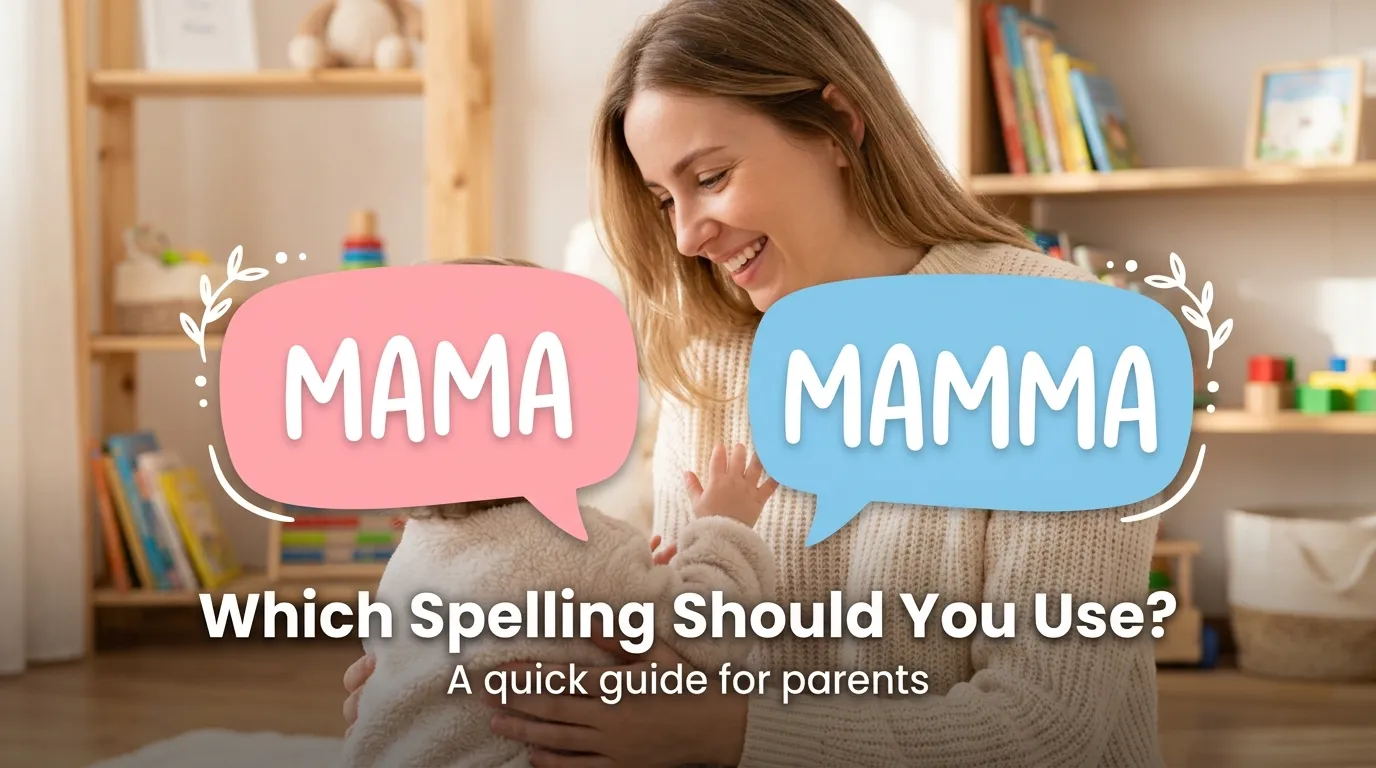
“Mama” and “mamma” both mean mother, but they are used in different places and styles. “Mama” is the most common spelling in modern English, while “mamma” is an older or regional spelling that still appears in British English, literature, and names.
A few years ago, I was editing a family story for a client. Everything looked perfect until I reached one small word: mama. Later in the story, the writer switched to mamma. They asked me a simple question: “Which one is actually correct?”
The answer surprised them. Both spellings are correct, but they are not always used in the same way.
Many people search for “mama or mamma” because they see different spellings in books, songs, social media, and everyday conversations. Some wonder if one spelling is a mistake. Others want to know which version sounds more natural in modern English.
The good news is that the difference is easy to understand once you know the history behind each word. By the end of this guide, you’ll know when to use mama, when mamma fits better, and how to avoid common mistakes in your writing.
Let’s begin with the basics.
Mama or Mamma: Quick Answer
Both mama and mamma are affectionate words for mother. Neither spelling is wrong.
In modern English:
- Mama is the most common spelling.
- Mamma is less common and often appears in British English, older books, family traditions, or famous names.
Simple Examples
- “My mama always made the best soup.”
- “The child ran to her mamma after school.”
Both sentences are correct. The choice depends on style and audience.
The Origin and Background of Mama or Mamma
The words mama and mamma have been around for centuries.
They both come from one of the first sounds that babies learn to make: “ma.” Babies across many languages naturally say sounds like ma, mama, or amma because they are easy to pronounce.
Over time, different languages created their own versions.
Some examples include:
- English – Mama
- Italian – Mamma
- Spanish – Mamá
- French – Maman
- German – Mama
- Hindi – Mama means maternal uncle, while Maa means mother
This shared history explains why the words look and sound similar around the world.
Why Are There Two Spellings?
English borrowed words from many languages over hundreds of years.
The spelling mamma became popular through Italian influence and older British writing.
Later, mama became the simpler and more common spelling, especially in American English.
Today, both spellings still exist, but they appear in different contexts.
Mama Explained: Key Differences
At first glance, mama and mamma look almost identical.
The biggest difference is style, location, and tradition rather than meaning.
| Term | Meaning | When to Use | Region/Context |
|---|---|---|---|
| Mama | Mother | Everyday writing and speech | Worldwide, especially American English |
| Mamma | Mother | Literature, family tradition, historical writing | British English, Italian influence |
| Mom | Mother | Informal everyday use | North America |
| Mum | Mother | Informal everyday use | United Kingdom, Australia, New Zealand |
| Mother | Parent | Formal writing and official situations | Worldwide |
Mama
Mama feels warm, friendly, and modern.
People often use it in:
- Conversations
- Children’s books
- Parenting blogs
- Songs
- Social media
Example
“My mama always believed in me.”
Mamma
Mamma has a classic or traditional feel.
You may find it in:
- Older novels
- Historical stories
- British literature
- Italian family settings
- Famous titles
Example
“The little girl hugged her mamma tightly.”
Is One More Correct?
No.
Both spellings are accepted.
The better choice depends on your audience and writing style.
Which Version Should You Use?
Choosing between mama and mamma is easier than most people think.
If you’re writing for a global audience
Choose Mama.
It is familiar to readers almost everywhere.
If you’re writing for American readers
Use Mama.
It is the standard spelling in modern American English.
If you’re writing for British readers
Both spellings work.
However, mamma may appear more often in classic books or older writing.
If you’re writing fiction
Think about your character.
A modern American child will probably say:
“Mama!”
A character in an old English novel might say:
“Mamma.”
The spelling helps create the right voice.
If you’re writing about Italian culture
Mamma often feels more authentic because it matches Italian spelling.
For example:
- Mamma mia!
- Italian family traditions
- Italian restaurants
- Cultural discussions
Quick Recommendations
| Audience | Best Choice | Why |
|---|---|---|
| Students | Mama | Easy and widely accepted |
| Bloggers | Mama | Familiar to most readers |
| Fiction writers | Depends on character | Matches the setting |
| Historians | Mamma when quoting older texts | Keeps historical accuracy |
| Global readers | Mama | Most recognised worldwide |
Why This Difference Still Matters
You might wonder why such a small spelling difference deserves attention.
The answer is simple.
Small word choices shape how readers see your writing.
Imagine reading these two lines:
“My mama taught me kindness.”
Now compare it with:
“My mamma taught me kindness.”
Both are correct.
Yet each creates a slightly different feeling.
Mama sounds modern, simple, and familiar.
Mamma feels older, softer, and sometimes more literary.
Writers use these tiny differences to build mood, character, and setting.
That is why authors, editors, teachers, and students still pay attention to this spelling choice.
Quick Comparison Table
| Term/Variant | Meaning | Region/Context | Best Used When |
|---|---|---|---|
| Mama | Mother | Modern English | Everyday writing |
| Mamma | Mother | British, literary, Italian influence | Historical or stylistic writing |
| Mom | Mother | United States and Canada | Casual conversation |
| Mum | Mother | UK, Australia, New Zealand | Everyday British English |
| Mother | Female parent | Formal and official | Professional or academic writing |
Common Mistakes with Mama and Mamma
Even though both spellings are correct, writers often make small mistakes. Here are the most common ones and how to fix them.
| Mistake | Correct Version | Why It Happens |
|---|---|---|
| Mixing mama and mamma in the same article | Pick one spelling and stay consistent | Switching styles confuses readers. |
| Thinking mamma is always wrong | Both are correct | Many people only know the American spelling. |
| Using mamma in modern business writing | Use mama or mother, depending on the context | Mamma can sound old-fashioned. |
| Capitalising every use | Use Mama only as a name | Common nouns stay lowercase unless they replace a person’s name. |
| Confusing mama with mamma mia | They are different expressions | Mamma mia is an Italian exclamation, not simply another spelling. |
Capitalisation Examples
Correct:
- I love my mama.
- Mama, can you help me?
- She called her mamma every Sunday.
- Mamma, dinner is ready.
Incorrect:
- I love my Mama. (unless “Mama” is being used as her name)
Mama and Mamma in Real World Examples
Seeing words in context makes them easier to understand. Here are four common situations.
Professional Email
Dear Sarah,
Thank you for organising the Mother’s Day event. My mama was touched by the thoughtful activities, and our family had a wonderful time.
Best regards,
Emily
Here, mama sounds warm and personal while the rest of the email remains professional.
News Headline
Local Mama Opens Community Kitchen for Families in Need
A newspaper may use Mama as part of a nickname or brand because it feels friendly and memorable.
Social Media Post
My mama always says, “Be kind even when nobody is watching.” ❤️
This feels natural because social media often uses everyday language.
Formal Report
The participant referred to her mother during the interview.
In formal reports, mother is usually the better choice. Mama or mamma may appear only if they are direct quotations.
Mama or Mamma in Books, Music, and Culture
The two spellings also appear in popular culture.
You may notice mamma in:
- Classic British novels
- Italian stories
- Stage productions
- Traditional family sayings
You will often see mama in:
- Parenting blogs
- Children’s books
- Country and folk songs
- Modern novels
- Everyday conversations
Neither spelling is better. Each creates a slightly different feeling for the reader.
Mama Usage, Trends, and Why It Matters
Language changes over time, and spelling often follows those changes.
Today, mama is the spelling most people expect in modern English. It appears frequently in online articles, parenting websites, blogs, and social media because it is simple and familiar.
Mamma remains common in certain situations:
- British and Irish literature
- Historical writing
- Italian cultural references
- Family traditions
- Well-known names and expressions
Search Intent
People searching “mama or mamma” usually have informational intent.
They want answers such as:
- Which spelling is correct?
- Is one British and one American?
- Which should I use in my writing?
- Are both accepted by dictionaries?
- Does one sound more formal?
Why This Topic Still Matters
A single letter can change the tone of your writing.
Choosing the right spelling helps your work feel natural to your readers. It also shows attention to detail, whether you’re writing a school essay, a blog post, or a family story.
Standalone Comparison Table
| Term/Variant | Meaning | Region/Context | Best Used When |
|---|---|---|---|
| Mama | Mother | Modern English worldwide | Everyday writing and conversation |
| Mamma | Mother | British English, literature, Italian influence | Historical, literary, or cultural writing |
| Mom | Mother | United States, Canada | Informal North American English |
| Mum | Mother | United Kingdom, Australia, New Zealand | Informal British English |
| Mother | Female parent | Global | Formal writing, legal documents, reports |
Frequently Asked Questions
Q: What does “mama” mean?
A: Mama is an affectionate word for mother. Children and adults use it to show love, comfort, or closeness.
Q: How do you use “mama” correctly?
A: Use mama when writing informally or speaking naturally. Capitalise it only when it replaces a person’s name, such as “Thanks, Mama.”
Q: Mama vs. mamma what’s the difference?
A: Both words mean mother. Mama is more common in modern English, while mamma often appears in older writing, British English, or Italian contexts.
Q: Is “mamma” acceptable in formal writing?
A: Yes, but only when it fits the context, such as a quotation, a historical text, or a person’s preferred spelling. Otherwise, mother is usually the best formal choice.
Q: Which version is correct mama or mamma?
A: Both are correct. Choose mama for modern everyday English and mamma when you want a traditional, literary, or culturally specific style.
Q: Where do these words come from?
A: They developed from one of the first sounds babies naturally make: “ma.” Similar words exist in many languages around the world, which is why they look and sound alike.
Q: Can “mama” be used in professional writing?
A: Yes, if it appears in a personal story, interview, quotation, or brand name. For official documents or academic writing, mother is usually the better choice.
Conclusion
The debate over mama or mamma is much simpler than it first appears. Both spellings are correct, and both express affection for a mother. The real difference lies in style, audience, and tradition.
If you’re writing for a modern audience, mama is usually the safest and most familiar choice. It feels natural in everyday conversation, blog posts, children’s books, and personal writing.
If you’re writing historical fiction, discussing Italian culture, or quoting older literature, mamma may be the better fit. It adds a traditional touch without changing the meaning.
When you’re unsure, ask yourself one question: Who will read this? Your audience will often tell you which spelling sounds most natural.
Language is full of small choices like this. Understanding them makes your writing clearer and more confident.
Now you know exactly when to use mama and when mamma fits better. Bookmark this guide for future reference, and share it with anyone who has ever wondered which spelling is correct.
Read more: Lens or Lense: Easy Guide to Correct Usage

I started writing about English word differences after years of teaching students who kept making the same mistakes. My focus is on making spelling rules feel simple and easy to remember. At WordsCombo, I turn confusing word pairs into clear comparisons.

1 thought on “Mama or Mamma: Which Spelling Should You Use?”