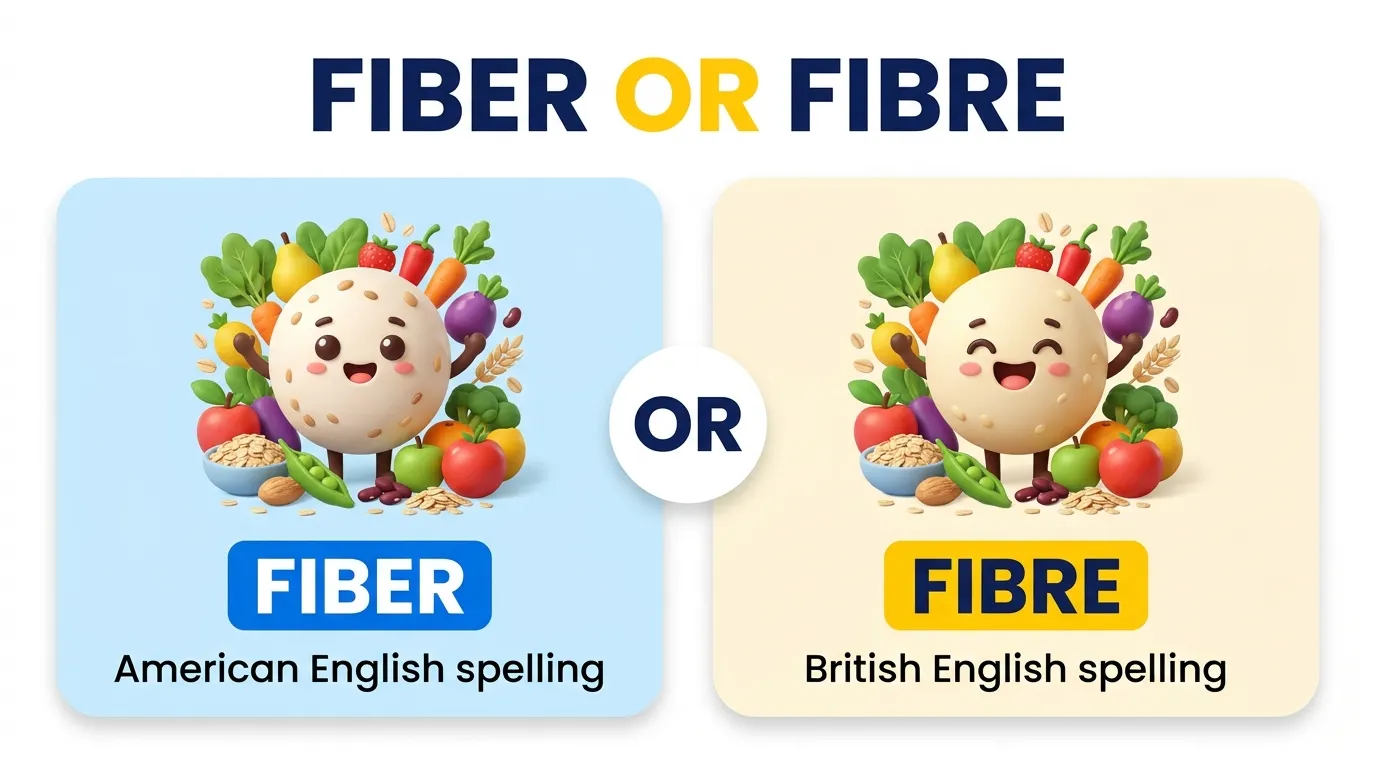
Fiber is the correct American English spelling, while fibre is the standard British English spelling. Both words have the same meaning.
When writing a food label, school paper, or work email, you may pause over is it fiber or fibre? Both spellings look right, but which one should you choose? The answer depends on your audience. Fiber is used in American English, while fibre is common in British English, Canadian English, and other varieties. Both refer to thin threads or plant parts that help with digestion. This guide explains the difference, shares easy examples, and helps you pick the right spelling every time.
Is It Fiber or Fibre: Quick Answer
Fiber is the correct spelling in American English. Fibre is the preferred spelling in British English.
Both words have the same meaning. They can refer to plant material, tiny threads, or a part of food that helps your body digest it.
Examples:
- This cereal is rich in fiber. (American English)
- Fresh fruits contain plenty of fibre. (British English)
So, if you are writing for readers in the United States, choose fiber.
The Origin of Fiber and Fibre
The word fiber has a long history. It comes from the Latin word fibra, which means a thread, filament, or part of the body.
The word entered English through French. Over time, people used it to describe thin parts of plants, animals, and other materials.
However, the two spellings became linked to different forms of English.
American spelling began to favor words ending in -er instead of -re. For example, Americans write center instead of centre and theater instead of theatre.
British English kept the older -re form. As a result, both fiber and fibre became accepted spellings in different regions.
The spelling changed, but the meaning stayed the same.
Is It Fiber or Fibre: Understanding the Key Differences
The main difference between fiber and fibre is where each spelling is used.
Both words are nouns. They describe the same things and have the same pronunciation in most English-speaking regions.
Here is a closer look at their use.
What Does Fiber Mean?
Fiber is the American English spelling.
It can describe thin threads found in plants, cloth, and other materials. It also refers to the part of plant foods that helps keep your digestive system healthy.
For example:
- Beans are a good source of dietary fiber.
- Cotton fiber is used to make clothes.
- A healthy diet needs enough fiber.
In the United States, you will see this spelling on food labels, health websites, and school materials.
What Does Fibre Mean?
Fibre is the British English spelling.
It has the same meaning as fiber. The extra letter E does not change how the word is used.
For example:
- Whole grains contain natural fibre.
- Cotton fibre is used to make soft fabric.
- A healthy diet should include enough fibre.
This spelling is common in the United Kingdom, Australia, and many other countries that follow British English.
Fiber vs Fibre: Main Differences
| Feature | Fiber | Fibre |
| Meaning | Thin thread or plant material | Thin thread or plant material |
| Spelling | American English | British English |
| Pronunciation | FYE-ber | FYE-ber |
| Dietary use | Dietary fiber | Dietary fibre |
| Plural | Fibers | Fibres |
| Main region | United States | UK, Australia, Canada, and other regions |
Both forms are correct. However, your choice should match the English style you are using.
Which One Should You Use?
Your audience is the easiest way to choose between fiber and fibre.
Here are some simple rules to follow.
- For American readers: Use fiber because it follows standard American spelling.
- For British readers: Choose fibre because it follows British spelling rules.
- For Australian readers: Use fibre because Australian English generally follows British spelling.
- For Canadian readers: Both forms are recognized, but fibre is commonly preferred in Canadian writing.
- For international readers: Pick one spelling style and use it throughout your content.
If you write blog posts for a USA audience, use fiber in your title, headings, body text, and examples.
However, if you quote an official product name or text that uses fibre, keep its original spelling.
Consistency makes your writing clear and professional.
Common Mistakes with Fiber and Fibre
Writers often mix these spellings without knowing that they belong to different English styles.
Here are some common mistakes and how to fix them.
Using Both Spellings in One Article
Mistake: This food contains fiber, and it is rich in fibre.
Correction: This food contains fiber, and it is rich in fiber.
Why does this happen? Writers may switch between American and British spelling without noticing. Therefore, choose one style before you start writing.
Thinking the Words Have Different Meanings
Mistake: Fiber is used in food, but fibre only refers to cloth.
Correction: Both words can describe dietary material, cloth threads, and other thin structures.
The difference is spelling, not meaning. So, you can use either form when the regional spelling is right.
Writing Fibre for a USA Audience
Mistake: This cereal contains 8 grams of fibre.
Correction: This cereal contains 8 grams of fiber.
American readers expect the spelling with ER. Therefore, use fiber in USA-focused articles and food labels.
Changing the Spelling in a Product Name
Mistake: Changing an official product name from Fibre to Fiber.
Correction: Keep the spelling used in the original brand or product name.
This matters because names should stay the same. However, you can use your preferred regional spelling in the rest of your writing.
Using the Wrong Plural Form
Mistake: These foods contain many fibres. (When referring to dietary fiber in general.)
Correction: These foods contain plenty of fiber.
The plural forms are fibers and fibres, but dietary fiber is usually treated as an uncountable noun.
Fiber or Fibre in Real-World Examples
Seeing both spellings in everyday writing makes the difference easier to understand.
Here are some examples from common situations.
Professional Email
Subject: Healthy Food Options
Hi Sarah,
I have added more high-fiber foods to the weekly meal plan. These choices include beans, oats, and fresh fruit.
Best regards,
Alex
News Headline
American English: New Study Highlights the Benefits of Dietary Fiber
British English: Healthy Eating: Why Dietary Fibre Matters
Both headlines use the correct regional spelling.
Social Media Post
Looking for a simple way to improve your meals? Add more fiber with fruits, vegetables, beans, and whole grains!
Formal Document
American English: The recommended diet includes foods that are rich in dietary fiber.
British English: The recommended diet includes foods that are rich in dietary fibre.
Food Packaging
American English: High in Dietary Fiber
British English: High in Dietary Fibre
Food labels follow the spelling rules used in their target market.
Fiber or Fibre: Data, Trends and Usage
The search phrase is it fiber or fibre shows a common spelling question. People want to know which form is correct and whether the two words have different meanings.
This question is useful for several groups of readers.
Who Searches for Fiber or Fibre?
Different people may look up this spelling difference.
- Students: They want to use the right spelling in schoolwork.
- Content writers: They need to match the spelling style of their target audience.
- Health readers: They see both forms on food labels and health pages.
- Editors: They want to keep spelling consistent in published work.
- English learners: They want to understand American and British spelling rules.
What Is the Search Intent?
Most searches have an informational purpose. People want a quick answer about the correct spelling.
Some readers also want to know the meaning, pronunciation, origin, and regional differences.
For example, a USA reader may search for fiber vs fibre before writing a blog post. Meanwhile, a student in the UK may want to know why American websites use fiber.
Why Does This Difference Matter?
English is used in many countries, but spelling rules are not always the same.
As more people read content from around the world, spelling differences become easier to notice. However, they do not mean that one form is wrong.
For USA websites, using fiber helps match local writing standards. On the other hand, using fibre makes sense for British audiences.
The best approach is simple: understand your readers and stay consistent.
Fiber or Fibre: Comparison at a Glance
Here is a quick table to help you remember the difference.
| Term/Variant | Meaning | Region/Context | Best Used When |
| Fiber | Thin thread or plant material | American English | Writing for USA readers |
| Fibre | Thin thread or plant material | British English | Writing for UK readers |
| Dietary fiber | Plant material that supports digestion | American English | Writing about food and health |
| Dietary fibre | Plant material that supports digestion | British English | Writing for British audiences |
| Fiber-rich | Rich in dietary fiber | American English | Describing healthy foods |
| Fibre-rich | Rich in dietary fibre | British English | Describing healthy foods |
Remember, the meaning stays the same across both forms.
Frequently Asked Questions
Is fiber or fibre correct in English?
Both fiber and fibre are correct English spellings. Fiber is standard in American English, while fibre is standard in British English. The right choice depends on your audience.
What is the difference between fiber and fibre?
There is no difference in meaning between these words. The only difference is their spelling. Fiber is used in American English, while fibre is used in British English.
Is fiber the American or British spelling?
Fiber is the American spelling. It is used in the United States for food, clothing materials, and other meanings of the word. British English uses fibre instead.
Is fibre acceptable in American English?
Yes, readers in the United States can understand the spelling fibre. However, fiber is the standard choice in American writing. Therefore, use fiber in USA schoolwork, business writing, and blog posts.
Why do Americans spell fibre as fiber?
American English changed some older word endings from -re to -er. This spelling style became common in words such as center, theater, and fiber. British English kept the -re ending.
Is it dietary fiber or dietary fibre?
Both forms are correct. Use dietary fiber when writing for American readers, and use dietary fibre for British readers. Both refer to the plant material that helps support healthy digestion.
How do you spell fiber in Canada?
Both spellings may be understood in Canada, but fibre is the commonly preferred Canadian form. If you are writing for a Canadian audience, fibre is a suitable choice. Always follow the style guide of the publication.
Final Thoughts on Is It Fiber or Fibre
The choice between fiber and fibre is simple once you know the regional rules. Both words have the same meaning, but their spelling depends on the type of English you use. American English prefers fiber, while British English prefers fibre.
For USA readers, always choose fiber. If your audience is in the UK or Australia, use fibre instead. Also, keep the same spelling throughout your article, email, or report.
Now you can use both forms with confidence. Before publishing your next piece of content, check your target audience and choose the spelling that fits. A small spelling choice can make your writing clearer!
Curious about more confusing English words? Explore Criticising or Criticizing.

I studied English literature and have spent years editing content for blogs and digital platforms. I noticed most people struggle with choosing between two similar words. At WordsCombo, I make that choice simple and clear.