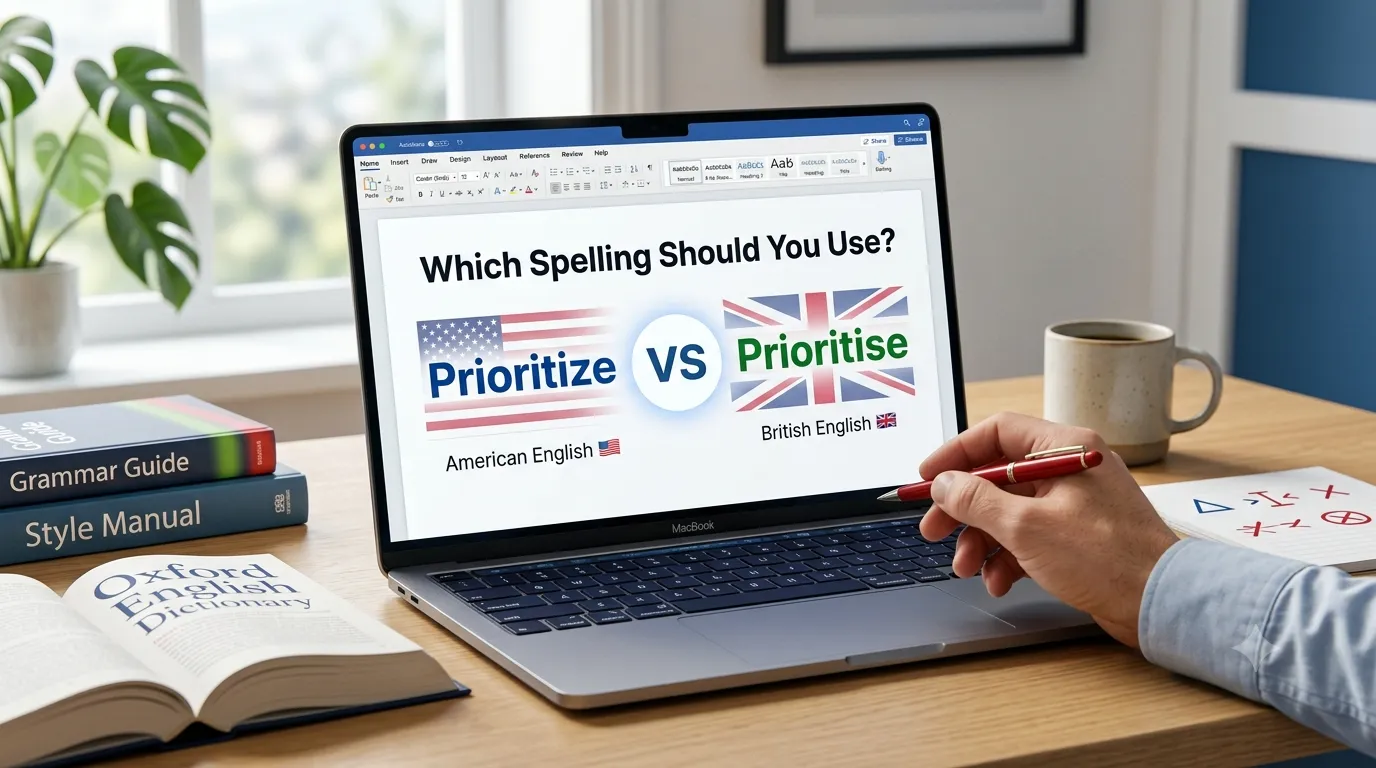
Prioritize and prioritise have the same meaning. Prioritize is the preferred American English spelling, while prioritise is the standard British English spelling.
A few years ago, I was editing a blog post for an international client. Everything looked perfect until I noticed something odd. Half the article used prioritize, while the other half used prioritise. Neither spelling was wrong, but mixing them made the writing look inconsistent.
Many English learners and even experienced writers face this same problem. If you’ve ever wondered whether you should write prioritize or prioritise, you’re not alone. The confusion comes from the difference between American and British English rather than grammar or meaning.
The good news is that the answer is simple. Once you know where each spelling belongs, you’ll never have to guess again.
In this guide, you’ll learn the meaning of both spellings, their history, the differences between them, real-world examples, common mistakes, and tips for choosing the right version with confidence.
Prioritize or Prioritise: Quick Answer
Both prioritize and prioritise mean to decide what is most important and deal with it first.
The only real difference is the spelling.
Examples:
- American English: You should prioritize your health.
- British English: You should prioritise your health.
The meaning stays exactly the same.
The Origin of Prioritize and Prioritise
The word comes from priority, which entered English from French and ultimately traces back to the Latin word prior, meaning earlier or more important.
As English developed, writers added the verb ending to create prioritize/prioritise, meaning to arrange tasks by importance.
The spelling difference appeared because American English usually prefers -ize, while British English commonly uses -ise for many verbs.
This is the same pattern you see in words like:
- Organize / Organise
- Recognize / Recognise
- Realize / Realise
That is why both spellings exist today.
Prioritize vs Prioritise Explained
Although they look different, they carry the same meaning.
| Term | Meaning | When to Use | Region |
|---|---|---|---|
| Prioritize | Arrange by importance | American English writing | United States |
| Prioritise | Arrange by importance | British English writing | UK, Australia, New Zealand, many Commonwealth countries |
Examples
American English:
We must prioritize customer satisfaction.
British English:
We must prioritise customer satisfaction.
Business report:
Managers should prioritize projects with the highest impact.
UK newspaper:
Schools should prioritise student wellbeing.
Which Version Should You Use?
The best spelling depends on your audience.
Use Prioritize if you write for:
- American readers
- US businesses
- American universities
- US-based websites
- Most international technology companies
Use Prioritise if you write for:
- British readers
- UK companies
- Australian audiences
- New Zealand publications
- Many Commonwealth organizations
For Global Audiences
If you’re writing for people worldwide, either spelling is acceptable. The most important rule is stay consistent.
Don’t switch between prioritize and prioritise in the same article or document.
Common Mistakes
Here are mistakes writers often make.
| Mistake | Correct |
|---|---|
| Mixing both spellings in one article | Choose one spelling and use it throughout |
| Thinking one spelling is incorrect | Both are correct depending on region |
| Using British spelling for US clients | Use prioritize |
| Using American spelling in UK publications without checking style | Use prioritise if required |
| Assuming pronunciation changes | Both are pronounced the same way |
Why These Mistakes Happen
Many websites, spell checkers, and writing tools default to American English. That can confuse writers working with British English.
Always check your client’s style guide or your publication’s preferred language.
Prioritize or Prioritise in Real World Examples
Professional Email
Please prioritize the customer support tickets before the weekly meeting.
News Headline
Government to prioritise healthcare funding this year.
Social Media Post
Today’s goal: Prioritize what matters most and stop worrying about the rest.
Business Report
We recommend prioritizing high-value projects during the first quarter.
Prioritize or Prioritise: Data, Trends & Usage
Search interest for prioritize is much higher worldwide because American English dominates online content.
However, prioritise remains the preferred spelling in:
- United Kingdom
- Australia
- New Zealand
- Ireland
- Many Commonwealth countries
Search Intent
Most people searching prioritize or prioritise want to know:
- Which spelling is correct
- Whether both words are acceptable
- Which version they should use
- The difference between American and British English
Why This Matters Today
Many people write for international audiences. Using the right spelling improves professionalism and keeps your writing consistent.
Quick Comparison Table
| Term/Variant | Meaning | Region/Context | Best Used When |
|---|---|---|---|
| Prioritize | Arrange tasks by importance | American English | Writing for US readers |
| Prioritise | Arrange tasks by importance | British English | Writing for UK and Commonwealth readers |
Tips to Remember the Difference
A simple memory trick can help.
- Z = USA → Prioritize
- S = Britain → Prioritise
If you’re writing for Americans, choose Z.
If you’re writing for British readers, choose S.
FAQs
Q: What does prioritize or prioritise mean?
Both words mean to decide what is most important and deal with those tasks first.
Q: Is prioritize or prioritise correct?
Yes. Both spellings are correct. The choice depends on whether you’re using American or British English.
Q: What is the difference between prioritize and prioritise?
There is no difference in meaning. The only difference is regional spelling.
Q: Which spelling should I use in formal writing?
Use the spelling that matches your audience or your organization’s style guide. Both are accepted in formal writing.
Q: Is prioritize more common?
Yes. Prioritize appears more often online because American English has a larger global influence.
Q: Where does the word come from?
It comes from the noun priority, which ultimately comes from the Latin word prior, meaning earlier or more important.
Q: Can I use prioritize in business writing?
Absolutely. It is widely used in emails, reports, presentations, project management, education, and professional communication.
Conclusion
Choosing between prioritize and prioritise is much easier than it first appears. Both spellings are correct, both have the same meaning, and both are accepted in professional writing. The only difference is the variety of English you’re using.
If your audience is in the United States, use prioritize. If you’re writing for readers in the United Kingdom, Australia, New Zealand, or other Commonwealth countries, prioritise is usually the better choice. For international audiences, consistency matters more than the specific spelling you choose.
Whenever you’re unsure, check your style guide or think about who will read your content. That small step makes your writing look polished and professional.
Now you know exactly when to use prioritize and prioritise. Bookmark this guide, share it with another writer, and never second-guess this spelling again.
Read more: Flavour or Flavor: Correct Spelling & Usage Guide

I studied English literature and have spent years editing content for blogs and digital platforms. I noticed most people struggle with choosing between two similar words. At WordsCombo, I make that choice simple and clear.