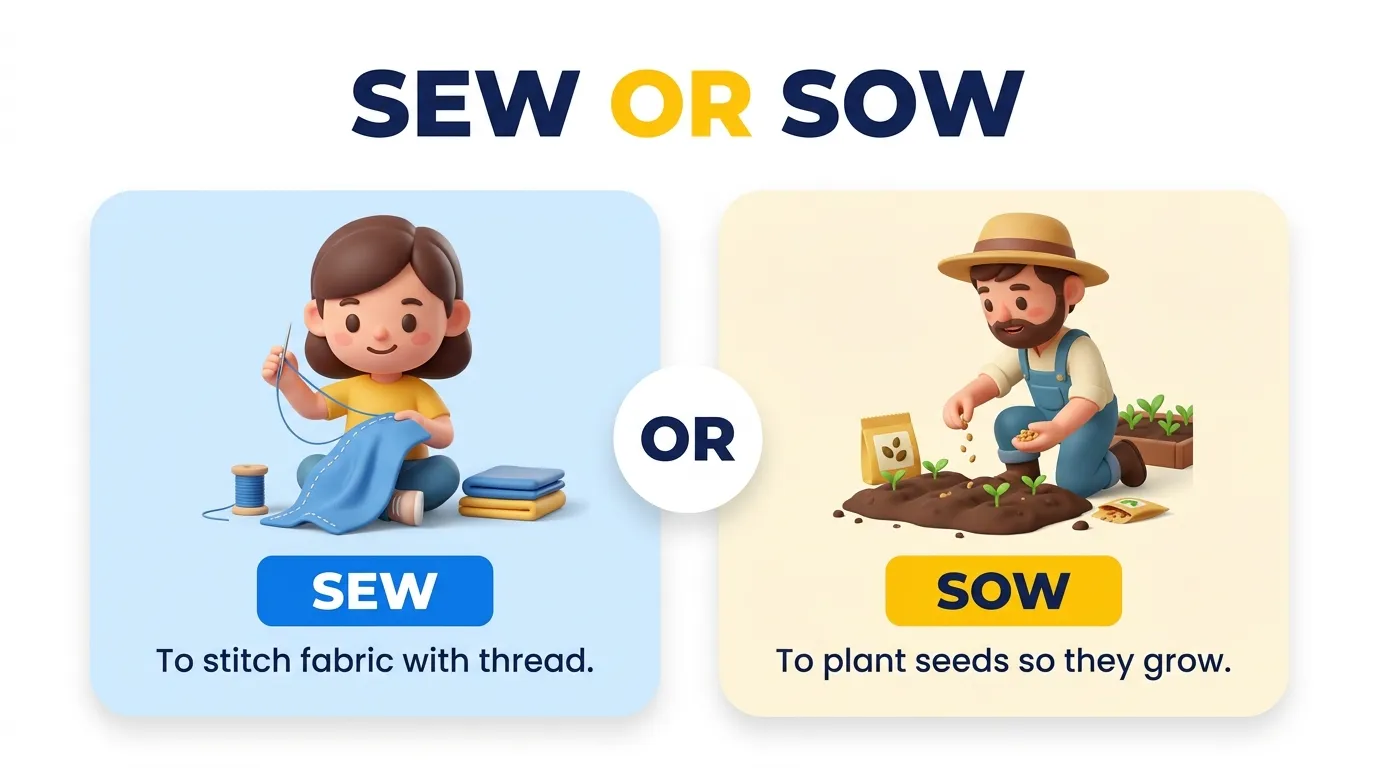
Sew means to join fabric with a needle and thread. Sow means to plant seeds in the ground. Both words sound the same, but they have different meanings and uses.
Imagine writing an email about a school garden or a dress you want to fix. You type “sew the seeds” and notice a red line under the word. Should it be sew or sow? This spelling mix-up is common because both words sound alike. However, their meanings are easy to tell apart. Sew is about stitching cloth, while sow is about planting seeds. Once you learn this simple difference, you can pick the right word in emails, schoolwork, and everyday writing.
Sew or Sow: Quick Answer
Use sew when you join cloth with a needle and thread. Use sow when you put seeds into soil so plants can grow.
For example:
- Mom will sew a button onto my shirt.
- We will sow tomato seeds in the garden.
Both words are correct English words. However, you cannot swap them because they describe different actions.
The Origin of Sew or Sow
The words sew and sow have old roots in the English language. Their similar sounds make them easy to mix up, but their meanings grew from different actions.
Sew comes from an old English word linked to stitching and joining things with thread. It has long been used for making clothes, fixing torn fabric, and creating items from cloth.
Sow comes from an old English word that means to scatter or plant seeds. Farmers have used this word for generations when talking about growing crops.
Interestingly, the two words sound alike in modern English. This makes them examples of homophones, words that sound the same but have different meanings and spellings.
Sew or Sow Explained: Key Differences
The main difference is simple. Sew is about cloth, while sow is about seeds.
What Does Sew Mean?
Sew is a verb that means to join or fix fabric with a needle and thread. You can sew clothes, bags, buttons, or small holes in a shirt.
For example, a tailor may sew a new dress for a customer. You can also sew a loose button back onto your coat.
The past tense is sewed. The word sewn is also used as a past participle, as in “The dress was sewn by hand.”
What Does Sow Mean?
Sow is a verb that means to plant or scatter seeds in the ground. People sow seeds to grow flowers, fruits, vegetables, and crops.
For example, a farmer may sow wheat seeds in a field. You might also sow flower seeds in a small garden at home.
The past tense is sowed. The word sown is often used as a past participle, as in “The seeds were sown in spring.”
Sew vs. Sow at a Glance
| Term | Meaning | When to Use | Region/Context |
| Sew | Join fabric with thread | Fixing clothes or making garments | Standard English |
| Sow | Plant or scatter seeds | Gardening and farming | Standard English |
| Sewed | Past tense of sew | Talking about finished stitching | Standard English |
| Sewn | Past participle of sew | Describing something stitched | Standard English |
| Sowed | Past tense of sow | Talking about planting seeds | Standard English |
| Sown | Past participle of sow | Describing seeds already planted | Standard English |
Which One Should You Use?
Choosing between sew or sow depends on what you want to say. Think about the action in your sentence before you pick a spelling.
- For clothing and crafts, use sew because it means to stitch fabric with thread.
- For gardening and farming, use sow because it means to plant seeds.
- For schoolwork and formal writing, use the word that matches the action, since both spellings are correct.
- For everyday messages, read the full sentence to check whether you mean stitching or planting.
Here is an easy memory trick: Sew has an e, like needle. Sow has an o, like grow. This simple link can help you remember the difference.
For example, write “I will sew my dress” when you plan to stitch it. However, write “I will sow flower seeds” when you plan to grow flowers.
Common Mistakes with Sew or Sow
These words sound alike, so it is easy to choose the wrong one. However, a quick check of the meaning can help you avoid common errors.
Mistake: Writing Sew the Seeds
Incorrect: I will sew the seeds in the garden.
Correct: I will sow the seeds in the garden.
The mistake happens because both words sound the same. Since seeds go into the soil, sow is the right choice.
Mistake: Writing Sow a Button
Incorrect: She will sow a button onto her coat.
Correct: She will sew a button onto her coat.
A button is attached with thread, so sew is correct. Remember, sow is used for planting seeds.
Mistake: Mixing Up Se w and Sow in Past Tense
Incorrect: He sowed a tear in his shirt.
Correct: He sewed a tear in his shirt.
The past tense of sew is sewed, while the past tense of sow is sowed. Therefore, use sewed when talking about stitching and sowed when talking about planting.
Mistake: Using the Wrong Word in Schoolwork
Incorrect: The farmer will sew wheat this spring.
Correct: The farmer will sow wheat this spring.
Farmers plant seeds to grow crops. As a result, sow is the correct word in this sentence.
Mistake: Thinking One Word Is More Correct
Some writers think sew is the correct spelling and sow is a mistake. However, both words are correct English words with different meanings.
Instead of judging the spelling alone, look at the full sentence. That way, you can choose the word that says what you mean.
Sew or Sow in Real World Examples
Real examples make the difference easier to remember. Here is how you can use both words in different types of writing.
Professional Email
“I will sew the loose buttons onto the uniforms before Friday.”
This sentence works because the task involves attaching buttons with thread. In a work email, the word clearly explains the job.
News Headline
“Local Farmers Sow Wheat Seeds Ahead of Spring.”
The word sow fits because farmers are planting seeds. As a result, readers know what the farmers are doing.
Social Media Post
“Time to sew a new dress for the weekend!”
This post is about making clothes with a needle and thread. You could also write, “Time to sow some flower seeds and brighten up the garden!”
Formal Document
“The team will sew the fabric panels together before the final inspection.”
Here, sew describes joining pieces of fabric. In a farming report, however, you might write, “The farm will sow corn seeds in early spring.”
Everyday Conversation
“My grandmother taught me how to sew a small hole in my jeans.”
This sentence uses sew because it describes fixing clothes. Meanwhile, “My father taught me how to sow vegetable seeds” describes planting.
Sew or Sow: Data, Trends and Usage
People often search for sew or sow when they are unsure which spelling belongs in a sentence. This is a spelling and word meaning search, rather than a search for a product or service.
The topic matters to several groups:
- Students want to spell words correctly in homework and tests.
- English learners want to understand words that sound alike.
- Writers and editors want clear, correct sentences.
- Gardeners and farmers use sow when talking about seeds and crops.
- People who sew use sew when talking about clothes and fabric.
Because the two words sound alike, listening alone may not help you choose the right spelling. Context is the key.
Another useful point is that sow can also mean to spread or start something, such as doubt or fear. For example, “His words sowed doubt among the team.” This wider meaning makes sow useful beyond gardening.
There is no need to guess based on which word looks right. Instead, focus on the action described in your sentence.
Sew or Sow: Comparison at a Glance
| Term or Variant | Meaning | Region or Context | Best Used When |
| Sew | Stitch fabric with thread | Standard English | Making or fixing clothes |
| Sow | Plant seeds in soil | Standard English | Growing plants or crops |
| Sewed | Past tense of sew | Standard English | Describing a past sewing task |
| Sewn | Past participle of sew, also used as a past form | Standard English | Describing stitched fabric |
| Sowed | Past tense of sow | Standard English | Describing a past planting task |
| Sown | Past participle of sow | Standard English | Describing seeds that have been planted |
The table shows that both main words are correct. However, their meanings and word forms depend on the action and the sentence.
Frequently Asked Questions
Is it sew or sow?
Both sew and sow are correct words, but they have different meanings. Use sew for stitching fabric and sow for planting seeds.
What is the difference between sew and sow?
Sew means to join or fix fabric with a needle and thread. Sow means to plant or scatter seeds so they can grow.
How do you use sew in a sentence?
You use sew when you talk about stitching clothes or other fabric. For example, “I will sew a patch onto my jacket before winter.”
How do you use sow in a sentence?
You use sow when you talk about planting seeds. For example, “We will sow carrot seeds in the garden this weekend.”
Is sew or sow correct in formal writing?
Both words are correct in formal writing, but the meaning must fit the sentence. For example, use sew in a clothing report and sow in a farming report.
Why do sew and sow sound the same?
The verb forms of sew and sow sound alike in many English accents. They are called homophones because they share a pronunciation but have different spellings and meanings.
What is the past tense of sew and sow?
The past tense of sew is sewed, while the past tense of sow is sowed. Their past participles are often sewn or sewed for sew, and sown for sow.
Final Thoughts on Sew or Sow
Choosing between sew or sow becomes easy when you focus on the meaning. Use sew when you stitch clothes, attach buttons, or fix fabric. On the other hand, use sow when you plant seeds in a garden or field. Both words are correct, so the key is knowing what action you want to describe.
Remember this simple rule: sew is for stitching, and sow is for growing. Also, keep their past forms in mind, sewed and sewn for sew, and sowed and sown for sow. These small details can make your writing clearer.
Now, before you send that email or finish your homework, check the meaning once more. Practice with your own sentences, and you will soon choose the right word with confidence!
Curious about other tricky words? Explore Latter or Ladder.

I have a background in academic writing and spent several years as a proofreader for digital publications. Spotting differences between easily confused words became second nature to me. At WordsCombo, I share that knowledge so readers can write with confidence.