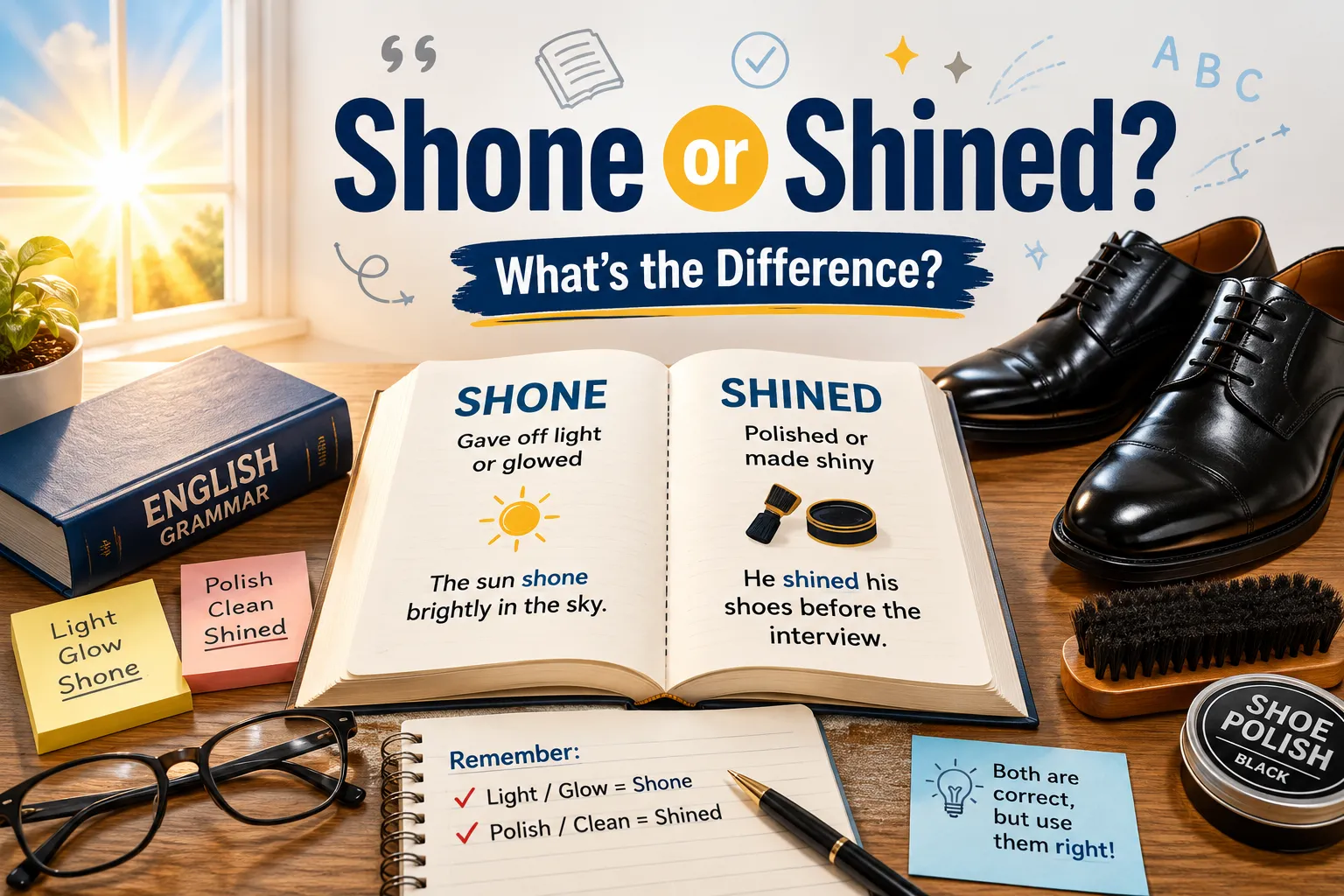
✨ Shone is usually the past tense of shine when talking about giving off light, while shined is commonly used when someone polishes or shines an object. 💡 Think: light = shone, polish = shined.
I still remember reading a student’s essay that said, “The sun shined brightly over the hills.” It looked perfectly fine at first. Then another student wrote, “The sun shone brightly over the hills.” That small difference started a lively classroom discussion.
If you’ve ever stopped while writing and wondered whether shone or shined is correct, you’re not alone. Many native English speakers pause over this choice too. The confusion comes from the fact that both words are correct, but they fit different situations.
By the end of this guide, you’ll know exactly when to use shone and when shined is the better choice. You’ll also see simple examples, common mistakes, and easy tips that will help you remember the difference forever.
Shone or Shined
Both shone and shined are accepted past tense forms of shine.
Use shone when something gives or reflects light.
Examples:
- The stars shone all night.
- Her smile shone with happiness.
Use shined when someone polishes or makes something shiny.
Examples:
- He shined his shoes before the interview.
- She shined the silver cups.
A simple trick is this:
- Light = Shone
- Polish = Shined
The Origin and Background of Shone or Shined
The verb shine comes from Old English scīnan, meaning to give light or to glow.
For hundreds of years, English speakers mainly used shone as the past tense. Over time, another form, shined, became common, especially in American English.
Today:
- Shone remains the traditional form for light.
- Shined became common when talking about polishing objects.
This split happened naturally as English changed. That is why modern dictionaries accept both forms.
Shone or Shined Explained: Key Differences
Although both words come from the same verb, they are used differently.
| Term | Meaning | When to Use | Region/Context |
|---|---|---|---|
| Shone | Gave off light | Sun, moon, stars, lamps, smiles | Worldwide, especially formal writing |
| Shined | Polished something | Shoes, floors, silver, cars | Common in American English |
Examples Using Shone
- The moon shone through the clouds.
- His eyes shone with excitement.
- The lighthouse shone across the sea.
Examples Using Shined
- Dad shined the family car.
- She shined her leather boots.
- The worker shined the brass handle.
Remember:
When something naturally produces light, shone sounds more natural.
When someone performs the action of polishing, shined is usually preferred.
Which Version Should You Use?
The best choice depends on your audience and purpose.
For Students
Use shone for light.
Example:
- The sun shone brightly.
Teachers usually expect this form.
For Business Professionals
Use:
- Shone for glowing or light.
- Shined for polishing.
This matches modern style guides.
For Creative Writers
You can safely use shone when describing nature, emotions, or light.
Example:
- Hope shone in her eyes.
It sounds smoother and more literary.
For Global English
If you’re unsure, remember:
- Shone = Light
- Shined = Polish
This rule works almost everywhere.
Common Mistakes with Shone or Shined
Many learners mix the two forms.
Here are the most common mistakes.
| Mistake | Correct Form | Why |
|---|---|---|
| The moon shined all night. | The moon shone all night. | Natural light uses shone. |
| He shone his shoes. | He shined his shoes. | Polishing uses shined. |
| The stars shined brightly. | The stars shone brightly. | Light-producing objects usually use shone. |
| She shined with joy. | She shone with joy. | Emotions are treated like light. |
| The janitor shone the floor. | The janitor shined the floor. | Cleaning or polishing takes shined. |
Why These Mistakes Happen
People often think there should be only one past tense.
English is full of irregular verbs, and shine happens to have two accepted forms.
Shone or Shined in Real World Examples
Professional Email
I shined my presentation materials and checked every detail before today’s meeting.
News Headline
The Sun Shone Brightly During the Summer Festival
Social Media Post
The stars shone so brightly tonight. What an amazing view!
Formal Report
The maintenance team shined all metal surfaces before the inspection.
Shone or Shined: Data, Trends & Usage
People search for shone or shined because they want the correct grammar.
Search Intent
Informational
Most users want:
- The correct past tense
- Grammar rules
- Writing examples
- Easy memory tricks
Where Is It Most Searched?
Interest is strongest among:
- Students
- English learners
- Teachers
- Writers
- Editors
Countries with many English learners often search this topic because exams frequently test irregular verbs.
Why It Matters Today
Grammar checkers sometimes suggest one form over the other. Knowing the rule helps you decide which suggestion is actually correct.
Shone vs Shined Comparison Table
| Term/Variant | Meaning | Region/Context | Best Used When |
|---|---|---|---|
| Shone | Produced or reflected light | Formal English, UK English, worldwide | Talking about sunlight, stars, lamps, smiles, eyes |
| Shined | Polished or cleaned something | Common in American English | Talking about shoes, floors, silver, cars |
Frequently Asked Questions
Q: What does shone mean?
A: Shone is the past tense of shine when something gives off or reflects light. It is also used for figurative meaning, such as someone’s face or eyes glowing with happiness.
Q: How do you use shone correctly?
A: Use shone whenever the subject naturally gives light or appears bright. For example, The stars shone overhead.
Q: Shone vs shined: what’s the difference?
A: Shone usually refers to light. Shined usually refers to polishing or making something shiny. Both are correct, but they fit different situations.
Q: Is shone acceptable in formal writing?
A: Yes. Shone is widely accepted in academic, professional, and formal writing. It is often the preferred choice when describing light.
Q: Which version is correct shone or shined?
A: Both are correct. Choose shone for light and shined for polishing objects.
Q: Where does shone come from?
A: It comes from the Old English verb scīnan, meaning to shine or give light. It has been used for centuries.
Q: Can shined be used when talking about the sun?
A: It is grammatically accepted by some dictionaries, especially in American English. However, shone is still the more natural and widely preferred choice when describing sunlight.
Conclusion
The difference between shone and shined is much easier than it first appears. Remember three simple ideas.
- Shone describes light or brightness.
- Shined describes polishing or cleaning something.
- Both forms are correct, but each has its own purpose.
Once you understand this simple rule, you’ll write with much more confidence. Whether you’re working on school assignments, business emails, creative stories, or everyday messages, choosing the right word helps your writing sound natural and polished.
The next time you hesitate between shone and shined, think about what is happening. Is something glowing? Choose shone. Is someone polishing an object? Choose shined.
Now you know exactly how to use shone or shined, bookmark this guide so you never second-guess the choice again, and share it with anyone who has ever been confused by these two words.
Read more: Exception vs Acception: Complete Guide to Meaning, Differences & Correct Usage

I started writing about English word differences after years of teaching students who kept making the same mistakes. My focus is on making spelling rules feel simple and easy to remember. At WordsCombo, I turn confusing word pairs into clear comparisons.