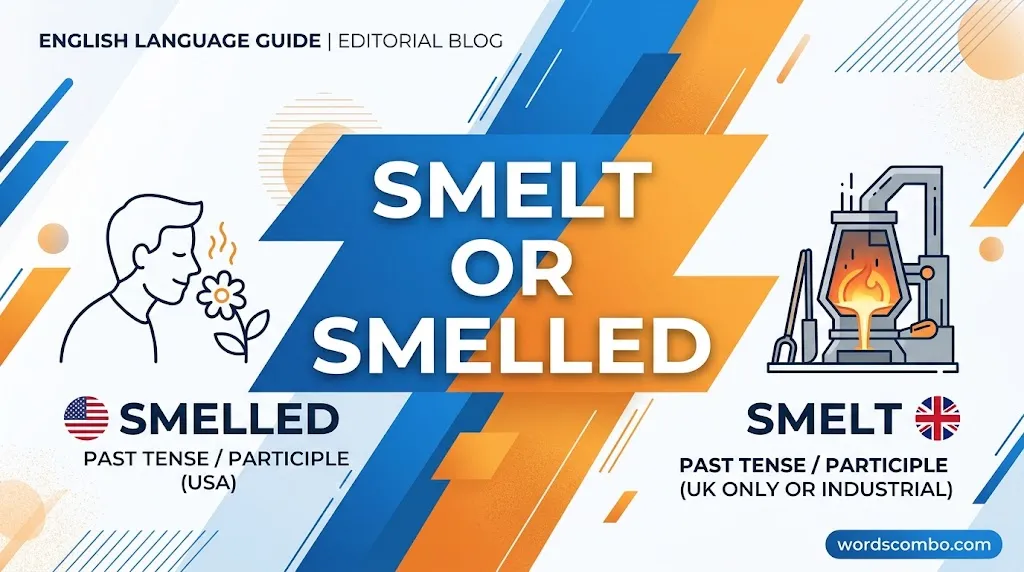
Smelt or smelled can both be past forms of smell. Smelled is the usual form in American English, while smelt is common in British English.
A few years ago, I was checking a short US-focused article before publishing it. One sentence said, “The room smelt like coffee.” Nothing was wrong with the meaning, but I changed smelt to smelled because the article was written for American readers.
That kind of small choice can make English feel harder than it needs to be. Two forms can carry the same meaning while sounding more natural in different varieties of English.
There is one more twist with smelt. It is not always related to the verb smell. It can also refer to a small fish or the process of extracting metal from ore.
So the answer depends on what smelt means in the sentence and who will read your writing. Once you know those two points, choosing between smelt or smelled becomes much easier.
Smelt or Smelled: Quick Answer
When you mean the past tense of smell, both forms are possible.
- Smelled: the normal choice in American English.
- Smelt: common in British English.
Examples:
I smelled smoke in the hallway.
She smelt smoke coming from the kitchen.
In US writing, smelled is usually the better choice.
Why Are There Two Forms?
English has several verbs with both regular and shorter past forms. Smell is one of them.
The regular form is smelled, while smelt is an older form that remains common in British English.
The difference is similar to pairs such as learned and learnt or dreamed and dreamt. Neither form automatically becomes wrong just because another version is more common in a particular region.
However, smelt has two unrelated meanings worth knowing:
- Smelt, as a noun, is a type of small fish.
- Smelt, as a verb, means to extract metal from ore.
For the metalworking verb, the past form is smelted.
The workers smelted the ore.
How Smelt and Smelled Work in a Sentence
When they mean the past form of smell, the two words describe the same basic action.
| Term | Meaning | Region/Context | Best Used When |
| Smelled | Past form of smell | American English | Writing for US readers |
| Smelt | Past form of smell | British English | Writing in British English |
| Smelt | A small fish | Fishing or food | Referring to the fish |
| Smelted | Past form of smelt | Metalworking | Describing metal production |
Compare these sentences:
The dog smelled the food.
The dog smelt the food.
The meaning is essentially the same. The first sentence fits standard American usage, while the second sounds more natural in British English.
Now compare:
We caught several smelt.
Here, smelt is a noun, not a form of smell.
That context makes the meaning clear.
Common Mistakes With Smelt or Smelled
Using smelt in American English
I smelt something burning.
For most American readers, this is less natural than:
I smelled something burning.
Calling smelt incorrect
Smelt is not automatically wrong. It is a valid English word with several meanings.
Using smelted for the verb smell
She smelted the flowers.
This is incorrect because smelted belongs to the metalworking verb smelt.
Use:
She smelled the flowers.
Missing the noun meaning
The fishermen caught a smelt.
Here, smelt refers to a fish. Replacing it with smelled would completely change the sentence.
Smelt or Smelled in Real-World Writing
Professional email
We smelled a strong odor near the storage room. Could someone check the area?
News article
Residents smelled smoke before firefighters arrived.
Social media post
I smelled fresh cookies as soon as I walked through the door.
Formal report
Staff members smelled a strong chemical odor during the inspection.
British English
She smelt fresh bread from the bakery.
These examples show why audience matters. The first four are natural for American English, while the final example uses a common British form.
Smelt or Smelled: Usage and Search Intent
People searching smelt or smelled are usually trying to solve a simple language problem: Which form should I use?
For a US audience, the practical answer is smelled when the word means the past tense of smell.
The other meanings of smelt create a second search need. Readers may encounter the word in discussions about fishing or metal production and wonder why it does not seem related to smell.
This makes context the most useful test. First decide what the word means. Then consider whether your writing follows American or British English.
FAQs About Smelt or Smelled
Is smelt or smelled more common in American English?
Smelled is the standard choice for most American writing when referring to the past tense of smell.
Can I use smelt in British English?
Yes. Smelt is a common British form of the past tense of smell. Smelled is also possible.
Is smelt wrong in American English?
Not necessarily. It can be understood as the past form of smell, but it is less typical in American English. It may also be correct when referring to the fish or metalworking.
What is the past tense of smell?
Smelled and smelt can both serve as past forms. American English generally favors smelled.
What is the difference between smelt and smelted?
Smelt can be the past form of smell or a noun for a fish. Smelted is the past form of the verb smelt, meaning to extract metal from ore.
Should I use smelled in a US school assignment?
Yes. Smelled is the safest and most natural choice for an American school assignment.
Is smelt a fish?
Yes. A smelt is a small fish. In that use, the word has no connection to the past tense of smell.
Final Thoughts on Smelt or Smelled
Choosing between smelt or smelled is mostly a matter of context and regional English.
Use smelled when you are writing in American English and mean the past tense of smell. Use smelt when British English fits your audience, or when the word refers to a fish.
Remember one extra detail: the metalworking verb is smelt, and its past form is smelted.
For most US readers, smelled is the simple choice. Once you identify the meaning and audience, there is little reason to second-guess the word.
Bookmark this guide so you can choose the right form quickly next time.
Curious about another confusing word pair? Explore Spelt or Spelled.

I studied English literature and have spent years editing content for blogs and digital platforms. I noticed most people struggle with choosing between two similar words. At WordsCombo, I make that choice simple and clear.










1 thought on “Smelt or Smelled: Easy Guide to the Difference”