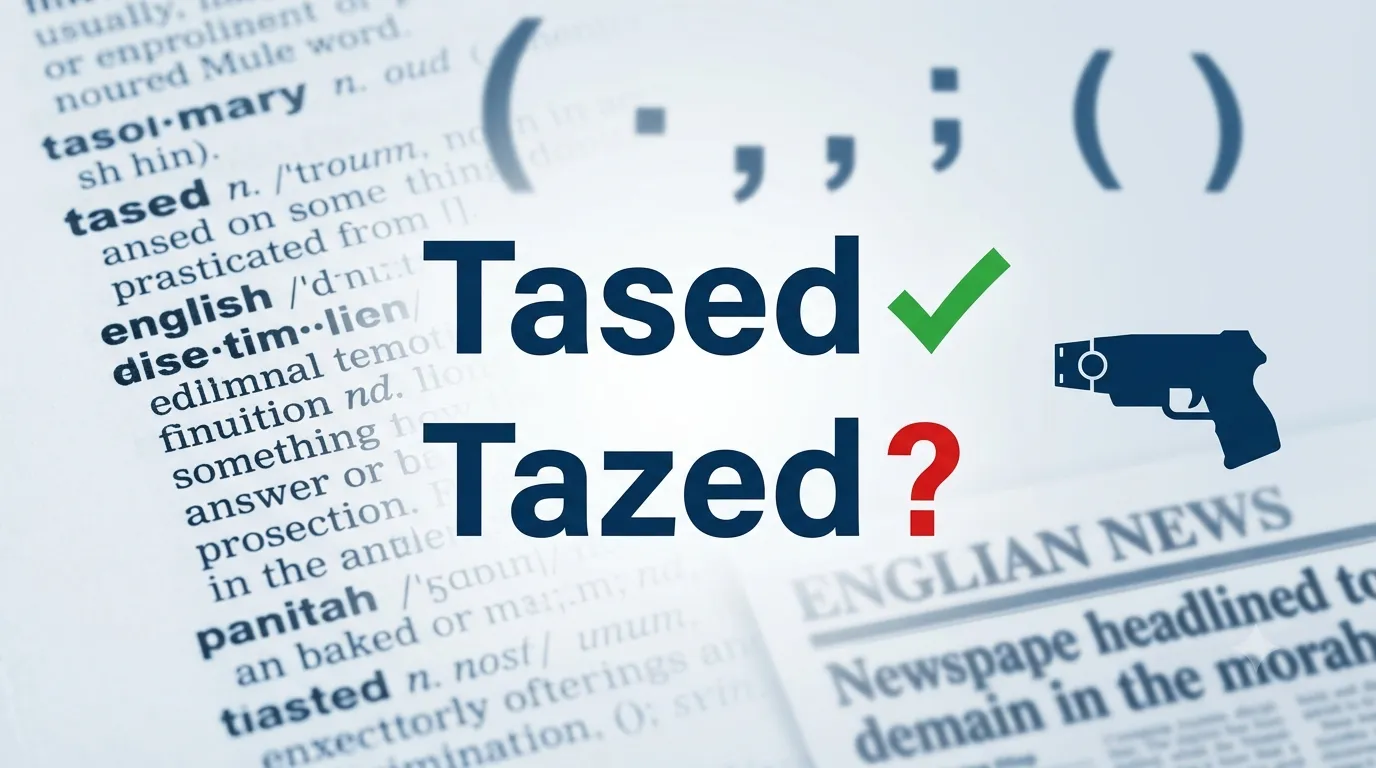
Tased is the standard and most widely accepted past tense of Tase, the trademarked brand name for an electroshock weapon. Tazed is a common alternative spelling, but tased is the preferred form in dictionaries, journalism, and formal writing.
A few years ago, I was editing a news article about a police incident. One sentence read, “The suspect was tazed before being arrested.” A few paragraphs later, another writer used tased instead. That tiny spelling difference sparked a long discussion in the newsroom.
If you’ve ever paused while writing tased or tazed, you’re not alone. Many people see both spellings online. News reports, blogs, and social media often use them interchangeably. That makes it hard to know which one is actually correct.
The confusion comes from the word’s unusual history. It began as a brand name, not a regular English verb. Over time, people started using it like any other action word. As a result, two spellings appeared.
By the end of this guide, you’ll know which spelling experts recommend, why both versions exist, and when each one is appropriate. You’ll also see real examples, common mistakes, and practical tips you can use with confidence.
Tased or Tazed: Quick Answer
The correct spelling in most situations is tased.
The verb comes from the trademark TASER, and English usually forms the past tense by adding ed.
Examples
- The police officer tased the suspect after repeated warnings.
- The security guard said the attacker was tased before being arrested.
While tazed appears online, especially in casual writing, it is far less common in professional publications.
The Origin and Background of Tased or Tazed
The word TASER started as a trademark, not a dictionary verb.
The name comes from Thomas A. Swift’s Electric Rifle, a fictional weapon from an old adventure novel. The initials created the word TASER.
As TASER devices became widely used by law enforcement, people naturally began using the brand name as a verb.
Examples include:
- The officer tased him.
- She was tased during the arrest.
This process happens with many famous brands.
Examples include:
- Google → Googled
- Photoshop → Photoshopped
- Xerox → Xeroxed
Because English speakers pronounce the word with a z sound, some writers began spelling the past tense as tazed. Even so, dictionaries and major style guides overwhelmingly prefer tased.
Tased or Tazed Explained: Key Differences
Although both spellings refer to the same action, one is much more accepted.
| Term | Meaning | When to Use | Region/Context |
|---|---|---|---|
| Tased | Past tense of Tase | Formal writing, journalism, academic work | Worldwide |
| Tazed | Alternative spelling | Informal writing, social media, personal posts | Less common |
Example
Correct (preferred):
The suspect was tased after refusing to drop the weapon.
Alternative:
The suspect was tazed after refusing to drop the weapon.
Both communicate the same meaning, but the first version looks more professional.
Which Version Should You Use?
The safest choice is simple.
For students
Use tased because teachers, dictionaries, and grammar checkers recognize it.
For journalists
Always use tased unless your publication has a different house style.
For business professionals
Stick with tased in reports, emails, and official documents.
For bloggers and casual writers
You may see tazed online, but tased still makes your writing look more polished.
For global audiences
Choose tased. It is the clearest and most widely accepted spelling.
Recommendation: When in doubt, write tased.
Common Mistakes with Tased or Tazed
Here are mistakes people often make.
| Mistake | Correct Form | Why It Happens |
|---|---|---|
| tazed | tased | Writers spell it the way it sounds |
| tasered | tased | Extra letters are unnecessary |
| Tasered | tased | Brand names change when used as verbs |
| tase’d | tased | Apostrophes are incorrect here |
| TAZED in formal reports | tased | Informal spelling is less accepted |
Easy Tip
If you’re writing for school, work, or publication, choose tased every time.
Tased or Tazed in Real World Examples
Professional Email
The security report states that the suspect was tased before officers completed the arrest.
News Headline
Man Tased After Allegedly Threatening Officers
Social Media Post
Can’t believe someone got tased at the concert last night!
Formal Report
The individual was tased after repeated verbal commands failed to gain compliance.
Tased or Tazed: Data, Trends & Usage
Search interest in tased or tazed remains steady because writers often stop to check the correct spelling before publishing.
People searching this topic usually have informational search intent. They want a quick grammar answer before finishing an article, assignment, or report.
The topic is especially popular among:
- Students
- Journalists
- Copywriters
- Bloggers
- Legal writers
- Police report readers
- English learners
One interesting trend is that online searches increase whenever major news stories mention police use of conducted electrical weapons. Readers then check whether tased or tazed is the proper spelling.
Today, most major dictionaries, newspapers, and style editors recommend tased, making it the safest choice for nearly every audience.
Quick Comparison Table
| Term/Variant | Meaning | Region/Context | Best Used When |
|---|---|---|---|
| Tased | Standard past tense | Worldwide | Formal and informal writing |
| Tazed | Alternative spelling | Mostly informal | Casual conversations only |
| Tase | Present tense verb | Worldwide | Present actions |
| TASER | Trademarked device name | Worldwide | Referring to the device itself |
Frequently Asked Questions
Q: What does tased mean?
A: Tased means someone was shocked with a TASER device. It is the standard past tense used in dictionaries and professional writing.
Q: How do you use tased correctly?
A: Use tased when describing a past event involving a TASER device. Example: “The suspect was tased during the arrest.”
Q: Tased vs tazed: what’s the difference?
A: They mean the same thing. The main difference is spelling. Tased is the preferred standard, while tazed is a less common alternative.
Q: Is tased acceptable in formal writing?
A: Yes. Tased is the spelling used by most newspapers, legal documents, and professional editors.
Q: Which version is correct tased or tazed?
A: Tased is the recommended spelling. It follows standard English spelling conventions for verbs derived from the trademark TASER.
Q: Where does the word tased come from?
A: It comes from TASER, the trademarked name of an electroshock weapon. Over time, English speakers turned the noun into a verb.
Q: Can tased be used in legal or police reports?
A: Yes. Tased is the standard spelling found in many police reports, court documents, and news coverage.
Conclusion
The choice between tased and tazed is simpler than it first appears. Both spellings describe the same action, but tased is the clear winner in professional English. It is the spelling most dictionaries, editors, journalists, and style guides recommend.
Remember these key points:
- Tased is the standard spelling.
- Tazed exists but is much less common.
- Use tased for school, work, journalism, and formal writing.
- Choose tased if you want your writing to look polished and credible.
Language changes over time, but following accepted standards makes your message clearer and more trustworthy. The next time you need this word, you won’t have to stop and wonder which spelling is right.
Now you know exactly how to use “tased” correctly, bookmark this guide so you never second guess “tased or tazed” again, and share it with anyone who has been confused by the spelling.
Read more: Mama or Mamma: Which Spelling Should You Use?

I started writing about English word differences after years of teaching students who kept making the same mistakes. My focus is on making spelling rules feel simple and easy to remember. At WordsCombo, I turn confusing word pairs into clear comparisons.