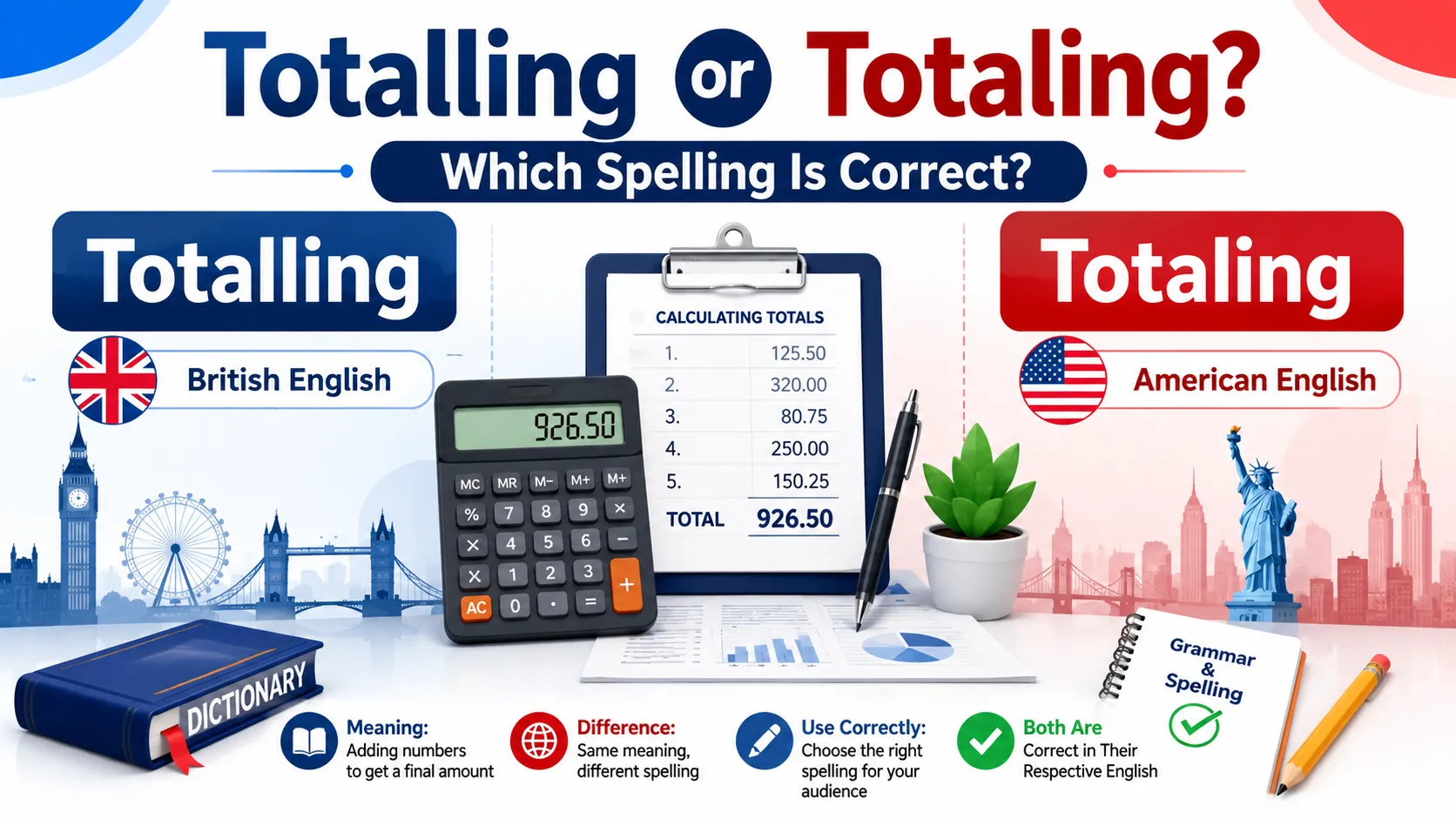
Totalling and totaling both mean adding numbers together to get a final amount. Totalling is the preferred spelling in British English, while totaling is the standard spelling in American English.
Have you ever stopped while writing and wondered, “Should I write totalling or totaling?” You’re not alone. I still remember proofreading an article for an international client. My spell checker kept flagging totalling as incorrect, even though I knew it was right. The problem wasn’t the spelling. It was the English version being used.
That small moment taught me something important. Many English words have different spellings depending on whether you’re writing in British or American English. Totalling and totaling are perfect examples. They look different, but they mean exactly the same thing.
If you’ve ever been confused by these spellings, this guide will clear things up. You’ll learn why two versions exist, where each one is used, and how to choose the right spelling with confidence. By the end, you’ll never have to second guess this word again.
Totalling or Totaling: Quick Answer
The difference is simple.
- Totalling is the British English spelling.
- Totaling is the American English spelling.
- Both are correct.
- The meaning stays exactly the same.
Examples
British English
We are totalling the expenses for this month’s project.
American English
We are totaling the expenses for this month’s project.
Another example:
- The cashier is totalling today’s sales. (UK)
- The cashier is totaling today’s sales. (US)
The only real difference is the spelling.
The Origin and Background of Totalling or Totaling
The word total comes from the Medieval Latin word totalis, meaning whole or entire. Over time, English speakers began using total as both a noun and a verb.
As a verb, to total means:
- add everything together
- calculate the final amount
- reach a complete sum
The spelling difference appeared because British and American English developed different spelling rules.
British English often doubles the final “l” before adding endings such as ing or ed.
Examples include:
- travel → travelling
- cancel → cancelling
- label → labelling
- total → totalling
American English usually keeps one “l” when adding these endings.
Examples include:
- travel → traveling
- cancel → canceling
- label → labeling
- total → totaling
Neither spelling is newer or more correct. They simply follow different writing conventions.
Totalling or Totaling Explained: Key Differences
Although the spellings are different, the meaning never changes.
| Term | Meaning | When to Use | Region/Context |
|---|---|---|---|
| Totalling | Adding everything together | British writing | UK, Australia, New Zealand, many Commonwealth countries |
| Totaling | Adding everything together | American writing | United States |
Example in British English
“The accountant is totalling all the invoices before submitting the report.”
Example in American English
“The accountant is totaling all the invoices before submitting the report.”
Past Tense
The same rule applies to the past tense.
| British | American |
|---|---|
| Totalled | Totaled |
Examples:
- The clerk totalled the bill correctly. (UK)
- The clerk totaled the bill correctly. (US)
Related Words
The same spelling pattern appears in many other English words.
| British English | American English |
|---|---|
| Travelling | Traveling |
| Cancelling | Canceling |
| Labelling | Labeling |
| Modelled | Modeled |
| Fuelled | Fueled |
| Totalling | Totaling |
If you already know these spelling differences, remembering totalling and totaling becomes much easier.
Why Do People Get Confused?
Several reasons cause this confusion.
- Spell checkers often use American English by default.
- Schools teach different English versions.
- Websites mix British and American spellings.
- International companies write for global audiences.
- Search engines show results from many countries.
Because of this, you may see both spellings online every day.
That does not mean one is wrong.
Quick Tips to Remember
Remember these simple rules.
✅ Writing for a UK audience? Use totalling.
✅ Writing for an American audience? Use totaling.
✅ Working for an international company? Stay consistent throughout your document.
✅ Never mix British and American spellings in the same piece of writing unless your style guide allows it.
Which Version Should You Use?
Choosing the right spelling depends on who will read your writing.
For UK, Australia, and Commonwealth Readers
Use totalling because it follows British English spelling rules.
Example:
The finance team is totalling this week’s expenses.
For US Readers
Use totaling because it matches American English conventions.
Example:
The finance team is totaling this week’s expenses.
For Global Audiences
Pick one spelling and use it consistently throughout your document.
If you’re unsure which style to use, check your company’s style guide or the publication’s requirements.
Quick Recommendation
| Audience | Best Choice | Why |
|---|---|---|
| UK readers | Totalling | Standard British English |
| US readers | Totaling | Standard American English |
| International readers | Either | Stay consistent |
Common Mistakes with Totalling or Totaling
Many writers make small mistakes when using these spellings. Here are the most common ones.
| ❌ Mistake | ✅ Correct |
|---|---|
| The cashier is totaling the bill. (British document) | The cashier is totalling the bill. |
| The cashier is totalling the bill. (American document) | The cashier is totaling the bill. |
| We are totaling and labelling products. | Use one style throughout. |
| He totalled the bill and organized the files. | Either British or American spelling consistently. |
| She is totalling up everything quickly. | She is totalling everything quickly. (“Up” is optional but often unnecessary.) |
Why These Mistakes Happen
- Spell check is set to another English version.
- Writers mix British and American spellings.
- They assume one spelling is always wrong.
- They copy text from different sources.
The easiest fix is to choose one English style before you start writing.
Totalling or Totaling in Real World Examples
Here is how the word appears naturally in different situations.
Professional Email
Dear Sarah,
I am totalling the project expenses and will send the final report by this afternoon.
(American version: totaling)
News Headline
Local Charity Is Totalling Donations After Weekend Fundraiser
(US newspaper: Local Charity Is Totaling Donations After Weekend Fundraiser)
Social Media Post
We are totalling every vote. Thank you for your amazing support!
Business Report
The accounting department finished totalling all quarterly sales before preparing the financial statement.
Daily Conversation
I’m totalling the grocery bill before we leave the shop.
Totalling or Totaling: Data, Trends & Usage
Although both spellings are correct, they are popular in different regions.
| Factor | Details |
|---|---|
| Search Intent | Informational |
| Most searched question | “Totalling or totaling—which is correct?” |
| British English | Totalling is preferred |
| American English | Totaling is preferred |
| Common users | Students, writers, editors, bloggers, teachers, businesses |
Why This Matters Today
More people write for international audiences than ever before. A UK writer may work with a US company, while an American blogger may have readers from around the world. Knowing the correct regional spelling helps your writing look professional and consistent.
Comparison Table
| Term/Variant | Meaning | Region/Context | Best Used When |
|---|---|---|---|
| Totalling | Adding numbers to get a final amount | British English | Writing for UK, Australia, New Zealand, and Commonwealth audiences |
| Totaling | Adding numbers to get a final amount | American English | Writing for readers in the United States |
Frequently Asked Questions (FAQs)
Q: What does “totalling” or “totaling” mean?
A: Both words mean adding numbers together to reach a final amount. The only difference is the spelling used in British and American English.
Q: Which is correct: totalling or totaling?
A: Both are correct. Use totalling in British English and totaling in American English.
Q: Is “totalling” acceptable in formal writing?
A: Yes. It is the standard British English spelling and is perfectly acceptable in reports, emails, academic papers, and business documents.
Q: Why does British English use two “L”s?
A: British spelling usually doubles the final L before adding ing or ed to many words, such as travelling, labelling, and totalling.
Q: Is “totaling” wrong in the UK?
A: It is not grammatically wrong, but it looks American. Most UK publishers and organisations prefer totalling.
Q: Can I use both spellings in one article?
A: It is better not to. Pick one English style and use it consistently from beginning to end.
Q: Does the spelling change the meaning?
A: No. Both spellings have exactly the same meaning. Only the regional spelling changes.
Conclusion
Choosing between totalling and totaling is easier than many people think. Both spellings mean adding everything together to reach a final amount. The real difference is the version of English you are using.
Remember these key points:
- Totalling is the standard spelling in British English.
- Totaling is the standard spelling in American English.
- Both spellings are correct.
- The most important rule is consistency. Do not mix British and American spellings in the same document unless a style guide tells you to.
When you match your spelling to your audience, your writing looks more polished and professional. Whether you’re writing an email, an article, a report, or a social media post, choosing the right version helps readers trust your work.
Now you know exactly how to use “totalling” and “totaling.” Bookmark this guide for future reference, and share it with anyone who has ever been confused by these two spellings.
Read more: Canceled or Cancelled: Easy Guide to Correct Usage

I studied English literature and have spent years editing content for blogs and digital platforms. I noticed most people struggle with choosing between two similar words. At WordsCombo, I make that choice simple and clear.