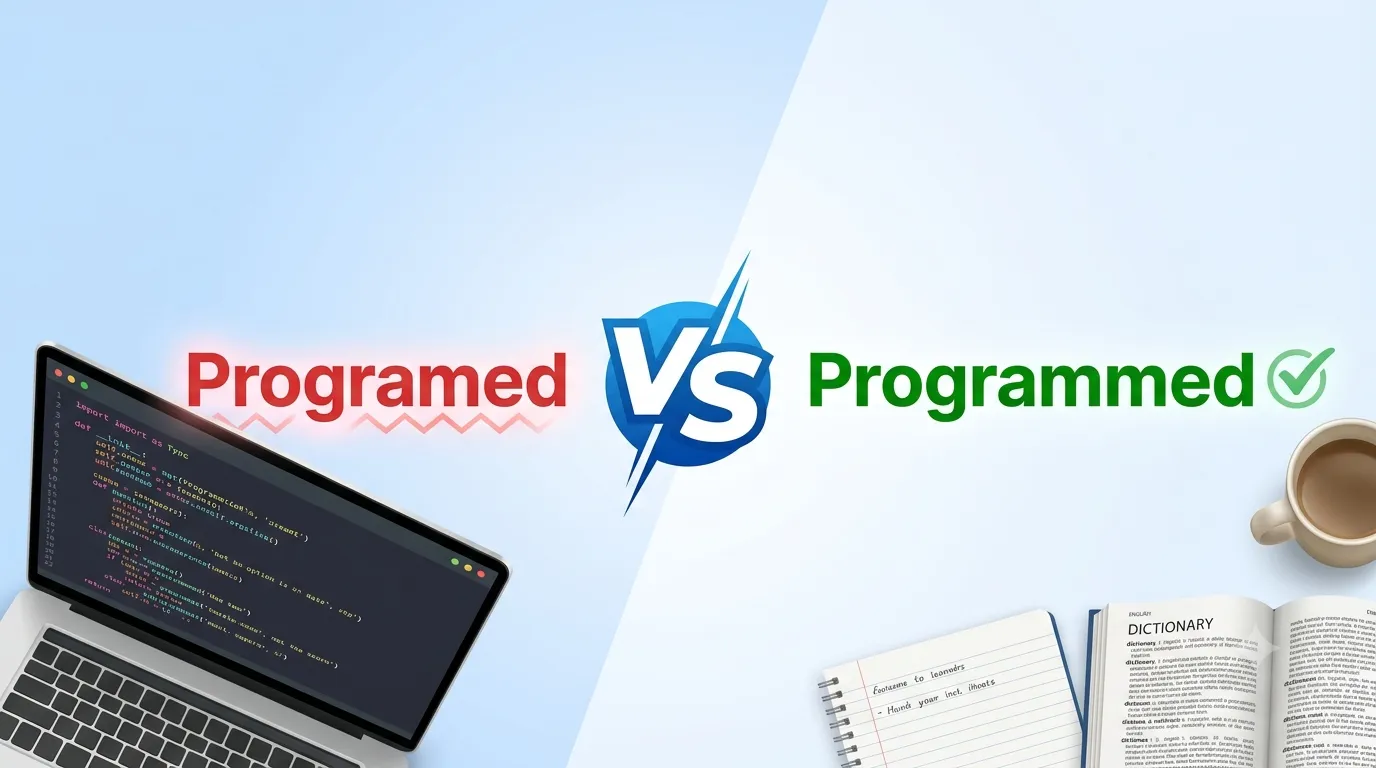
Programmed is the standard and correct spelling in American English. Programed is a much less common variant and is generally considered nonstandard. If you want your writing to look professional and correct, use “programmed” in almost every situation.
A few years ago, I was editing a blog post for a software company when I noticed something strange. The writer used “programed” in one paragraph and “programmed” in the next. At first glance, both looked acceptable. But when I checked trusted dictionaries and style guides, the answer became much clearer.
Many people run into this same problem. Whether you’re writing code, preparing an assignment, creating a resume, or sending a work email, you may stop and wonder which spelling is correct. The confusion is understandable because English has many words that change when adding ed or ing, and the rules are not always obvious.
The good news is that this question has a simple answer once you know the spelling rule. In this guide, you’ll learn the difference between programed and programmed, why both forms exist, where each one appears, and which version you should choose in everyday writing. By the end, you’ll never have to second guess this word again.
Programed or Programmed: Quick Answer
The correct spelling in almost every case is programmed.
The word comes from the verb program, and when adding ed, the final m is doubled. This follows a common English spelling rule for many short verbs that end with a consonant after a stressed vowel.
Simple Examples
✅ The engineer programmed the robot yesterday.
✅ She programmed the coffee machine before going to bed.
❌ The engineer programed the robot yesterday. (Generally considered incorrect in modern standard English.)
Although you may occasionally see programed, especially in older texts or rare technical references, programmed is the spelling accepted by major dictionaries, publishers, schools, and businesses.
The Origin and Background of Programmed
Understanding where the word came from makes the spelling much easier to remember.
The word program originally came from the Greek word programma, meaning a public written notice. It later entered French before becoming part of English. At first, program referred to a printed schedule for events such as concerts or plays.
As computers became common during the 20th century, the word gained a new meaning. To program meant giving instructions to a computer or machine so it could perform specific tasks.
When English speakers turned the verb into the past tense, they followed the normal spelling rule for many short verbs:
- Program → Programmed
- Program → Programming
The double m helps keep the pronunciation consistent.
Why Does “Programed” Exist?
The spelling programed usually appears for one of these reasons:
- Someone forgets the double letter spelling rule.
- It is a typing mistake.
- It appears in older documents or less edited websites.
- Some people simplify spellings by dropping doubled consonants.
Even so, modern English strongly prefers programmed.
Programed or Programmed Explained: Key Differences
Although the two words look similar, they are not treated equally in modern English.
| Term | Meaning | When to Use | Region/Context |
|---|---|---|---|
| Programmed | Past tense of program | Everyday writing, academic work, coding, business, journalism | Standard worldwide, especially American English |
| Programed | Rare alternative spelling | Older documents or uncommon personal usage | Rare and generally avoided |
Example 1
✅ The developer programmed the software in Python.
This is the preferred and professional spelling.
Example 2
❌ The developer programed the software in Python.
Many readers will assume this is a spelling mistake.
Example 3
✅ The thermostat was programmed to turn on at 7 a.m.
This is the form used in manuals, product guides, and technical documents.
Why Is “Programmed” Preferred?
There are three main reasons:
- It follows standard English spelling rules.
- It appears in major dictionaries and style guides.
- It looks professional in academic and business writing.
Using the accepted spelling also improves clarity. Readers focus on your message instead of noticing a possible spelling error.
Which Version Should You Use?
If you’re unsure which spelling to choose, the answer is simple.
For Students
Use programmed in essays, homework, research papers, and exams. Teachers expect the standard spelling.
For Software Developers
Always write programmed in documentation, tutorials, technical blogs, GitHub READMEs, and project reports. It matches professional writing standards used across the software industry.
For Business Professionals
Choose programmed in emails, presentations, manuals, reports, and marketing content. It creates a polished and trustworthy impression.
For Content Writers and Bloggers
Use programmed to improve credibility and align with dictionary standards. Readers are more likely to trust content that follows accepted spelling conventions.
For Global Readers
If your audience includes people from different countries, programmed is the safest choice. It is widely recognized and understood across English speaking regions.
Final Recommendation
Unless you are quoting an old document or preserving someone’s original spelling, always use “programmed.” It is the accepted, professional, and reader friendly choice in nearly every situation.
Common Mistakes with Programmed
Even experienced writers make mistakes with programmed. Most errors happen because English spelling rules can be confusing. Here are the ones you should avoid.
| Mistake | Correct Form | Why It Happens |
|---|---|---|
| Programed the computer | Programmed the computer | Forgot to double the m before adding ed. |
| Programing language | Programming language | The same doubling rule applies before ing. |
| The app was programed | The app was programmed | A common typo or spelling mistake. |
| He programed a robot | He programmed a robot | The standard spelling uses two ms. |
| Programed settings | Programmed settings | Modern dictionaries prefer programmed. |
Tips to Remember
- Double the “m” before adding ed or ing.
- Think of words like planned, stopped, and preferred. They follow a similar pattern.
- If you’re writing for school, work, or publishing, always choose programmed.
Programmed in Real World Examples
Seeing the word in context makes it much easier to remember.
Professional Email
Hello Sarah,
I have programmed the new automation system as requested. Please review the settings before tomorrow’s meeting.
Best regards,
Alex
News Headline
Engineers Programmed New AI Robot to Assist Hospital Staff
Social Media Post
Finally programmed my smart lights to turn on before sunrise. My mornings just got much easier!
Formal Report
The production equipment was programmed according to the updated safety guidelines before testing began.
Everyday Conversation
Person A: Who set the coffee machine?
Person B: I programmed it last night.
Programmed: Data, Trends & Usage
Although both spellings exist online, programmed is overwhelmingly more common.
Search Interest
People usually search for this topic because they ask questions like:
- Programed or programmed?
- Is programed correct?
- How do you spell programmed?
- Programmed meaning
- Programmed vs programed
These searches show informational intent. Readers want a quick, reliable answer rather than a product or service.
Where Is It Most Searched?
Interest is highest in countries where English is widely used, including:
- United States
- Canada
- United Kingdom
- Australia
- India
Many searches also come from students, software developers, technical writers, editors, and English learners.
Why Does This Matter Today?
Technology is part of everyday life. People write about software, artificial intelligence, smart devices, and automation more than ever before. Because of this, the word programmed appears in emails, articles, manuals, coding tutorials, and workplace documents every day.
Using the correct spelling helps your writing look accurate, professional, and trustworthy.
Programed vs. Programmed: Quick Comparison
| Term/Variant | Meaning | Region/Context | Best Used When |
|---|---|---|---|
| Programmed | Standard past tense and past participle of program | Accepted worldwide | Everyday writing, education, business, technology |
| Programed | Rare alternative spelling | Occasionally seen in older or unedited texts | Only when preserving original wording or quotations |
Frequently Asked Questions
Q: What does programmed mean?
A: Programmed is the past tense and past participle of program. It means giving instructions to a computer, machine, device, or system so it performs a specific task.
Q: How do you use programmed correctly?
A: Use programmed whenever you describe someone who has already set up software, a machine, or an electronic device. It is also used for routines, schedules, and automated actions.
Q: Programmed vs. programed what’s the difference?
A: Both spellings refer to the same idea, but programmed is the accepted standard spelling. Programed is rare and is often viewed as a spelling mistake in modern English.
Q: Is programmed acceptable in formal writing?
A: Yes. Programmed is the preferred spelling for academic papers, business reports, technical documents, professional emails, and published articles.
Q: Which version is correct programed or programmed?
A: Programmed is the correct choice in nearly every situation. Unless you are quoting an original source that uses programed, stick with programmed.
Q: Where does the word programmed come from?
A: It comes from the verb program, which traces back to the Greek word programma. Over time, the word expanded from printed schedules to computer instructions and automated systems.
Q: Can programmed be used outside computing?
A: Absolutely. You can use programmed for many situations, such as programmed alarms, programmed irrigation systems, programmed workouts, or even describing learned behaviors in psychology.
Conclusion
Choosing between programed and programmed is easier than it first appears. The standard spelling is programmed, and it is the form accepted by dictionaries, schools, publishers, and businesses around the world.
Remember these key points:
- Programmed is the correct spelling in modern English.
- Programed is rare and should usually be avoided.
- The double m follows standard English spelling rules.
- Using programmed makes your writing look more professional and trustworthy.
Whether you’re writing code, preparing an assignment, drafting a report, or posting online, using the correct spelling helps your message stay clear and credible.
Now you know exactly how to use programmed with confidence. Bookmark this guide so you never second guess the spelling again, and share it with someone who’s been confused by this common question.

I studied English literature and have spent years editing content for blogs and digital platforms. I noticed most people struggle with choosing between two similar words. At WordsCombo, I make that choice simple and clear.