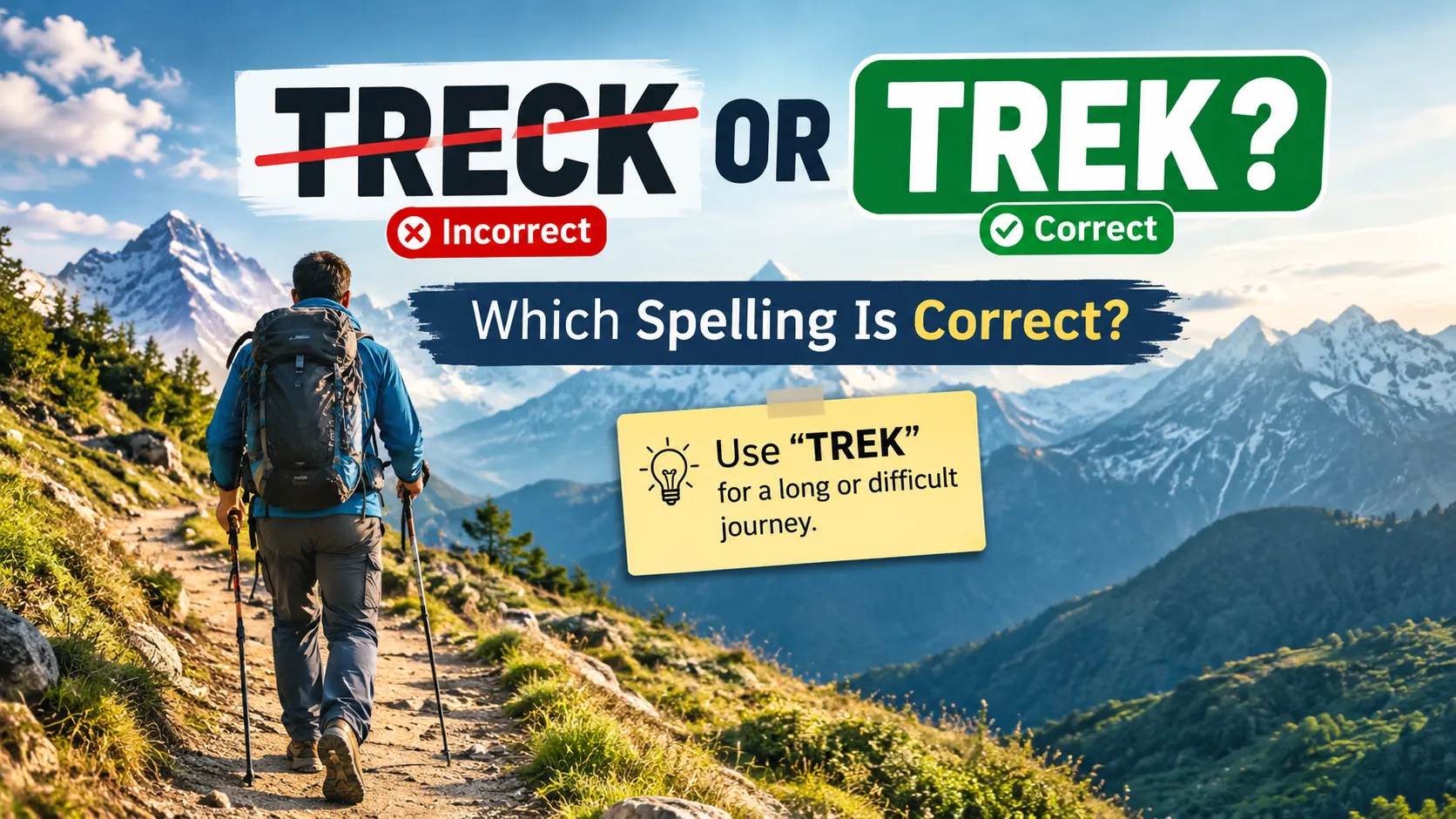
Treck or trek is a common spelling question. Trek is the correct standard English spelling, while treck is usually a misspelling.
Have you ever typed “treck” and stopped to wonder if something looked wrong? You are not alone. This is a small spelling question, but it can cause real confusion.
The two words look almost identical. Both sound similar when spoken. Search engines also show both forms, which can make the choice even harder.
The correct spelling in standard English is trek.
A trek is a long or difficult journey, often made on foot. You can trek through mountains, forests, deserts, or other wild places. The word is also used in a wider sense. For example, you might say, “The walk to the station was a long trek.”
The confusion usually comes from the way the word sounds. Many English words double their final consonant when a suffix is added, so treck can feel natural to some writers. But English spelling does not always follow simple sound rules.
This guide explains treck or trek, where the word comes from, how to use it, common mistakes, and which spelling you should choose in school, work, and everyday writing.
Treck or Trek
If you are asking “Is it treck or trek?”, use trek.
Trek is the correct spelling in standard modern English.
Examples:
- We went on a long trek through the hills.
- The hikers began their trek early in the morning.
- Getting home became a two hour trek because of traffic.
Treck is not the standard spelling of this English word. You may see it online, but that does not make it the correct form.
Trek can be a noun or a verb
As a noun, trek means a long or difficult journey.
The mountain trek took five days.
As a verb, trek means to travel or walk a long distance.
We trekked across the valley.
Notice the spelling of the past tense: trekked.
That change is one reason people sometimes wonder whether the base word should be treck. It should not. The base form remains trek.
The Origin and Background of Trek
The word trek has an interesting history.
It came into English from Afrikaans, a language that developed in southern Africa. The Afrikaans word trek means a journey or movement, especially a long journey.
The word became strongly linked with the movement of Dutch speaking settlers across southern Africa during the 19th century. English later adopted trek as a word for a long or difficult journey.
Over time, its meaning became broader.
Today, you do not need to be traveling across a huge wilderness to use trek. The word can describe many types of long journeys.
For example:
We made a three ay trek through the mountains.
But you could also say:
The walk from the parking lot to the stadium was a real trek.
The second example is often informal and slightly humorous. It shows how the word has moved beyond its original travel context.
Why does “treck” look right?
The main reason is sound.
When people hear trek, they may naturally expect a spelling such as treck. English has many words with the ck pattern, including back, track, and stick.
However, trek is simply the established English spelling.
This is a good reminder that English spelling is based on history and usage, not sound alone.
Treck or Trek Explained: Key Differences
There is a simple difference between the two forms:
| Term | Meaning | When to Use | Region/Context |
|---|---|---|---|
| Trek | A long or difficult journey | Use in normal English writing and speech | Standard English |
| Treck | Usually a misspelling of trek | Avoid it when you mean the journey | Nonstandard spelling |
| Trekked | Past tense of trek | Use for a journey that already happened | Standard English |
| Trekking | Present participle of trek | Use for the activity of traveling or walking | Standard English |
The key point is simple:
Trek is the word. Treck is usually the mistake.
Examples of correct forms
- trek
- treks
- trekked
- trekking
- trekker
For example:
She loves trekking in the mountains.
They trekked through the forest yesterday.
He is an experienced trekker.
Which Version Should You Use?
The answer is easy: use trek.
For students
Use trek in essays, assignments, exams, and school projects.
The explorers began a difficult trek through the mountains.
This is the standard spelling your teacher or examiner will expect.
For professionals
Use trek in reports, emails, websites, presentations, and business documents.
The team completed a three day trek across the region.
It looks clean and professional.
For bloggers and content writers
Use trek when writing about hiking, travel, adventure, outdoor activities, or long journeys.
You may also use related words such as:
- hiking
- trekking
- trail
- expedition
- journey
- adventure
- backpacking
- walking tour
These words help explain the topic clearly without repeating trek too often.
For global or neutral English
Choose trek.
It is the safest option because it is the standard spelling recognized across major varieties of English.
Common Mistakes with Treck or Trek
1. Writing “treck” instead of “trek”
Mistake:
We went on a long treck.
Correction:
We went on a long trek.
Why it happens:
The pronunciation can make treck feel logical. But the standard spelling is trek.
2. Using “trecked” as the past tense
Mistake:
We trecked for six hours.
Correction:
We trekked for six hours.
Why it happens:
The past tense doubles the k.
The pattern is:
trek → trekked
Not:
treck → trecked
3. Spelling “trekking” incorrectly
Mistake:
I enjoy trecking in the hills.
Correction:
I enjoy trekking in the hills.
The correct spelling is:
trek → trekking
The k is doubled before ing.
4. Thinking “treck” is a regional English spelling
It is generally not a standard regional variant of trek.
You may find treck in usernames, informal posts, names, or other contexts. But if you are writing standard English, choose trek.
5. Confusing trek with hike
The words are close, but they are not always identical.
A hike often means a walk outdoors, especially on a trail.
A trek often suggests a longer, harder, or more demanding journey.
For example:
We went for a short hike after lunch.
We completed a seven day trek through the mountains.
There is overlap, so context matters.
Treck or Trek in Real World Examples
Seeing the word in different settings can make the rule easier to remember.
Professional email
Subject: Mountain Trek Schedule
The team will begin the trek at 7:00 a.m. Please arrive 30 minutes early and bring enough water for the journey.
Here, trek fits a clear and professional message.
News headline
Local hikers begin challenging mountain trek
News writing often uses trek to describe a long or difficult journey.
Social media post
Just finished an amazing trek through the hills! Tired feet, great views, and memories for life.
The word works naturally in casual writing too.
Formal report
The research team completed a four day trek to reach the remote study site.
Here, trek describes a long journey to a difficult to reach location.
Treck or Trek: Data, Trends & Usage
The search intent behind “treck or trek” is mainly informational.
People searching this phrase usually want a quick answer to one of these questions:
- Which spelling is correct?
- Is treck a word?
- How do I spell trekking?
- What does trek mean?
- What is the difference between trek and hike?
- How do I use trek in a sentence?
This matters because spelling searches often happen at the moment a person is writing.
A student may be finishing an assignment. A traveler may be writing a post. A blogger may be preparing an article. A professional may be checking an email.
The best answer is therefore direct:
Use “trek” when you mean a long or difficult journey.
Searches around trekking, hiking, travel, outdoor adventures, and spelling also show how broad the word has become. The word is now common far beyond its original historical setting.
Standalone Comparison Table
| Term/Variant | Meaning | Region/Context | Best Used When |
|---|---|---|---|
| Trek | Long or difficult journey | Standard English | Almost all normal uses |
| Treck | Usually a misspelling | Nonstandard | Avoid in standard writing |
| Trekked | Traveled on a trek | Standard English | Talking about the past |
| Trekking | Taking part in trekking | Standard English | Talking about an activity |
| Trekker | A person who treks | Standard English | Describing a person |
FAQ: Treck or Trek
Q: What does trek mean?
A: Trek means a long or difficult journey. It often refers to walking or traveling through a challenging area, such as mountains or forests.
Q: Is treck a correct spelling?
A: Treck is usually a misspelling of trek. In standard English, use trek when you mean a long journey.
Q: How do you use trek correctly?
A: You can use trek as a noun or verb. For example, “We went on a long trek” uses it as a noun, while “We trekked through the valley” uses it as a verb.
Q: Treck vs trek: what is the difference?
A: Trek is the standard English spelling. Treck is generally an incorrect spelling when used to mean a journey.
Q: Is trek acceptable in formal writing?
A: Yes. Trek is a standard English word and is suitable for formal writing when the meaning fits the context. It can appear in reports, articles, essays, and professional documents.
Q: Which is correct, trecking or trekking?
A: Trekking is correct. The base word is trek, and the final k is doubled before ing.
Q: Where does the word trek come from?
A: Trek entered English from Afrikaans. It originally referred to a journey or movement and later became an English word for a long or difficult journey.
Q: Is trek the same as hike?
A: Not always. A hike is often a walk outdoors, while a trek can suggest a longer or harder journey. The two words can overlap in everyday English.
Q: Can I use trek for a city journey?
A: Yes, especially in informal writing. For example, “It was a long trek across the city” suggests that the journey felt tiring or difficult.
Conclusion
If you have ever wondered “treck or trek?”, you can stop guessing.
The correct standard spelling is trek. Use it when you mean a long, difficult, or demanding journey. It can work as both a noun and a verb.
Remember these simple forms:
- trek — base word
- treks — third person singular
- trekked — past tense
- trekking — activity
- trekker — a person who treks
The spelling treck may appear online, but it is generally not the form you want in standard English.
The biggest lesson is simple: when in doubt, choose “trek.”
Once you know the base word, the other forms become much easier to spell. Whether you are writing a school essay, a travel blog, a work report, or a social media post, trek is the safe and correct choice.
Now you know exactly how to use trek. Bookmark this guide so you never second guess treck or trek again.
Read more: Mwah or Muah: Which Spelling Is Correct?

I started writing about English word differences after years of teaching students who kept making the same mistakes. My focus is on making spelling rules feel simple and easy to remember. At WordsCombo, I turn confusing word pairs into clear comparisons.