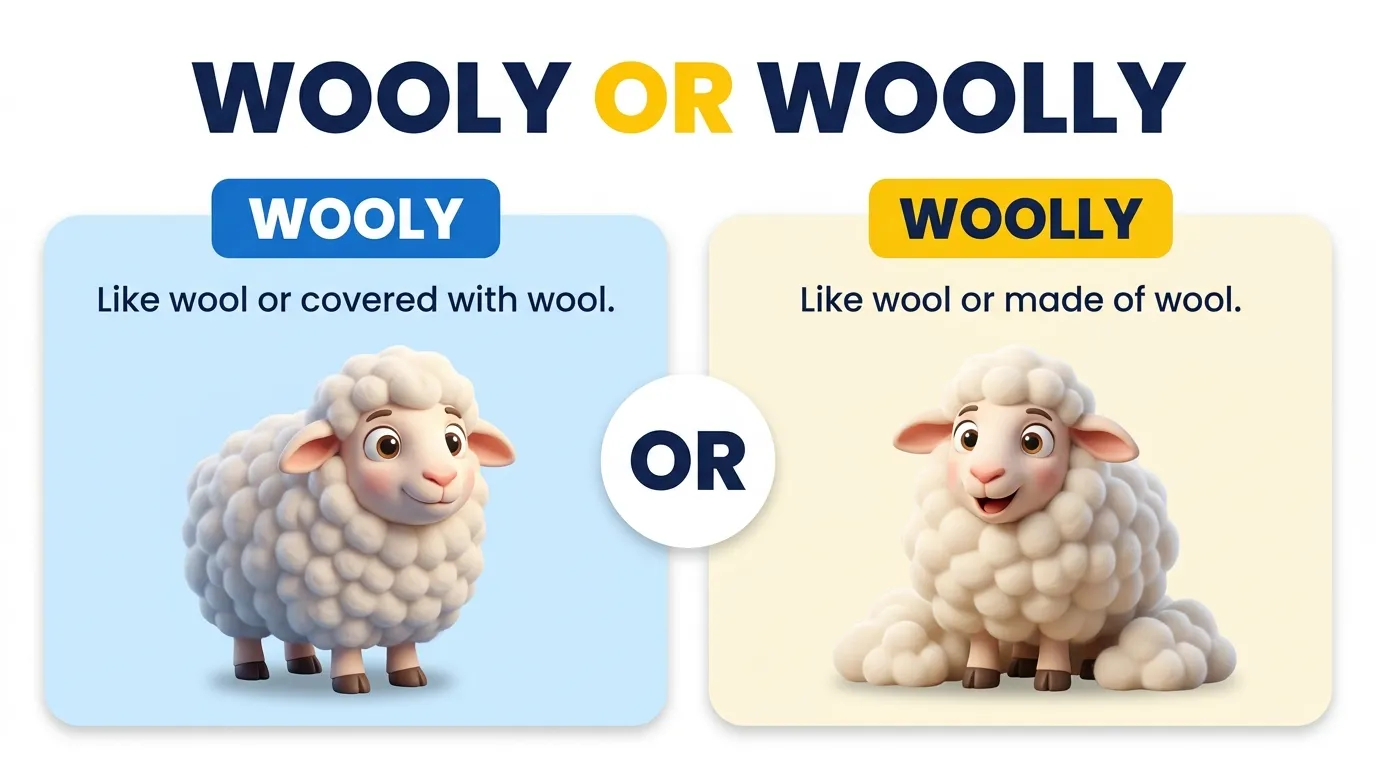
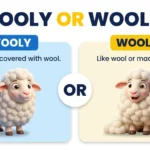
Wooly and woolly are both correct spellings. Woolly is the more common form in general English, while wooly is an accepted U.S. variant.
When typing a client email, you may pause over a simple word like wooly or woolly. The red squiggly line can make the choice feel harder than it is.
Both spellings have the same basic meaning. They describe something made of wool, covered with wool, or looking like wool. However, woolly is the safer choice for most formal and global writing.
Wooly or Woolly: Quick Answer
Both wooly and woolly are correct. The main difference is spelling preference by region.
For example, you can write, “The sheep has a woolly coat.” In U.S. English, “The sheep has a wooly coat” is also acceptable.
The Origin of Wooly or Woolly
The word woolly comes from the word wool, with the ending -y added to show a quality or feature.
Over time, the word developed the sense of being like wool or covered with wool. It can also describe something soft, thick, or fuzzy.
The spelling wooly developed as a variant with one l. American English often has shorter spellings in words that use double consonants in other forms of English.
So, the extra l is the main spelling difference. The meaning stays almost the same.
Wooly or Woolly Explained: Key Differences
The two forms usually describe the same thing. However, the spelling you choose can depend on your audience and style.
| Term | Meaning | When to Use | Region/Context |
| woolly | Made of wool or like wool | General and formal writing | Common in British and global English |
| wooly | Made of wool or like wool | U.S. English and informal use | Accepted American variant |
For example, woolly can describe a warm hat, thick hair, or a sheep’s coat.
The word can also have a figurative meaning. Woolly thinking means unclear or confused thinking.
Meanwhile, wooly can carry the same meanings. The difference is mainly the spelling rather than the idea.
Woolly
Woolly is the form you will see widely in English writing. It works well for clothes, animals, hair, and anything that looks or feels like wool.
For example:
- She wore a woolly sweater.
- The sheep had a thick woolly coat.
- His woolly hair looked soft and thick.
Wooly
Wooly is an accepted spelling, especially in American English. It has the same basic meanings as woolly.
For example:
- The lamb had a wooly coat.
- She bought a wooly hat for winter.
- The plant had a wooly texture.
The pronunciation does not change. Both forms sound like WUHL-ee.
Wooly or Woolly: Comparison at a Glance
| Term/Variant | Meaning | Region/Context | Best Used When |
| Woolly | Like wool or made of wool | General English | You want the widely recognized spelling |
| Wooly | Like wool or made of wool | Mainly U.S. English | You are following American spelling |
| Woolly thinking | Unclear or confused thinking | General English | Describing unclear ideas |
| Wooly thinking | Unclear or confused thinking | U.S. variant | Using the American spelling |
Which One Should You Use?
For most readers, woolly is the safest spelling.
For U.S. English, use wooly or woolly because both forms are understood and accepted. However, wooly can fit an American spelling style when consistency matters.
For British English, use woolly because it is the usual form.
For international readers, use woolly because it is widely recognized across English varieties.
For formal writing, use woolly when you want the most familiar general form.
For casual U.S. writing, wooly is fine if it matches the spelling style you use elsewhere.
Either way, do not mix both spellings in the same piece without a reason. Consistent spelling makes your writing look cleaner.
Common Mistakes with Wooly or Woolly
Treating Wooly as a Misspelling
Some writers think wooly must be wrong because woolly looks more familiar.
However, wooly is a valid spelling. It is used as a variant, especially in American English.
Treating Woolly as British Only
Another mistake is assuming woolly can only appear in British writing.
In fact, woolly is understood and used in American English too. The U.S. variant wooly simply gives writers another accepted spelling.
Changing the Meaning
The two spellings do not normally have different meanings.
So, changing woolly to wooly does not change the basic idea. The main change is the spelling.
Mixing Both Forms
A document may use wooly in one paragraph and woolly in another.
That can look careless. Instead, choose one spelling and keep it consistent throughout the document.
Forgetting the Figurative Meaning
Woolly does not only describe wool or soft material.
It can also describe unclear ideas or thinking. For example, “The plan was based on woolly thinking.”
Wooly or Woolly in Real-World Examples
Professional Email
“The new woolly fabric should keep customers warm during the winter season.”
This works well when describing a product or material.
News Headline
“Farmers Prepare for Another Season of Woolly Sheep”
Here, woolly clearly describes sheep with thick wool.
Social Post
“Nothing beats a warm wooly sweater on a cold morning!”
The single-l spelling works naturally in casual American English.
Formal Document
“The animal has a thick woolly coat that protects it from cold weather.”
Here, woolly is a clear choice for formal writing.
Figurative Use
“The report gives a woolly explanation of the problem.”
In this sentence, woolly means unclear or not well explained.
Wooly or Woolly: Data, Trends & Usage
People searching wooly or woolly usually want a spelling answer. The search intent is mainly informational because the reader wants to know which form is correct.
U.S. readers may also search because they see both spellings in different places. That can create doubt about whether one form is wrong.
The key usage point is simple: both forms exist, but woolly is the broader spelling. Meanwhile, wooly is especially useful when following an American spelling style.
This matters for writers, students, editors, teachers, and anyone checking a word before publishing. A small spelling choice can affect how natural your writing feels to different readers.
FAQs About Wooly or Woolly
Is wooly or woolly correct?
Both wooly and woolly are correct spellings. However, woolly is the more widely recognized form, while wooly is an accepted U.S. variant.
What is the difference between wooly and woolly?
The main difference is the spelling. Both words can describe something made of wool, covered with wool, or similar to wool.
Is wooly correct in American English?
Yes, wooly is correct in American English. Still, woolly is also understood and used by American readers.
Is woolly more correct than wooly?
Neither spelling is simply wrong. However, woolly is the safer choice when you want a spelling that works broadly across English varieties.
Can woolly mean unclear?
Yes, woolly can describe unclear or confused thinking. For example, you might call an explanation woolly when it lacks clear ideas.
Why does woolly have two Ls?
The spelling woolly comes from wool plus the ending -y. The double l remains before the ending, while wooly is a shorter variant.
Should I use wooly or woolly in formal writing?
Use woolly when you want the most broadly recognized form. If you are writing specifically in American English, wooly can also be acceptable.
Final Thoughts on Wooly or Woolly
The choice between wooly or woolly is easier once you know the main rule. Both spellings can describe something made of wool or something that looks like wool.
For broad, formal, or international writing, woolly is a strong choice. Meanwhile, wooly works as an accepted American variant. The meaning usually stays the same.
Most importantly, keep your spelling consistent. If your audience follows American English, wooly can fit naturally. For a wider audience, woolly is often the clearest choice.
Now that you know the difference, you can choose the spelling with confidence. Keep this rule in mind the next time you write about wool, clothing, animals, or unclear ideas.
Curious about similar spelling questions? Explore Unexcusable or Inexcusable.

I started writing about English word differences after years of teaching students who kept making the same mistakes. My focus is on making spelling rules feel simple and easy to remember. At WordsCombo, I turn confusing word pairs into clear comparisons.






1 thought on “Wooly or Woolly: The Right Spelling”