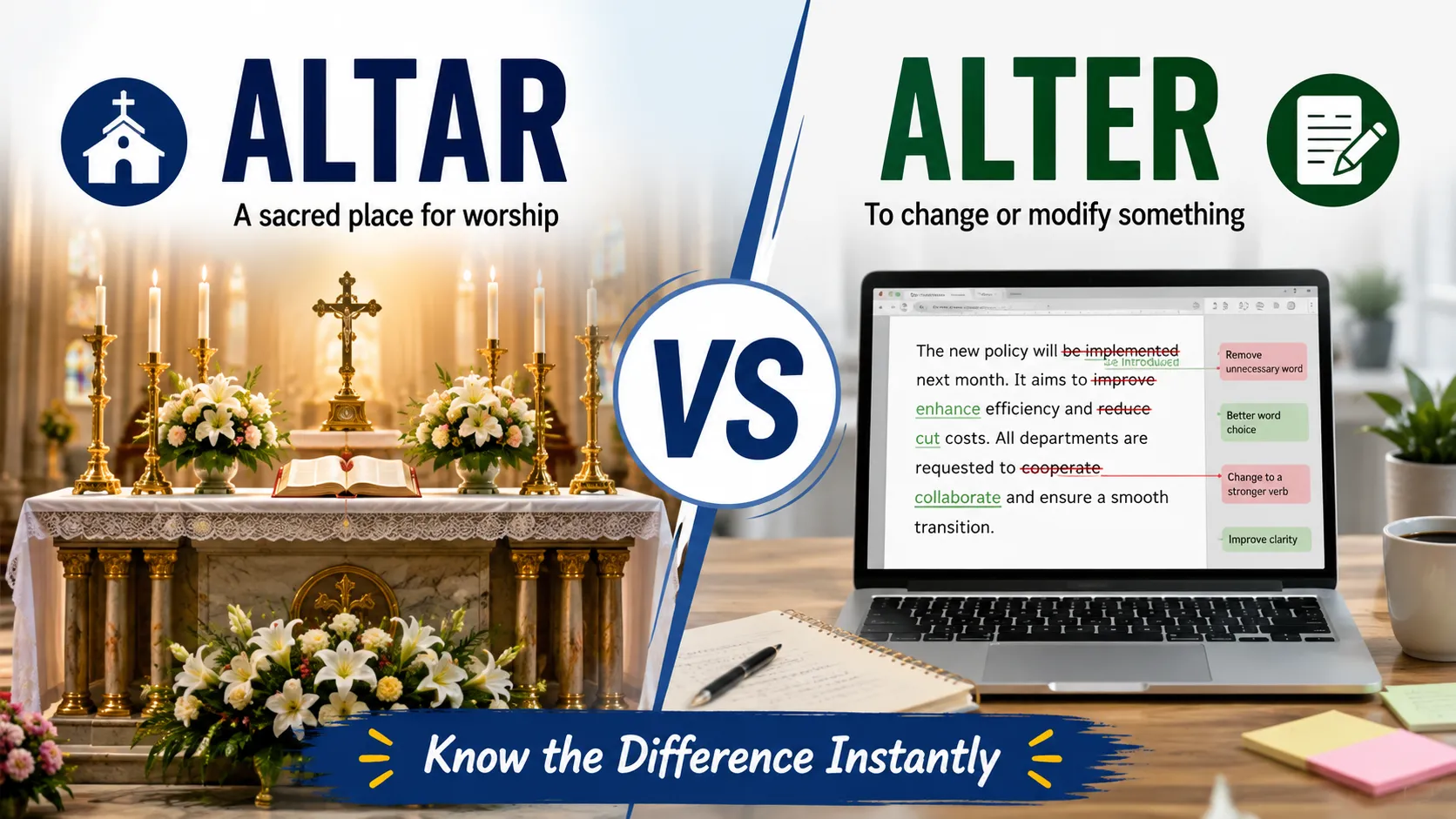
⛪ Altar is a table used in religious ceremonies, while ✏️ alter means to change or modify something. 💡 Easy trick: Altar = church, alter = change.
A few years ago, I was editing an article for a client when I noticed a sentence that read, “The couple stood before the alter on their wedding day.” At first glance, it looked fine. Then I smiled. The writer had used alter instead of altar. It was a tiny spelling mistake, but it completely changed the meaning.
This mix up happens every day. The words altar and alter sound exactly the same. They are classic homophones. Even experienced writers pause for a second before typing them.
If you have ever wondered which one is correct, you are not alone.
The good news is that the difference is simple once you understand it. In this guide, you will learn what each word means, where it came from, when to use it, and easy tricks to remember the correct spelling. By the end, you will never have to guess again.
Altar or Alter
The difference is easy.
- Altar = a place used for worship, prayer, or ceremonies.
- Alter = to change something.
Examples
- The bride walked toward the altar.
- We need to alter the plan before tomorrow.
A simple memory trick:
- Altar has an A, just like adoration.
- Alter has an E, just like edit.
The Origin and Background of Altar or Alter
Although these words sound the same, they come from different roots.
Altar
The word altar comes from the Latin word altare. It has been used for centuries to describe a sacred table or structure used in religious ceremonies.
You can find altars in:
- Churches
- Temples
- Shrines
- Homes used for prayer
An altar is connected with worship and respect.
Alter
The word alter comes from the Latin word alterare. It means to change or make different.
Today, people use alter in many situations.
For example:
- Alter clothes
- Alter plans
- Alter behavior
- Alter documents
Because the words sound alike, many people confuse them while writing.
Altar or Alter Explained: Key Differences
The easiest way to remember the difference is to focus on the job each word does.
| Term | Meaning | When to Use | Region/Context |
|---|---|---|---|
| Altar | Sacred table or place | Religion, weddings, ceremonies | Worldwide English |
| Alter | Change or modify | Everyday writing, business, school | Worldwide English |
Example Using Altar
- Flowers decorated the altar before the ceremony.
- The priest stood beside the altar.
Example Using Alter
- Please alter the schedule.
- The tailor will alter your jacket.
Notice that altar is always a thing, while alter is always an action.
Which Version Should You Use?
Choosing the correct word depends on what you want to say.
For students
Use altar when writing about:
- Religion
- Weddings
- History
- Ceremonies
Use alter when writing about:
- Essays
- Science
- Daily life
- Editing work
For professionals
Choose alter in business writing because it often means changing a document, process, or plan.
Example:
“We may alter the project timeline.”
For writers and bloggers
Always ask yourself one question:
Am I talking about a place or a change?
- Place → altar
- Change → alter
This quick check prevents almost every mistake.
Common Mistakes with Altar or Alter
Here are mistakes people often make.
| Mistake | Correct Version | Why It Happens |
|---|---|---|
| The bride walked to the alter. | The bride walked to the altar. | Wedding context needs a noun. |
| We need to altar the report. | We need to alter the report. | Changing something requires a verb. |
| The church built a new alter. | The church built a new altar. | It refers to a religious structure. |
| Please altar your schedule. | Please alter your schedule. | Schedule means change. |
| The flowers covered the alter. | The flowers covered the altar. | Ceremony location requires altar. |
Why these mistakes happen
- The words sound identical.
- Spell check may not catch the error.
- Writers focus on pronunciation instead of meaning.
Altar or Alter in Real World Examples
Professional Email
Please alter the presentation before sending it to the client.
News Headline
Historic altar discovered during archaeological excavation.
Social Media Post
We finally stood at the altar today. Best day ever!
Formal Report
Engineers decided to alter the design after safety testing.
These examples show how naturally each word fits different situations.
Altar or Alter: Data, Trends and Usage
People search for altar or alter because they want a quick spelling answer.
Search intent
Informational
Readers want to know:
- Which spelling is correct
- What each word means
- When to use each one
Popular audiences
- Students
- Bloggers
- Teachers
- Content writers
- English learners
- Proofreaders
Regions where searches are common
- United States
- United Kingdom
- Canada
- Australia
- India
Why this matters now
More people write emails, blog posts, and social media updates every day. Small spelling mistakes can affect credibility. Learning the difference helps you write with confidence.
Standalone Comparison Table
| Term/Variant | Meaning | Region/Context | Best Used When |
|---|---|---|---|
| Altar | Sacred place for worship | Religious settings worldwide | Talking about churches, weddings, or ceremonies |
| Alter | To change something | Everyday English worldwide | Talking about changing plans, clothing, ideas, or documents |
Frequently Asked Questions
Q: What does altar mean?
A: Altar is a noun. It refers to a sacred table or place used for religious worship, weddings, or ceremonies.
Q: What does alter mean?
A: Alter is a verb. It means to change, modify, or adjust something.
Q: How do you use altar correctly?
A: Use altar whenever you refer to a religious or ceremonial place. Example: “The candles were placed on the altar.”
Q: How do you use alter correctly?
A: Use alter when something changes. Example: “The tailor will alter the dress.”
Q: Altar vs. alter : what’s the difference?
A: Altar is a place used for worship. Alter is an action that means to change something. One is a noun, while the other is a verb.
Q: Is alter acceptable in formal writing?
A: Yes. Alter is common in business reports, academic papers, legal documents, and professional emails whenever you mean “change.”
Q: Which version is correct, altar or alter?
A: Both are correct. The right choice depends on your meaning. Use altar for religious settings and alter for making changes.
Q: Where does altar come from?
A: The word comes from the Latin altare, meaning a sacred place used for worship.
Q: Can alter be used in business writing?
A: Absolutely. Businesses often use alter when discussing revised schedules, contracts, budgets, or project plans.
Conclusion
The difference between altar and alter is simple once you know the meaning behind each word.
Remember these key points:
- Altar is a place used for worship or ceremonies.
- Alter means to change something.
- Ask yourself whether you are talking about a location or an action before choosing the word.
- A quick memory trick can save you from common spelling mistakes.
Even skilled writers mix these words up from time to time. The important thing is knowing how to spot the difference. With a little practice, choosing the right spelling becomes automatic.
Now you know exactly how to use altar and alter with confidence. Bookmark this guide for future reference, and share it with anyone who has ever paused to wonder which spelling is correct.
Read more: Emigrate or Immigrate: The Complete Guide to Using the Right Word

I have been working with English language content for over six years. I specialize in word comparisons and spelling differences that most people overlook. At WordsCombo, I help readers choose the right word every time.