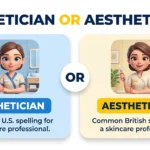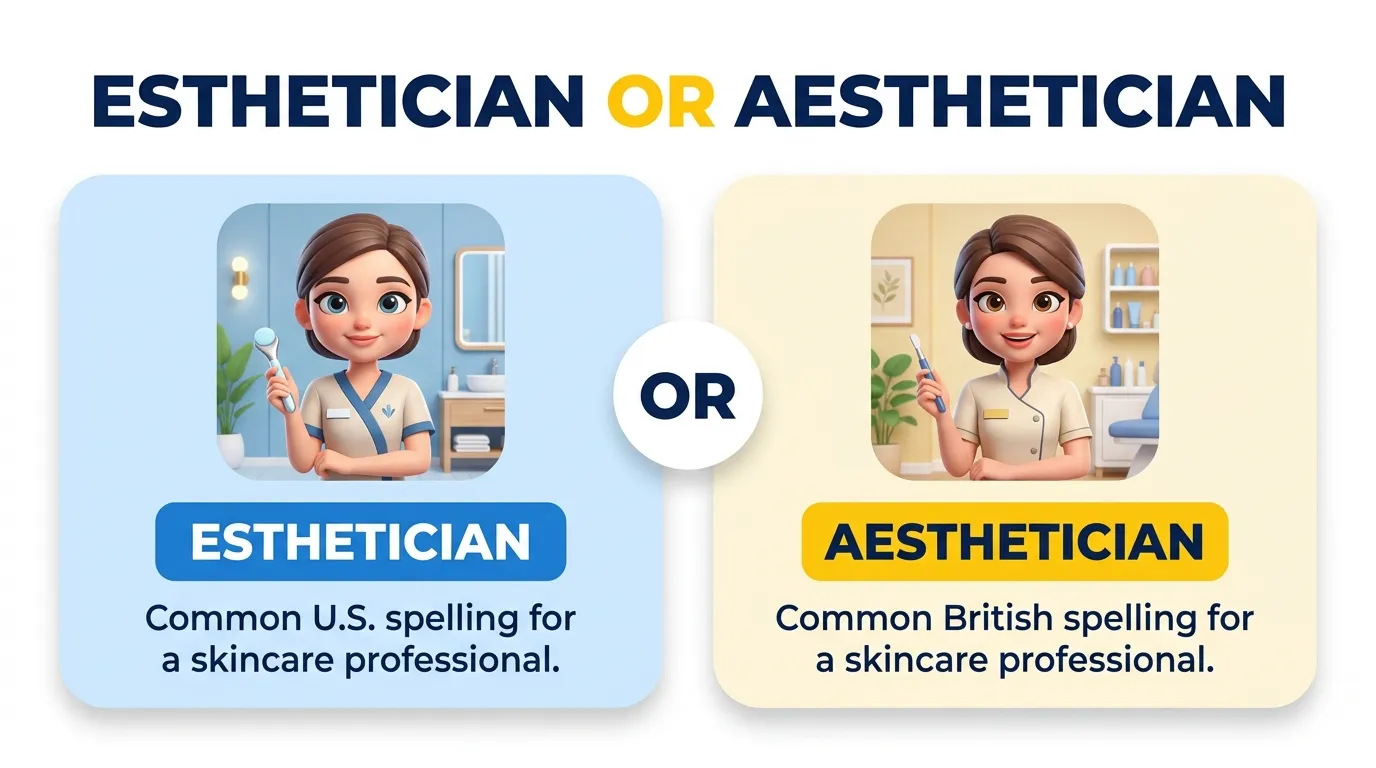
Esthetician and Aesthetician are both correct spellings for a skincare professional. Esthetician is more common in American English, while aesthetician is common in British English and some U.S. settings.
The red squiggly line appeared under “aesthetician” as you finished a client email. You changed it, then changed it back, unsure which spelling looked right. If that sounds familiar, you are not alone.
So, the short answer is simple: both forms are used, but esthetician is the usual choice for U.S. writing. Aesthetician is also correct, especially in British English and some professional settings.
Esthetician or Aesthetician: Quick Answer
Both words can describe a trained skincare professional who works on the care and appearance of skin. Common services may include facials, skin care advice, hair removal, and other beauty treatments.
For example:
- “She is an esthetician at a spa in Texas.”
- “She works as an aesthetician at a beauty clinic in London.”
So, neither spelling is simply a typo. The main difference is regional usage and context.
The Origin of Esthetician and Aesthetician
The two forms come from the word aesthetic, which relates to beauty and the way things look or feel. Over time, English developed both aesthetician and esthetician as accepted forms.
American English often uses the shorter esthetic form in this word family. Meanwhile, British English more often keeps the opening “a,” giving us aesthetician.
However, the pattern is not absolute. You can still see aesthetic and aesthetician in American writing. That is why the spelling can feel less clear than pairs such as color and colour.
In fact, the key point is that the extra “a” does not automatically create a different job. In many everyday uses, both words point to the same kind of skincare professional.
Esthetician or Aesthetician Explained: Key Differences
The clearest difference is spelling. In U.S. English, esthetician is the more common choice for a skincare professional. Meanwhile, aesthetician is widely used in British English and can also appear in American professional or medical skincare settings.
Context can affect the title you see. For example, a clinic may choose aesthetician as part of its brand or job title, even when an American writer would normally choose esthetician.
| Term | Meaning | When to Use | Region/Context |
| esthetician | Skincare and beauty professional | U.S. writing and everyday use | Mainly American English |
| aesthetician | Skincare and beauty professional | British writing or when a workplace uses this title | Mainly British English |
Still, neither spelling tells you by itself how much training a person has. Licensing rules and job titles can vary by location, so the exact title used by a local board or employer may differ.
Esthetician vs. Aesthetician in American English
For most U.S. readers, esthetician will look more familiar. So, it is a natural choice for a salon website, resume, job post, or general article aimed at Americans.
Still, aesthetician is not wrong in American English. You may see it in medical skincare, beauty brands, professional titles, and other settings.
Esthetician vs Aesthetician: Comparison at a Glance
| Term/Variant | Meaning | Region/Context | Best Used When |
| Esthetician | Skincare professional | U.S. English | Writing for a U.S. audience |
| Aesthetician | Skincare professional | British English and some U.S. contexts | Writing for a British audience or matching a set title |
| Medical esthetician | Skincare professional in a medical setting | U.S. professional context | When the role is specifically medical or clinical |
| Medical aesthetician | Skincare professional in a medical setting | Professional and international contexts | When that exact title is used by the workplace |
Which One Should You Use?
For a U.S. audience, use esthetician because it is the more familiar American form. This choice works well for general writing, resumes, websites, and everyday messages.
For a British audience, choose aesthetician because it fits the usual British spelling. Likewise, the same rule can help when you are writing for a UK beauty business or local readers.
When you are using an official job title, copy the spelling used by the employer or local licensing body. That way, your wording matches the title they actually use.
If your audience is mixed, either form can work. However, pick one spelling and stay consistent throughout the page.
Common Mistakes with Esthetician or Aesthetician
- One mistake is treating aesthetician as wrong.
Correction: Both spellings are used. The better choice depends on region and context. - Another mistake is assuming the extra “a” means a different job.
Correction: In many cases, both words describe a skincare professional. The title alone does not prove a different level of training. - A third mistake is using esthetician for every English audience.
Correction: Use aesthetician when writing for readers who expect British English. - Another common mistake is switching spellings on one page.
Correction: Choose one form based on your audience, then keep it consistent. - One more mistake is changing an official title just to match your preference.
Correction: Keep the spelling used by the employer, school, or licensing body when you are naming a formal role.
Esthetician or Aesthetician in Real-World Examples
Professional Email
“Please contact our esthetician to book your facial consultation.”
So, this sounds natural for a U.S. beauty business. For a British business, aesthetician may fit better.
News Headline
“Local esthetician Opens New Skin Care Studio”
A U.S. publication may use the shorter spelling. However, a UK publication may choose aesthetician.
Social Post
“Meet our new esthetician and learn about our skin care services.”
For social media, the best spelling usually depends on the audience you want to reach. In other words, match the word to the readers.
Formal Document
“Jane Smith is a licensed esthetician with experience in skin care services.”
If the person’s official title uses aesthetician, keep that spelling instead. In formal writing, matching the real title is more useful than forcing one spelling.
Esthetician or Aesthetician: Data, Trends & Usage
Searches for this word pair usually come from people who are checking a spelling, writing a job title, or learning the difference between American and British English. Job seekers, beauty businesses, students, editors, and everyday writers can all have this question.
In U.S. search intent, the main need is often simple: Which spelling should I use? So, this is mainly a spelling and word-usage topic, rather than a question about a completely different profession.
Meanwhile, both spellings remain visible online because beauty businesses and workplaces do not always use the same title. As a result, knowing both forms helps you understand job posts, profiles, and professional pages without assuming one is a mistake.
FAQs About Esthetician or Aesthetician
Is esthetician or aesthetician correct?
Both esthetician and aesthetician are correct spellings. However, esthetician is usually the better choice for American English, while aesthetician is common in British English.
Is esthetician the American spelling?
Yes, esthetician is the common American spelling for the skincare profession. Still, aesthetician also appears in U.S. writing, so it is not automatically wrong.
Is aesthetician the British spelling?
Yes, aesthetician is commonly used in British English. Therefore, it is a natural choice when your readers or workplace use British English.
Are an esthetician and an aesthetician the same thing?
In many everyday uses, yes, they refer to the same type of skincare professional. However, a workplace may use a specific title for its own role, so the exact duties can depend on the setting.
Should I use esthetician on a U.S. resume?
For a general U.S. resume, esthetician is a clear and familiar choice. If your employer, license, or job posting uses aesthetician, though, matching that title can make your resume more precise.
Why are there two spellings?
The two forms come from the same word family built around aesthetic. Over time, American and British English developed different preferences, which is why both spellings are still seen.
Is aesthetician more professional than esthetician?
No spelling is automatically more professional. Instead, choose the form that fits your region, audience, and the official title used in your workplace.
Final Thoughts on Esthetician or Aesthetician
The choice between esthetician or aesthetician is mainly about spelling, region, and context. Both forms can describe a skincare professional, so seeing one instead of the other does not mean the other is wrong.
For U.S. writing, esthetician is usually the safest everyday choice. British readers are more likely to expect aesthetician. Still, an employer or professional body may use its own title, so check that wording when you are naming a formal role.
Most of all, stay consistent. Pick the spelling that matches your readers, keep it the same across your page, and you will avoid the most common mistake. Now you can write your next email, resume, or article with confidence.
Curious about similar words? Explore Smelt or Smelled.

I studied English literature and have spent years editing content for blogs and digital platforms. I noticed most people struggle with choosing between two similar words. At WordsCombo, I make that choice simple and clear.