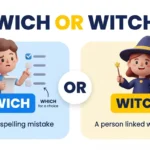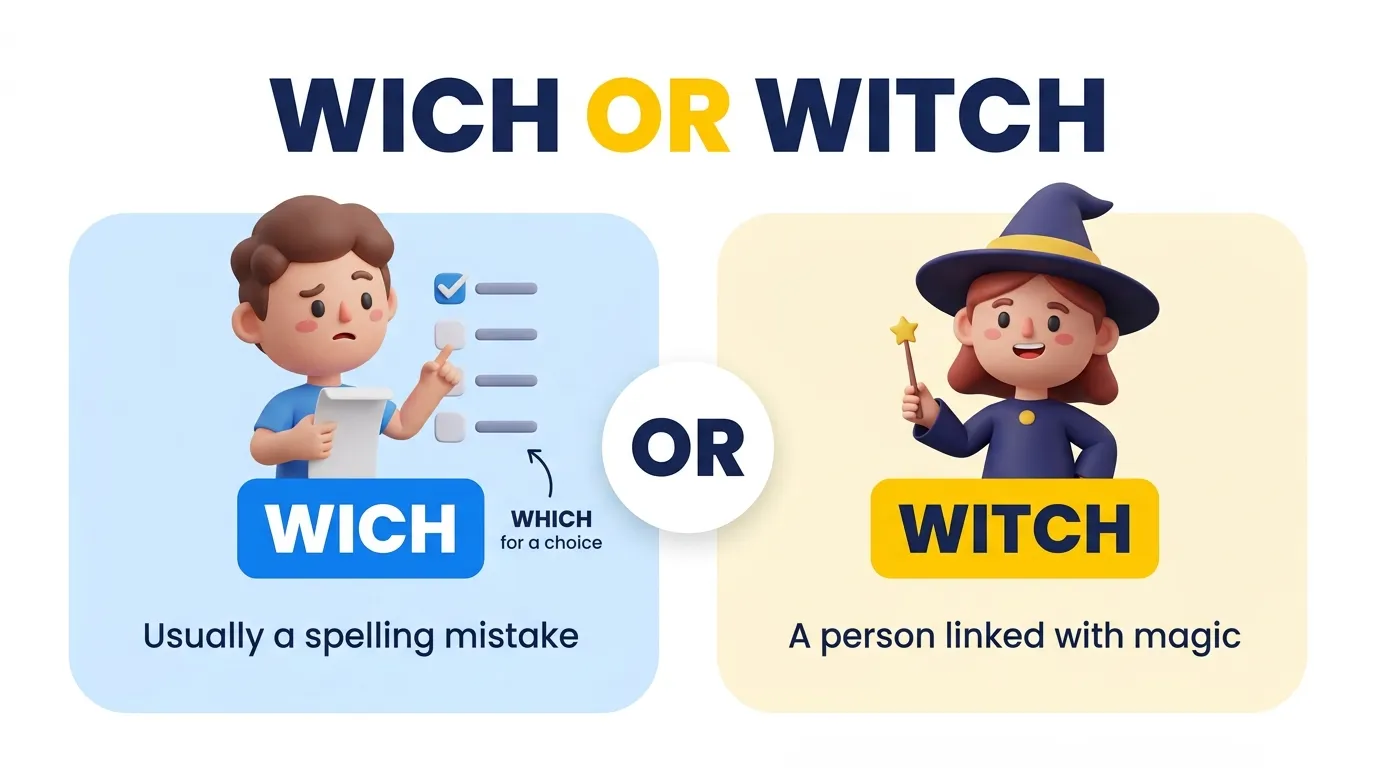
Wich or witch can be confusing, but witch means a person linked with magic, while which is used for a choice or question. Wich is usually a spelling mistake in everyday English.
A red squiggly line appears under “wich” as you finish an email. You know the sentence asks about a choice, but the spelling suddenly looks wrong. This is where wich or witch can cause trouble, especially because which and witch sound the same for many speakers.
The simple rule is clear: use which for a choice or identification, and use witch for a person connected with magic. In normal writing, wich is usually not the word you want.
Wich or Witch: Quick Answer
Which is the correct word when you ask about a choice, person, or thing.
For example:
- Which book should I read?
- Which color do you like?
Witch is a noun for a person traditionally connected with magic or witchcraft.
For example:
- The witch lived in an old house.
- The story has a young witch.
So, if you mean a choice, use which. If you mean magic, use witch.
The Origin of Wich or Witch
The confusion starts with sound. Which and witch are pronounced the same way by many English speakers, so hearing the word does not always tell you how to spell it.
The two words also have very different histories. Which comes from an old English word used to ask about a particular person or thing. Over time, its spelling changed into the form we use today.
Meanwhile, witch has a much older history connected with ideas about magic and people believed to have special powers. The word has appeared in stories, folklore, and everyday language for many centuries.
What about wich? In standard modern English, it is usually a spelling error when someone means which or witch. However, you may see the letters wich inside some older place names. That does not make it the normal spelling of either word.
Wich or Witch Explained: Key Differences
The easiest way to remember wich or witch is to focus on meaning instead of sound.
Which is a grammar word. It can ask about a choice or help connect information in a sentence.
Witch is a noun. It refers to a person associated with magic, witchcraft, or similar ideas.
Here are the main differences:
| Term | Meaning | When to Use | Region/Context |
| Which | A word used for a choice or identification | Questions, choices, and some clauses | Standard English |
| Witch | A person associated with magic or witchcraft | Stories, folklore, fantasy, and related contexts | British and American English |
| Wich | Usually a spelling mistake in everyday English | Normally avoid it as a standalone word | Rare historical or name-based uses |
For example, compare these two sentences:
Which dress should I wear?
The witch wore a black dress.
The first sentence asks you to choose. The second talks about a magical person.
Which Is Used for Choices
Use which when you want someone to choose or identify something.
For example:
- Which phone is yours?
- Which answer is correct?
- Which road should we take?
Also, which can refer back to something already mentioned.
She bought a new laptop, which was on sale.
Here, the word does not ask a question. Instead, it adds information about the laptop.
Witch Is Used for Magic
Use witch when you mean a person connected with magic or witchcraft.
For example:
- The witch cast a spell.
- The children dressed as witches.
- A young witch appeared in the story.
The plural form is witches, not “witchs.”
Wich vs Witch: Comparison at a Glance
| Term/Variant | Meaning | Region/Context | Best Used When |
| Which | Choice, identification, or sentence connector | Standard English | Asking which option or adding information |
| Witch | Person associated with magic | Standard English | Talking about magic, folklore, or fantasy |
| Wich | Usually an incorrect spelling in everyday writing | Rare historical or name-based contexts | Normally not used as a standalone word |
A quick memory trick can make this much easier.
Which = choice.
Witch = magic.
Wich = check your spelling.
Once you connect each spelling with its meaning, the difference becomes much easier to remember.
Which One Should You Use?
Your choice depends on what you want the sentence to mean.
For questions about a choice, use which because it asks you to identify an option.
Which movie should we watch?
For a person linked with magic, use witch because it names that person.
The witch entered the castle.
For formal writing, use which or witch based on the meaning. Both are standard English words.
For everyday writing, avoid wich because it will usually be seen as a spelling error.
For example:
❌ Wich one should I choose?
✅ Which one should I choose?
However, if you are writing a proper name that contains “wich,” keep the spelling used by that name.
Common Mistakes with Wich or Witch
Writing “wich” for “which”
This happens when the writer spells the word the way it sounds.
❌ Wich book do you want?
✅ Which book do you want?
Because the missing h is easy to overlook, this mistake can appear in quick messages.
Using “witch” for a choice
The sound can trick you into choosing the wrong spelling.
❌ Witch option should I select?
✅ Which option should I select?
The sentence asks for a choice, so which is the right word.
Using “which” for a magical person
The opposite mistake can happen too.
❌ The which flew over the castle.
✅ The witch flew over the castle.
Here, the sentence describes a magical person, so witch is needed.
Treating “wich” as the British spelling
British English does not use wich as the normal spelling of which.
For example, both British and American English use:
Which one do you prefer?
The spelling stays the same in both forms of English.
Choosing by sound alone
Sound is not always a safe spelling guide.
Because which and witch sound alike for many speakers, you need to look at the meaning. That simple habit can prevent both spelling mistakes.
Wich or Witch in Real-World Examples
Knowing the rule is useful, but real examples make it easier to remember.
In a Professional Email
Which version should I send to the client?
Here, the writer is asking about a choice, so which is correct.
In a News Headline
Witch Appears in New Fantasy Film
In this example, witch refers to a character connected with magic.
In a Social Post
Which outfit should I wear tonight?
The writer wants people to choose between options, so which is correct.
In a Formal Document
The report explains which option was selected.
Here, which identifies a particular option.
In a Story
The witch walked through the dark forest.
The word refers to a person associated with magic, so witch is correct.
When “Wich” Appears in a Name
You may sometimes see wich as part of a place name or another established name.
In that case, do not change the spelling simply because it looks unusual. Proper names can preserve older spellings that are different from normal everyday words.
Wich or Witch: Data, Trends & Usage
Searches for wich or witch usually come from a spelling problem. People often hear one word and then need to decide which spelling belongs in their sentence.
The main search intent is therefore informational and spelling-focused. English learners, students, writers, and people checking a quick message may all have the same problem.
Another reason this topic stays useful is that which and witch can sound identical. As a result, the problem can happen even when someone knows the meaning of both words.
The extra form wich adds another layer of confusion. People may type it because they hear the sound and leave out the letters they do not expect.
For practical writing, the strongest rule is simple: think about the meaning first, then choose the spelling.
FAQs About Wich or Witch
Is “wich” a correct English word?
In ordinary modern English, wich is usually not the spelling you need for a normal sentence. However, you may see it in some older names or special historical uses.
Is it which or witch?
Both which and witch are correct words, but they have different meanings. Use which for a choice or identification, and use witch for a person associated with magic.
Which is correct, wich or witch?
Neither word can be chosen without knowing the meaning. If you mean a choice, use which. If you mean a magical person, use witch, while wich is usually a spelling mistake.
Are which and witch pronounced the same?
For many English speakers, yes. They are commonly pronounced alike, which is why their spelling can be confusing.
Is wich the British spelling of which?
No. Which is the standard spelling in both British and American English. Wich is not the normal British form.
How do you remember which and witch?
Think which = choice and witch = magic. If you are choosing between things, use which. If you are talking about a magical person, use witch.
Can “which” be used in formal writing?
Yes. Which is a standard English word and is common in formal writing, emails, reports, and academic work. It can be used for questions, choices, and some relative clauses.
Final Thoughts on Wich or Witch
The difference between wich or witch becomes simple when you focus on meaning. Use which when you are asking about a choice or identifying something. Use witch when you mean a person connected with magic or witchcraft.
Remember the short rule: which means choice, witch means magic, and wich is usually a spelling mistake. Also, do not assume that sound will guide you, because which and witch can sound the same.
Before you send that email, post that comment, or finish your schoolwork, check what the word means. Then choose the spelling that matches it. Keep this simple rule in mind, and you will avoid this common mistake with confidence.
Curious about similar words? Explore Demasculate or Emasculate? The Right Word in 2026
.

I have been working with English language content for over six years. I specialize in word comparisons and spelling differences that most people overlook. At WordsCombo, I help readers choose the right word every time.