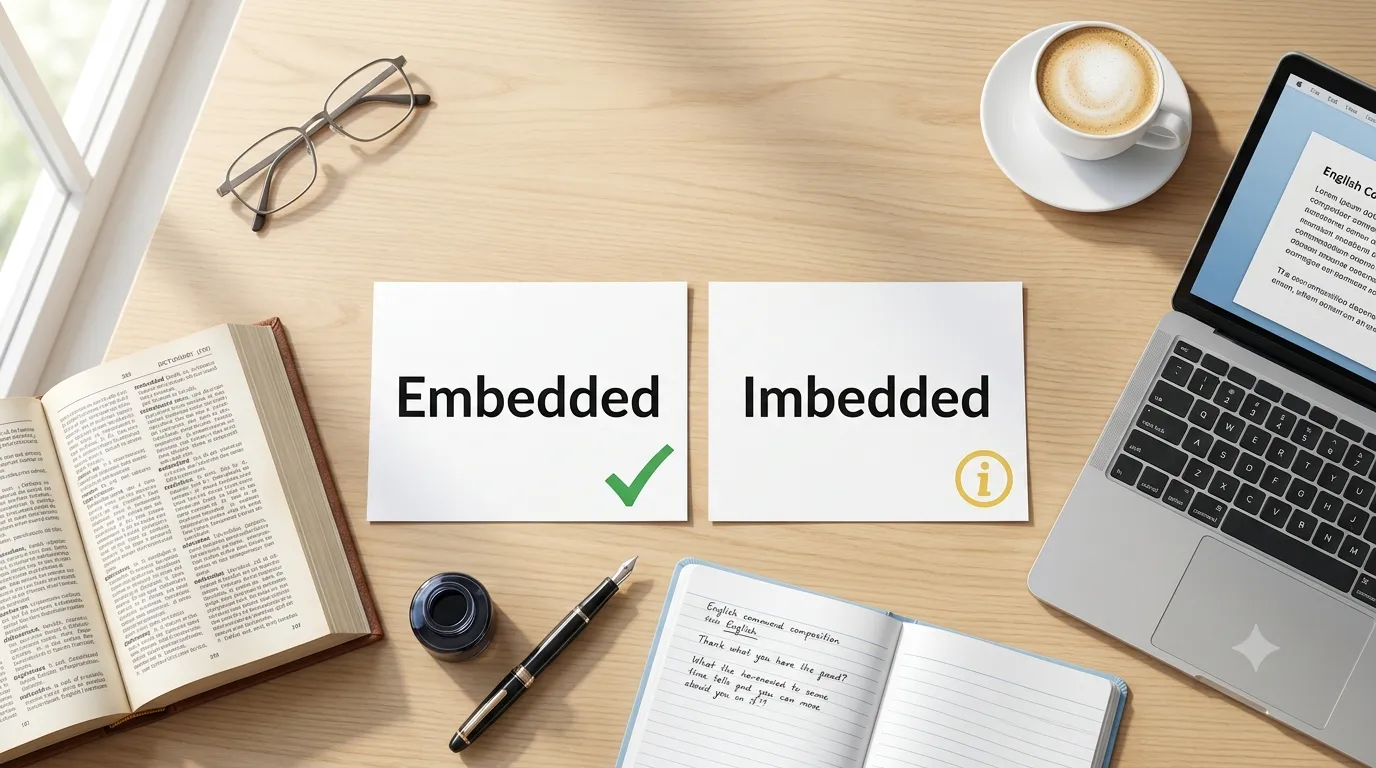
Embedded is the modern and preferred spelling in English. Imbedded is an older spelling that is still correct but much less common today. For almost all writing, embedded is the best choice.
Have you ever paused while writing because you weren’t sure whether to type embedded or imbedded? You’re not alone. This small spelling difference confuses students, writers, professionals, and even native English speakers.
The confusion happens because both words appear in dictionaries. That makes many people wonder if one is wrong, if they have different meanings, or if each belongs to a different type of English.
The good news is simple. The two spellings mean the same thing. However, one is used far more often than the other.
This guide explains everything you need to know about embedded and imbedded. You’ll learn where the words came from, which spelling is preferred today, when each one may appear, common mistakes to avoid, and real life examples. By the end, you’ll know exactly which spelling to use with confidence.
Imbedded or Embedded: Quick Answer
Embedded is the standard spelling in modern English. It is the preferred choice in schools, business writing, journalism, academic papers, and technology.
Imbedded is an accepted variant, but it appears much less often.
Examples
- The engineer embedded a microchip into the device.
- A reporter was embedded with the military.
In almost every situation, choosing embedded is the safest option.
The Origin and Background of Embedded or Imbedded
The word comes from the verb embed, which means to fix something firmly inside something else.
Its history goes back hundreds of years. Earlier English sometimes used both embed and imbed, leading to the past forms embedded and imbedded.
Over time, language changed.
Today:
- Embed became the standard verb.
- Embedded became the standard past tense and adjective.
- Imbed and imbedded gradually became uncommon.
Modern dictionaries still recognize imbedded, but most style guides recommend embedded because it is clearer and more familiar.
Embedded or Imbedded Explained
Although both spellings have the same meaning, their usage is different.
| Term | Meaning | When to Use | Region/Context |
|---|---|---|---|
| Embedded | Fixed firmly inside something | Everyday writing | Worldwide |
| Imbedded | Same meaning | Rare or historical writing | Older publications |
Example Using Embedded
“The software contains an embedded security feature.”
Example Using Imbedded
“The fossil was imbedded in the rock.”
Both sentences are correct, but most editors would change the second one to embedded.
Which Version Should You Use?
The answer depends on your audience.
For Students
Use embedded.
Teachers and textbooks almost always expect this spelling.
For Business Professionals
Choose embedded.
It looks modern and professional.
For Academic Writing
Always use embedded unless quoting an older source.
For Technical Writing
Technology uses embedded almost exclusively.
Examples include:
- Embedded systems
- Embedded software
- Embedded devices
- Embedded programming
For Historical Quotes
Keep imbedded only if it appears in the original quotation.
Best Choice for Everyone
Embedded is the safest and most widely accepted spelling.
Common Mistakes with Embedded or Imbedded
Here are mistakes people often make.
| Mistake | Correct Version | Why It Happens |
|---|---|---|
| Imbedded system | Embedded system | Technology uses “embedded.” |
| Imbeded | Embedded | Missing a letter. |
| Embeded | Embedded | Forgot one “d.” |
| Embeded code | Embedded code | Common spelling error. |
| Switching spellings | Stay consistent | Consistency improves readability. |
Tips
- Remember that the verb is usually embed.
- The past form is normally embedded.
- Use one spelling throughout your document.
Embeded or Imbedded in Real World Examples
Professional Email
“Our new software includes an embedded security feature that protects customer information.”
News Headline
“Journalist Embedded With Rescue Team During Flood Response”
Social Media Post
“I’m learning embedded programming this week. It’s challenging but exciting!”
Formal Report
“The company installed an embedded monitoring system to improve equipment performance.”
Embedded or Imbedded: Data, Trends & Usage
Language usage has changed over time.
Today, embedded appears far more often than imbedded in books, newspapers, websites, and research papers.
Search Intent
Informational
People usually search because they want to know:
- Which spelling is correct
- Whether both words are acceptable
- Which version to use in formal writing
Where Interest Is Highest
This topic is popular among:
- Students
- English learners
- Writers
- Editors
- Software developers
- Technical professionals
Why It Matters Today
The word embedded appears everywhere in technology. You see it in discussions about embedded systems, software development, electronics, artificial intelligence, and cybersecurity. Using the standard spelling helps your writing match modern expectations.
Standalone Comparison Table
| Term/Variant | Meaning | Region/Context | Best Used When |
|---|---|---|---|
| Embedded | Fixed inside something | Worldwide | Almost every situation |
| Imbedded | Same meaning | Older English | Historical texts or direct quotations |
| Embed | Present tense verb | Standard English | Everyday writing |
| Imbed | Variant verb | Rare | Historical or older publications |
Frequently Asked Questions
Q: What does embedded mean?
A: Embedded means something is fixed firmly inside something else. It can describe physical objects, software, electronics, or people working closely with a group.
Q: How do you use embedded correctly?
A: Use embedded whenever you describe something placed securely inside another thing. It is the preferred spelling in modern English.
Q: Embedded vs. imbedded what’s the difference?
A: There is no difference in meaning. The only real difference is usage. Embedded is the modern standard, while imbedded is an older spelling.
Q: Is embedded acceptable in formal writing?
A: Yes. It is the recommended spelling for academic papers, business documents, journalism, and professional communication.
Q: Which version is correct embedded or imbedded?
A: Both are technically correct. However, embedded is overwhelmingly preferred today and is the spelling you should normally choose.
Q: Where does embedded come from?
A: It comes from the verb embed, meaning to place something firmly within another object. The spelling evolved over time and became the modern standard.
Q: Can embedded be used in technology?
A: Yes. It is one of the most common words in technology. Terms such as embedded systems, embedded software, and embedded devices are widely used across the industry.
Conclusion
The debate between embedded and imbedded is much simpler than it first appears. Both spellings share the same meaning, but modern English strongly favors embedded. It is the spelling used in schools, businesses, news articles, academic writing, and the technology industry.
If you want your writing to look professional and up to date, choose embedded. Reserve imbedded only when quoting older material or preserving historical text.
Remember these key points:
- Embedded is the modern standard.
- Imbedded is an older but accepted variant.
- Both have the same meaning.
- Consistency matters more than anything else.
Now you know exactly how to use embedded correctly. Bookmark this guide so you never second guess the spelling again, and share it with someone who has been confused by “embedded” and “imbedded.”

I started writing about English word differences after years of teaching students who kept making the same mistakes. My focus is on making spelling rules feel simple and easy to remember. At WordsCombo, I turn confusing word pairs into clear comparisons.