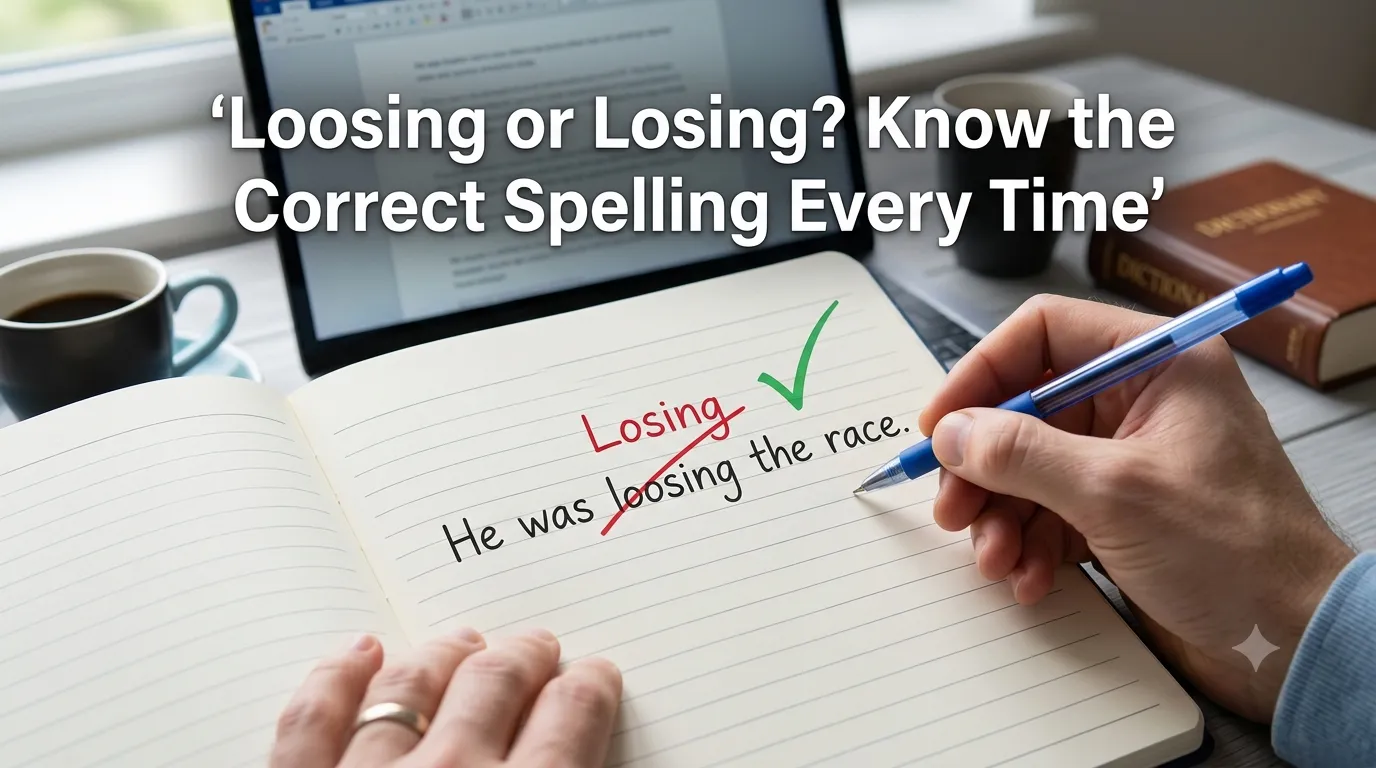
Losing is the correct spelling when you mean not winning or no longer having something. Loosing is a real word too, but it means to release, untie, or set free, and it is rarely used in everyday writing.
A few years ago, I was editing an article for a client when I noticed the sentence, “Our company is loosing money every month.” The writer was smart and experienced. Yet this tiny spelling mistake changed the meaning of the sentence.
That moment reminded me how easy it is to mix up loosing and losing. They look almost the same. They sound similar. Most spell checkers may not even catch the mistake because both words are real English words.
If you have ever stopped before typing losing because you were unsure about the spelling, you are not alone. Students, bloggers, business owners, and even professional writers make this mistake every day.
By the end of this guide, you will know exactly when to use losing and when loosing is actually correct. You’ll also see real examples, common mistakes, and easy tricks to remember the difference.
Loosing or Losing: Quick Answer
The correct word in most situations is losing.
Use losing when talking about:
- Not winning a game
- Misplacing something
- Having less of something
- Becoming weaker or smaller
Use loosing only when you mean releasing, untieing, or setting something free.
Examples
✅ She is losing weight.
✅ We are losing customers.
✅ The sailor is loosing the rope.
✅ The archer is loosing an arrow.
The Origin and Background of Loosing or Losing
The word lose comes from Old English losian, which meant “to perish” or “be destroyed.”
The word losing simply became the present participle of lose.
The word loose, however, has a different history. It comes from Old Norse and means “not tight.”
From loose, English developed the verb loose, meaning “to release.”
That is where loosing comes from.
The confusion happens because:
- The words look almost identical.
- They sound similar.
- Many people think adding “-ing” to lose should create loosing.
English does not work that way.
Instead:
- Lose → Losing
- Loose → Loosing
Loosing or Losing Explained: Key Differences
The biggest difference is simple.
Losing relates to lose.
Loosing relates to loose.
| Term | Meaning | When to Use | Region/Context |
|---|---|---|---|
| Losing | Not winning or no longer having something | Everyday English | Worldwide |
| Loosing | Releasing or setting free | Literature, history, archery, sailing | Less common |
Examples
Losing
- I am losing my keys.
- They are losing the match.
- She is losing confidence.
Loosing
- The hunter was loosing an arrow.
- The sailor was loosing the knot.
- The king ordered soldiers to begin loosing their horses.
Which Version Should You Use?
For almost everyone, the answer is easy.
For Students
Use losing unless your teacher is discussing historical writing or special vocabulary.
For Bloggers and Content Writers
Use losing nearly every time. It is the word your readers expect.
For Business Professionals
Always use losing when discussing:
- Money
- Customers
- Sales
- Opportunities
- Time
For Authors and Novel Writers
Use loosing only if characters are:
- Shooting arrows
- Untying ropes
- Releasing animals
- Setting prisoners free
For Global English
Choose losing in almost every situation.
Common Mistakes with Loosing or Losing
These mistakes appear everywhere.
| Mistake | Correct Version | Why It Happens |
|---|---|---|
| I am loosing weight. | I am losing weight. | Confusing lose with loose |
| Our team is loosing. | Our team is losing. | Similar spelling |
| She keeps loosing her phone. | She keeps losing her phone. | Habit of adding extra “o” |
| We are loosing money. | We are losing money. | Common typing mistake |
| They are loosing customers. | They are losing customers. | Word confusion |
Easy Memory Trick
Think of this:
Lose loses one “o.”
So:
- Lose
- Losing
Both have only one o.
Loosing or Losing in Real-World Examples
Professional Email
We are losing new customers because our website loads too slowly.
News Headline
Local Team Keeps Losing Close Matches This Season
Social Media Post
I’m finally losing the fear of speaking in public!
Formal Report
The company is losing market share in several regions due to increased competition.
Historical Example
The soldiers began loosing arrows toward the castle walls.
Loosing or Losing: Data, Trends & Usage
The spelling losing is searched thousands of times every month because many people are unsure whether they need one “o” or two.
The confusion is especially common among:
- Students
- ESL learners
- Bloggers
- Business writers
- Social media users
Search Intent
Primary intent: Informational
People usually want to know:
- Which spelling is correct
- Why both words exist
- How to avoid mistakes
Why This Matters Now
Online writing has become part of everyday life. Emails, blogs, resumes, and social posts all need clear spelling. Using losing correctly helps your writing look more professional and trustworthy.
Comparison Table
| Term/Variant | Meaning | Region/Context | Best Used When |
|---|---|---|---|
| Losing | Not winning or no longer having something | Standard English worldwide | Everyday writing |
| Loosing | Releasing or setting free | Literary, historical, archery, sailing | Special situations only |
Frequently Asked Questions
Q: What does losing mean?
A: Losing means not winning, no longer having something, or becoming smaller. It is the correct spelling in almost all everyday situations.
Q: How do you use losing correctly?
A: Use losing when talking about losing a game, losing money, losing weight, losing patience, or losing your keys.
Q: Loosing vs losing: what’s the difference?
A: Losing means not winning or no longer having something. Loosing means releasing or setting something free.
Q: Is loosing acceptable in formal writing?
A: Yes, but only when you truly mean releasing something. Otherwise, formal writing should use losing.
Q: Which version is correct: loosing or losing?
A: Losing is correct for nearly every everyday sentence. Loosing is correct only in specific contexts like archery, sailing, or historical writing.
Q: Where does loosing come from?
A: It comes from the verb loose, which means to release or untie something.
Q: Can loosing be used in modern English?
A: Yes. It still appears in books, historical stories, military writing, sailing, and archery. However, it is uncommon in everyday conversation.
Conclusion
The difference between loosing and losing is much easier than it first appears. Remember these key points. Losing is the correct spelling when you mean not winning, misplacing something, or having less of something. Loosing is also a real word, but it means releasing or setting something free. Because loosing is rarely used in daily English, most people actually need losing.
Whenever you write an email, blog post, school assignment, or business report, pause for a second and ask yourself what you really mean. If you are talking about defeat, money, time, weight, customers, or possessions, choose losing.
That simple habit will make your writing clearer and more professional.
Now you know exactly how to use loosing or losing. Bookmark this guide so you never second-guess the spelling again, and share it with someone who has made this common mistake.
Curious about similar word choices? Explore Loose or Lose.

I started writing about English word differences after years of teaching students who kept making the same mistakes. My focus is on making spelling rules feel simple and easy to remember. At WordsCombo, I turn confusing word pairs into clear comparisons.






1 thought on “Loosing or Losing: The Complete Guide to the Correct Spelling”