Prostrate or prostate are different words. Prostate is a male body gland, while prostrate usually means lying flat or weak from exhaustion.
Have you ever typed “prostrate” when you meant “prostate”? You are not alone. These two words look almost the same, sound similar in some speech, and can cause awkward mistakes.
The difference is simple once you see it.
Prostate is mainly a medical word. It refers to a small gland in the male reproductive system. You may see it in phrases such as prostate cancer, prostate exam, or enlarged prostate.
Prostrate, on the other hand, is a general English word. As a verb, it can mean to lie flat on the ground. As an adjective, it can describe someone who is lying flat or extremely weak.
That one extra r changes the meaning completely.
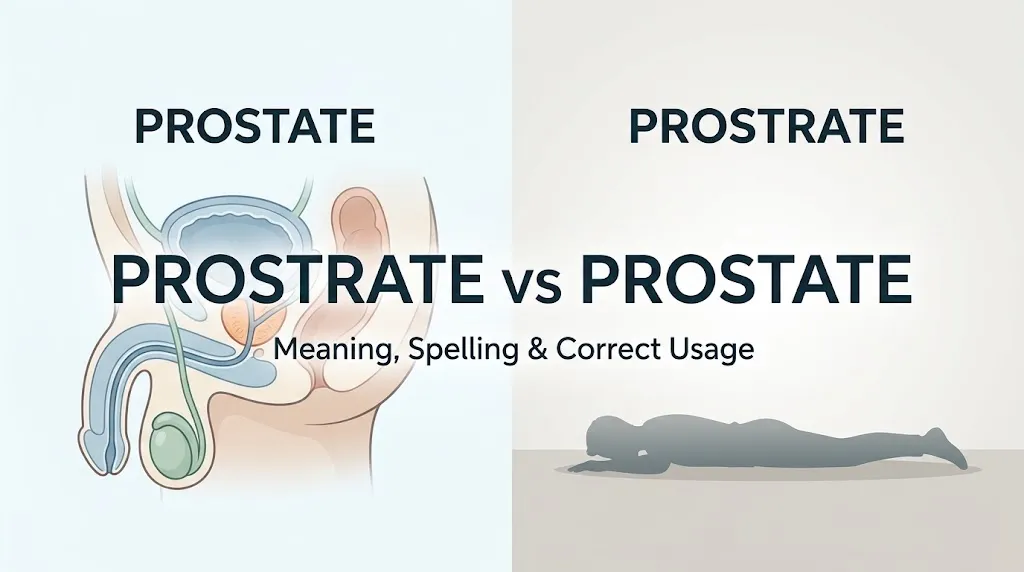
As an English teacher, one of the best ways to learn confusing words is to connect each word with a clear image. Think of the prostate as a body part. Think of prostrate as a person lying flat.
This guide will show you the meaning, origin, differences, common mistakes, and real world uses of both words. By the end, you should never have to guess which spelling to use.
Prostrate or Prostate
The easiest rule is this:
- Prostate = a gland in the male reproductive system.
- Prostrate = lying flat, or being very weak or exhausted.
Simple examples
Prostate:
The doctor checked his prostate during the medical exam.
Prostrate:
The runner was prostrate on the ground after the race.
Here is a quick memory trick:
Prostate = body gland.
Prostrate = flat on the ground.
If you are talking about health, doctors, cancer, urination, or the male reproductive system, prostate is almost certainly the word you need.
If you are describing someone lying flat or completely exhausted, prostrate may be correct.
The Origin and Background of Prostrate and Prostate
The two words look similar because they have related historical roots. Both came into English through Latin and French forms.
Prostate comes from a Latin word connected with the idea of standing before or in front of. The name refers to the gland’s position near the bladder and urethra.
In modern English, prostate is mainly used in medical contexts.
You will often see it in terms such as:
- prostate gland
- prostate cancer
- prostate health
- enlarged prostate
- prostate screening
- prostate examination
Prostrate has a different development. It comes from Latin roots linked to the idea of stretching or laying down.
That meaning remains clear today.
For example:
He lay prostrate on the floor.
It can also describe someone who is extremely tired:
After the long hike, she was prostrate with exhaustion.
The words became easy to confuse because their spelling is so close. One letter, however, creates a very different meaning.
Prostrate or Prostate Explained: Key Differences
The biggest difference is meaning and context.
| Term | Meaning | When to Use | Region/Context |
|---|---|---|---|
| Prostate | A gland in the male reproductive system | Medical and health topics | Standard English |
| Prostrate | Lying flat or completely exhausted | Physical position or condition | Standard English |
| Prostrated | Made weak or exhausted | Describing the effect of something | Standard English |
| Prostration | A state of extreme weakness or lying flat | Formal or medical writing | Standard English |
Prostate
Use prostate when you mean the gland.
Examples:
His doctor discussed prostate health with him.
The patient had an enlarged prostate.
He was worried about prostate cancer.
Prostrate
Use prostrate when you mean lying flat or being overcome by weakness.
Examples:
The injured man was prostrate on the ground.
The heat left the workers prostrate with exhaustion.
The context gives you the answer.
If the sentence is about a gland, use prostate.
If the sentence is about lying down or extreme weakness, use prostrate.
Which Version Should You Use?
Your choice depends on what you mean.
For medical or health writing
Use prostate.
This includes:
- health articles
- medical reports
- hospital information
- patient education
- news about prostate cancer
- discussions about urinary symptoms
For example:
Men should talk to a doctor about their prostate health.
For physical position
Use prostrate.
For example:
The soldier was found prostrate on the ground.
Here, the word describes a person’s position.
For extreme tiredness
Use prostrate or prostrated, depending on the sentence.
For example:
The extreme heat left him prostrate.
The long journey prostrated the travelers.
For global and neutral English
There is no American versus British spelling issue here.
Prostate and prostrate are both standard English words. The key issue is not geography. It is meaning.
Common Mistakes With Prostrate or Prostate
These mistakes are common because the words look almost identical.
| Mistake | Correction | Why? |
|---|---|---|
| He has a problem with his prostrate. | He has a problem with his prostate. | A body gland is a prostate. |
| The man was prostate on the floor. | The man was prostrate on the floor. | Lying flat is prostrate. |
| He was checked for prostrate cancer. | He was checked for prostate cancer. | The medical term is prostate cancer. |
| The heat left her prostate. | The heat left her prostrate. | Extreme weakness can be prostrate. |
| She had a prostrate exam. | She had a prostate exam. | The exam concerns the prostate gland. |
Why do these mistakes happen?
The main reason is visual similarity.
The words share almost all their letters:
prostate
prostrate
Notice the extra r in prostrate.
A useful memory trick is:
Prostrate has “strate,” like a person stretched out flat.
This is not a perfect word history lesson, but it can help you remember the spelling.
Prostrate or Prostate in Real World Examples
Seeing the words in natural sentences makes the difference easier to remember.
1. Professional email
Subject: Prostate Health Information
Dear Mr. Khan,
Please find the attached information about prostate health and routine medical care. If you have any questions, please contact your doctor.
Kind regards
Here, prostate is correct because the email is about a body gland.
2. News headline
New Study Examines Prostate Cancer Risk
The word prostate is used because the story concerns a medical condition.
A headline about someone collapsing might use prostrate:
Exhausted Hiker Found Prostrate Near Trail
Here, prostrate describes the hiker’s physical state.
3. Social media post
After a long day of hiking, I was completely prostrate on the sofa!
This use means extremely tired.
A health post might say:
Today I learned more about prostate health and why regular medical advice matters.
4. Formal report
The patient reported concerns related to his prostate and urinary symptoms.
Or:
The heat left several workers prostrate with exhaustion.
The surrounding meaning makes the correct word clear.
Prostrate or Prostate: Data, Trends and Usage
Searches for “prostrate or prostate” often come from people who have already noticed the spelling problem. They may be writing a medical document, reading a health article, or checking a sentence before publishing it.
The search intent is mainly informational.
People usually want to answer one simple question:
“Which spelling is correct?”
The answer depends on the meaning.
Health related searches are especially likely to use prostate because the word appears in many medical terms. These include prostate cancer, prostate enlargement, prostate symptoms, and prostate health.
Meanwhile, prostrate appears less often in everyday speech. It is more common in descriptive or formal writing.
This matters for writers because spell check tools may not catch the mistake. Both prostate and prostrate are real English words.
That means a spelling checker can accept the wrong word.
Meaning, not spelling alone, must guide your choice.
Standalone Comparison: Prostrate vs Prostate
| Term/Variant | Meaning | Region/Context | Best Used When |
|---|---|---|---|
| Prostate | Male reproductive gland | Medical, health, general English | Talking about the gland or related health issues |
| Prostrate | Lying flat | General English | Describing someone’s physical position |
| Prostrate | Extremely weak or exhausted | General and formal English | Describing severe tiredness |
| Prostrated | Made extremely weak | Formal/general English | Explaining the effect of heat, illness, shock, or effort |
| Prostration | Extreme weakness or physical collapse | Formal/medical contexts | Referring to the state itself |
FAQ: Prostrate or Prostate
Q: What does prostate mean?
A: Prostate is the name of a small gland in the male reproductive system. It is often mentioned in discussions about prostate health, prostate cancer, and an enlarged prostate.
Q: What does prostrate mean?
A: Prostrate means lying flat, often face down. It can also describe someone who is extremely weak or exhausted.
Q: Prostrate vs prostate: what is the difference?
A: Prostate is a body gland. Prostrate describes lying flat or being extremely weak. The extra r in prostrate can help you remember the difference.
Q: Is prostate acceptable in formal writing?
A: Yes. Prostate is the standard term for the male reproductive gland. It is widely used in medical, academic, professional, and general writing.
Q: Which is correct: prostrate or prostate cancer?
A: Prostate cancer is correct. The condition affects the prostate gland, so the word does not contain the extra r.
Q: Where does the word prostate come from?
A: Prostate comes from Latin through French and is linked to a word meaning “standing before.” It became the name of the gland because of its position in the body.
Q: Can prostrate be used to mean very tired?
A: Yes. Prostrate can describe someone who is extremely weak or exhausted. For example: “After working all day in the heat, he was prostrate.”
Q: Can I use prostrate when talking about the prostate gland?
A: No. If you mean the gland, use prostate. Writing prostrate gland or prostrate cancer is a spelling mistake.
Conclusion
Prostrate and prostate are easy to mix up, but the rule is simple.
Prostate is a body gland. Use it when you are talking about prostate health, prostate cancer, medical exams, or the male reproductive system.
Prostrate means lying flat or being extremely weak. It is used to describe a person’s position or condition.
The best way to remember the difference is to connect each word with its meaning:
Prostate = gland.
Prostrate = flat or exhausted.
One extra r can completely change your sentence. So do not rely on spell check alone. Read the meaning of the sentence and ask yourself what you are trying to describe.
If you are writing about health, the correct word will usually be prostate. If you are describing someone lying down or overcome by exhaustion, prostrate may be the right choice.
Bookmark this guide so you never second guess “prostrate or prostate” again.
Read more: Pedal or Peddle: The Easy Guide to the Right Word

I have been working with English language content for over six years. I specialize in word comparisons and spelling differences that most people overlook. At WordsCombo, I help readers choose the right word every time.