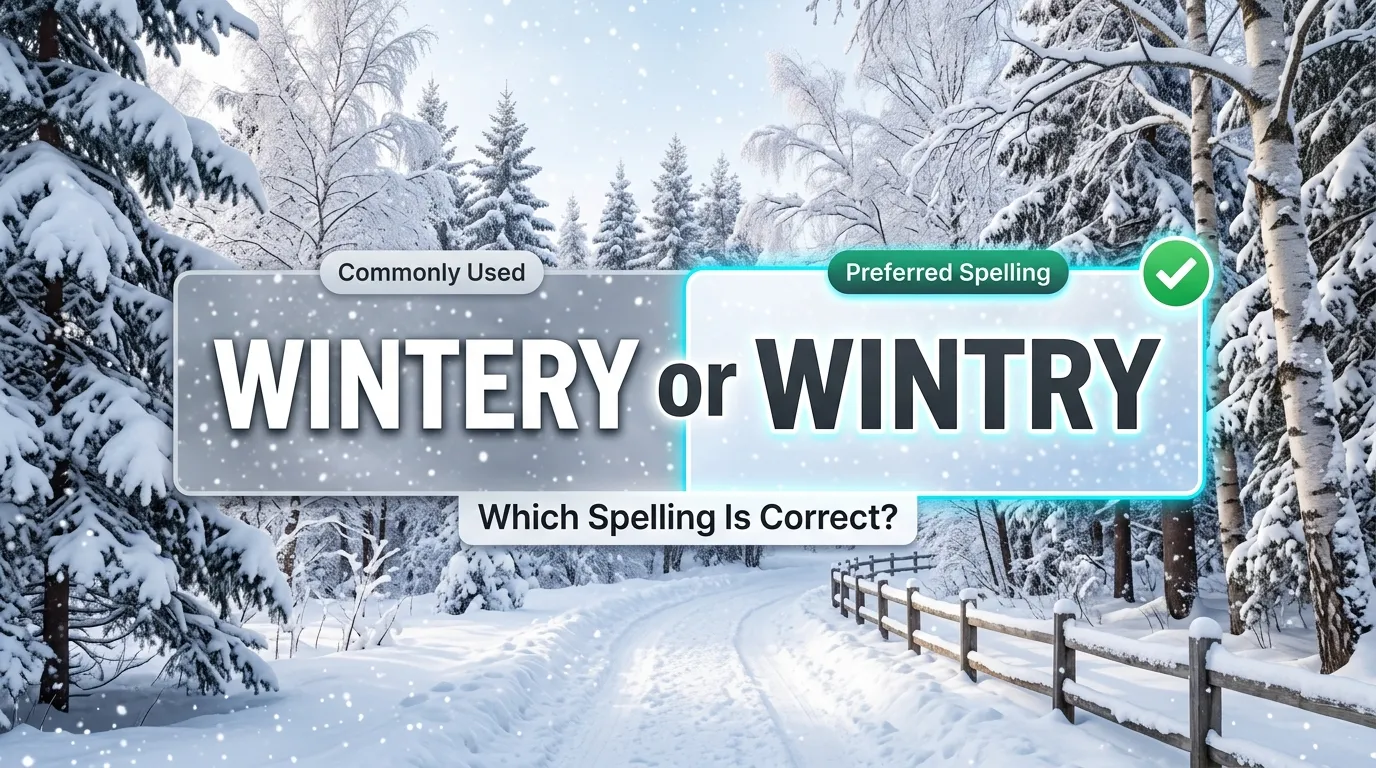
Wintry is the standard and preferred spelling. Wintery is also found, but it is much less common. Both mean “like winter” or “typical of winter.”
Have you ever typed wintery and stopped because it looked a little strange? I have seen this exact problem many times while helping students and writers improve their English. At first glance, wintery seems natural. After all, we say summer-like and form many adjectives by adding -y.
But English has a habit of keeping us on our toes.
The word you will see most often in dictionaries, books, news writing, and polished English is wintry. It means cold, snowy, or characteristic of winter. Wintery is not simply a spelling mistake, though. It is a real word that appears in English, but it is far less common.
That small difference matters when you want your writing to look natural and professional.
In this guide, you will learn why wintry is preferred, where the spelling comes from, how to use both forms, and which one you should choose in formal writing. By the end, you should never have to pause over this spelling again.
Wintery or Wintry: Quick Answer
The short answer is simple:
- Wintry = the standard and more common spelling.
- Wintery = a less common alternative.
- Both mean like winter or having the qualities of winter.
Examples
We woke up to a wintry morning.
The mountains looked beautiful under their wintry sky.
You may also find wintery in some dictionaries and published writing:
The town had a wintery feel.
The meaning is the same. The main difference is frequency and style.
If you want the safest choice, use wintry.
The Origin and Background of Wintry
Why does English use wintry instead of the more expected wintery?
The answer comes from the way English formed adjectives long before modern spelling rules became fixed.
Wintry comes from winter. The suffix -y means “having the quality of” or “characterized by.”
For example:
- cloud + y = cloudy
- rain + y = rainy
- wind + y = windy
- winter + y = wintry
When winter joins with -y, the spelling changes slightly. The word loses the e before the ending.
This is not unusual in English. Words often change their form when endings are added. Over time, wintry became the established form.
Wintery follows a more obvious pattern. It simply keeps the word winter and adds -y. That makes it look logical, but common usage favors wintry.
This is one of those English spelling cases where the form people expect is not always the form they use most.
Wintry Explained: Key Differences and Variations
There is no major difference in meaning between wintry and wintery.
The important difference is how common and accepted each form is.
| Term | Meaning | When to Use | Region/Context |
|---|---|---|---|
| Wintry | Like winter; cold or snowy | Best choice in most writing | Standard English |
| Wintery | Like winter; characteristic of winter | Acceptable but uncommon | Less common usage |
What Does Wintry Mean?
Wintry is an adjective.
It describes something that reminds you of winter or has typical winter qualities.
For example:
The wintry wind made the walk uncomfortable.
Here, wintry tells us that the wind feels like the kind of wind we expect in winter.
It can describe:
- weather
- landscapes
- temperatures
- skies
- conditions
- moods
- scenes
- appearances
More Examples of Wintry
A wintry storm covered the roads with snow.
The lake looked dark and wintry.
We enjoyed a quiet wintry evening by the fire.
The cold, wintry air filled the room when she opened the door.
In each case, wintry creates a clear picture of winter.
What Does Wintery Mean?
Wintery has the same basic meaning.
It describes something that is like winter or has a winter feel.
For example:
The room had a wintery atmosphere.
The sentence is understandable. However, many readers would expect wintry instead.
That is why wintry is usually the better choice.
Which Version Should You Use?
If you are unsure, choose wintry.
That recommendation works for most writers and most situations.
For Students
Use wintry in school assignments, essays, and exams.
It is the more common standard form, so it is the safer option.
The hikers struggled through the wintry weather.
For Professional Writers
Use wintry in reports, articles, websites, emails, and business content.
It looks natural and familiar to most English readers.
For Formal or Academic Writing
Choose wintry.
There is little reason to choose the less common wintery when the standard form is available.
For Global English
Again, wintry is the strongest choice.
If your writing will be read by people from different English-speaking regions, the more familiar spelling reduces confusion.
Simple rule: When in doubt, write “wintry.”
Common Mistakes With Wintery or Wintry
These two spellings cause a few common problems.
Mistake 1: Assuming Wintery Is Always Wrong
Wrong assumption: “Wintery is not a word.”
Better understanding: Wintery does exist, but it is much less common.
The safest standard form is wintry.
Mistake 2: Using Wintery in Formal Writing
The company prepared for the wintery conditions.
This is understandable, but wintry is more natural:
The company prepared for the wintry conditions.
Mistake 3: Thinking the Meaning Is Different
Some people think wintery and wintry describe different things.
They do not have a meaningful difference in modern usage.
Both refer to something connected with or characteristic of winter.
Mistake 4: Treating Wintry as a Noun
Wintry is an adjective.
You can say:
It was a wintry day.
You should not normally use wintry as the name of a season or object.
The noun is winter.
Mistake 5: Adding “Wintery” Because It Looks More Logical
The spelling wintery may seem easier to understand because it keeps the full word winter.
But spelling is not always based on what looks most logical.
Wintry is the established form.
Wintery or Wintry in Real-World Examples
Seeing the word in different settings can make the difference easier to remember.
Professional Email
Subject: Winter Travel Update
Please allow extra travel time because wintry conditions are expected tomorrow morning.
Here, wintry sounds clear and professional.
News Article
Wintry weather is expected to bring snow and strong winds across the region.
This is a natural news-style use.
Social Media Post
Nothing beats a warm drink on a cold wintry evening. ☕
The word works well in casual writing too.
Formal Report
The project experienced delays because of severe wintry weather.
Again, wintry fits naturally.
Creative Writing
A pale moon hung above the wintry forest.
This use shows that wintry can also create mood and atmosphere.
Standalone Comparison: Wintery vs. Wintry
| Term/Variant | Meaning | Region/Context | Best Used When |
|---|---|---|---|
| Wintry | Like or typical of winter | Standard English | Almost all situations |
| Wintery | Like or typical of winter | Less common English | When following a source or style that uses it |
The key point is simple: both forms can express the same idea, but wintry is far more established and widely preferred.
Wintery or Wintry: Data, Trends & Usage
The search intent behind “wintery or wintry” is clearly informational. People who search for this phrase usually want to know whether the spelling they wrote is correct.
The confusion makes sense.
English often forms adjectives by adding -y to nouns:
- snow → snowy
- cloud → cloudy
- rain → rainy
- dirt → dirty
So winter + y = wintery seems like the obvious answer.
Yet English usage settled on wintry as the more common form.
That is why this spelling question continues to appear in dictionaries, grammar guides, writing forums, and search queries.
The practical lesson is more useful than memorizing a rule:
When you need the standard, familiar form, choose “wintry.”
How to Remember the Correct Spelling
Here is a simple memory trick.
Think of:
WINTER → WINTRY
The E disappears.
You can remember it as:
Winter gets shorter in wintry weather.
Another easy trick is to connect wintry with other short adjective forms:
- winter → wintry
- mystery → mystery does not follow the same pattern, so do not rely on a universal rule
- country → country also shows why English spelling must often be learned word by word
The safest approach is simply to remember this pair:
Wintry = preferred
Wintery = uncommon alternative
Wintry vs. Winter: What Is the Difference?
Do not confuse the adjective wintry with the noun winter.
Winter is the season.
Winter begins after autumn.
Wintry describes something connected with winter.
We had wintry weather yesterday.
You can think of it this way:
winter = the season
wintry = like the season
That distinction is useful in many English sentences.
Wintry vs. Winter-like
You may also see winter-like.
This expression has the same general idea as wintry.
The weather was wintry.
The weather was winter-like.
Both sentences tell us that the weather felt like winter.
However, wintry is shorter and more natural in many contexts.
For everyday writing, wintry is usually the better choice.
FAQ: Wintery or Wintry
Q: What does wintry mean?
A: Wintry means like winter or typical of winter. It can describe cold weather, snow, landscapes, moods, and other winter-related qualities.
Q: Is wintery a correct spelling?
A: Wintery is found in English and is used by some writers. However, it is much less common than wintry, which is the preferred spelling.
Q: Which is correct, wintery or wintry?
A: Both can be found, but wintry is the standard and more common choice. Use wintry when you want the safest spelling.
Q: Is wintry acceptable in formal writing?
A: Yes. Wintry is completely acceptable in formal writing. It is often the better choice for essays, reports, articles, and professional communication.
Q: Where does the word wintry come from?
A: Wintry comes from winter plus the adjective-forming suffix -y. The established spelling dropped the e, giving us wintry.
Q: Can I use wintry to describe weather?
A: Yes. This is one of its most common uses. For example, you can say, “The city experienced wintry weather last night.”
Q: Does wintry mean snowy?
A: Not always. Wintry can mean cold, snowy, icy, dark, or simply characteristic of winter. Snow is common, but it is not required.
Final Verdict: Wintery or Wintry?
When you come across wintery or wintry, the answer is easier than it first appears.
Wintry is the spelling you should normally choose. It is common, natural, and well established in standard English.
Wintery is not simply meaningless or impossible. It appears in real English and carries the same basic meaning. However, it is much less common, so it can look unusual to readers.
Remember these three points:
- Wintry means “like winter” or “typical of winter.”
- Wintery is an uncommon alternative spelling.
- Wintry is the best choice for formal, academic, professional, and general writing.
So, if you are writing a sentence and hesitate between the two, keep it simple:
The correct choice for most situations is “wintry.”
Now you know exactly which spelling to use. Bookmark this guide so you never have to second-guess “wintery or wintry” again.
Related words: Neither or Either: The Easy Guide to Correct Usage

I started writing about English word differences after years of teaching students who kept making the same mistakes. My focus is on making spelling rules feel simple and easy to remember. At WordsCombo, I turn confusing word pairs into clear comparisons.





1 thought on “Wintery or Wintry: The Complete Easy Guide”