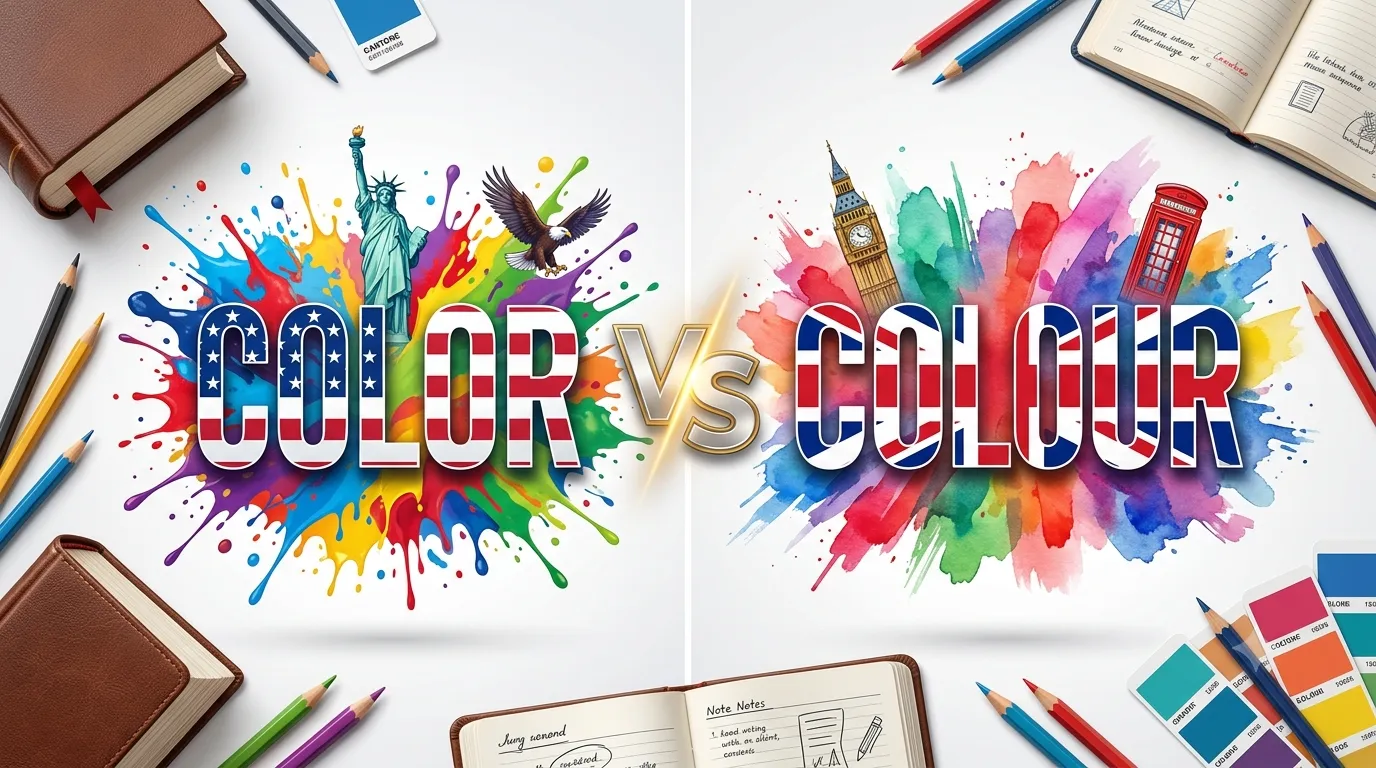
Color and colour mean the same thing. Color is the preferred spelling in American English, while colour is the standard spelling in British English and many other English speaking countries.
Have you ever stopped while writing and wondered, “Should I write color or colour?” I have. Years ago, I was editing an article for two different clients. One was based in the United States, and the other was in the United Kingdom. I accidentally mixed both spellings in the same document. The result? A confusing style that looked unprofessional.
That small mistake taught me an important lesson. The spelling you choose says something about your audience. It is not about right or wrong. It is about using the version your readers expect.
Many people search for color or colour because they want to avoid mistakes in school assignments, business emails, blog posts, or website content. The good news is that the answer is simple once you understand the difference.
By the end of this guide, you will know when to use each spelling, why the two versions exist, and how to stay consistent in every piece of writing.
Color or Colour: Quick Answer
Both color and colour are correct English words. They have the same meaning. They describe the appearance of something based on light, such as red, blue, green, or yellow.
Examples
- American English: My favorite color is blue.
- British English: My favourite colour is blue.
The meaning never changes. Only the spelling does.
The Origin and Background of Color or Colour
The word comes from the Latin word color.
Later, it entered Old French as colour. When English borrowed the word, British English kept the French style spelling with our.
In the early 1800s, American dictionary writer Noah Webster wanted English spelling to be simpler. He removed the extra u from many words.
That is why Americans write:
- Color
- Honor
- Favor
- Neighbor
Meanwhile, British English kept:
- Colour
- Honour
- Favour
- Neighbour
Neither spelling is newer or more correct. They simply belong to different English standards.
Color or Colour Explained: Key Differences
The difference is only spelling.
| Term | Meaning | When to Use | Region/Context |
|---|---|---|---|
| Color | The appearance of an object based on light | American writing | United States |
| Colour | The appearance of an object based on light | British writing | United Kingdom, Canada, Australia, New Zealand and many Commonwealth countries |
Example 1
American:
The color of the sky changed after sunset.
British:
The colour of the sky changed after sunset.
Example 2
American website:
Choose your favorite color.
British website:
Choose your favourite colour.
The meaning stays exactly the same.
Which Version Should You Use?
The best choice depends on your audience.
For American readers
Use color.
This matches American dictionaries, schools, newspapers, and businesses.
For British readers
Use colour.
This follows British spelling rules.
For Canadian readers
Both appear, but colour is more common in Canadian English.
For Australian and New Zealand readers
Use colour.
It follows British English.
For international websites
Pick one spelling and stay consistent.
If most visitors come from the United States, use color.
If your audience is global or mainly from Commonwealth countries, colour often feels more natural.
Common Mistakes with Color or Colour
Many writers know both spellings. Problems happen when they mix them.
| Mistake | Correct Version | Why It Happens |
|---|---|---|
| Using color and colour in one article | Choose one style | Mixing English varieties |
| Using colour for a US company | Color | Wrong regional spelling |
| Using color for a UK school project | Colour | Wrong audience |
| Switching spellings halfway | Stay consistent | Poor editing |
Tips to avoid mistakes
- Choose one English style before writing.
- Set your spell checker to US or UK English.
- Proofread before publishing.
- Follow your company’s style guide.
Consistency always looks more professional.
Color or Colour in Real World Examples
Professional Email
We updated the color settings in the software to improve accessibility.
British version:
We updated the colour settings in the software to improve accessibility.
News Headline
American:
Color Trends Shape Home Design in 2026
British:
Colour Trends Shape Home Design in 2026
Social Media Post
Which color should we launch next? Vote below!
British version:
Which colour should we launch next? Vote below!
Formal Report
The colour of the samples remained stable during testing.
American version:
The color of the samples remained stable during testing.
Color or Colour: Data, Trends & Usage
Millions of people search for color or colour every year because English learners and writers often wonder which spelling is correct.
Search Intent
- Primary intent: Informational
- Secondary intent: Writing help and grammar guidance
Regions Most Interested
- United States → Color
- United Kingdom → Colour
- Canada → Mostly Colour
- Australia → Colour
- New Zealand → Colour
Why This Matters Today
Many businesses now write for global audiences.
Using the correct spelling builds trust. It also makes your writing feel natural to local readers.
Comparison Table
| Term/Variant | Meaning | Region/Context | Best Used When |
|---|---|---|---|
| Color | Appearance based on light | American English | Writing for US readers |
| Colour | Appearance based on light | British English | Writing for UK readers |
| Color Palette | Group of colors | US design and marketing | American content |
| Colour Palette | Group of colours | UK design and publishing | British content |
Frequently Asked Questions
Q: What does color or colour mean?
Both words describe the appearance of something based on light. They have the same meaning but different spellings.
Q: How do you use color or colour correctly?
Use color for American English. Use colour for British English and most Commonwealth countries. Stay consistent throughout your writing.
Q: Color vs colour: what’s the difference?
The only difference is spelling. The pronunciation and meaning are exactly the same.
Q: Is color or colour acceptable in formal writing?
Yes. Both are correct in formal writing. Choose the version that matches your audience or style guide.
Q: Which version is correct: color or colour?
Both are correct. The correct choice depends on whether you are writing in American English or British English.
Q: Where does the word color or colour come from?
It comes from the Latin word color. British English later adopted the French influenced spelling colour, while American English simplified it to color.
Q: Can color or colour be used in business writing?
Yes. Businesses should use the spelling that matches their target market. Consistency is more important than the spelling itself.
Conclusion
The debate over color or colour is much simpler than it first appears. Both words are correct. They mean exactly the same thing. The only real difference is the English variety you choose to follow.
Remember these key points:
- Color is the standard spelling in American English.
- Colour is the standard spelling in British English and most Commonwealth countries.
- Neither spelling is more correct than the other.
- The most important rule is to stay consistent throughout your writing.
Once you know your audience, choosing the right spelling becomes easy. Whether you are writing a school paper, a business report, a blog post, or website content, matching your readers’ expectations helps your work look polished and professional.
Now you know exactly how to use color or colour with confidence. Bookmark this guide so you never second guess the spelling again, and share it with anyone who has ever wondered which version is right.

I studied English literature and have spent years editing content for blogs and digital platforms. I noticed most people struggle with choosing between two similar words. At WordsCombo, I make that choice simple and clear.