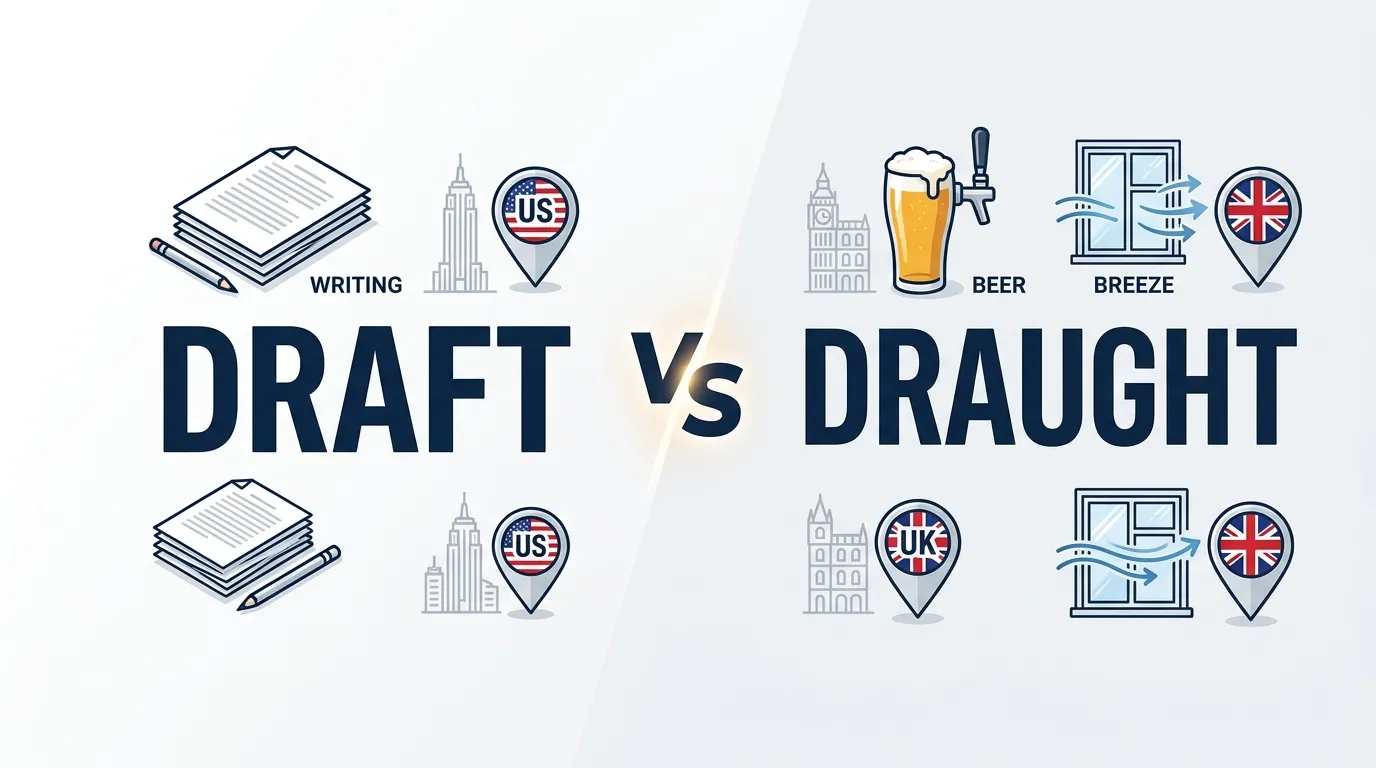
Draft or draught are different spellings of the same word. Use draft for American English and draught for British English when referring to beer, wind, or games.
Last month, I ordered a beer in London. I wrote “draft beer” on my order card. The bartender smiled and corrected my spelling to “draught.”
I felt embarrassed right then. I have taught English for over ten years. Yet, I still got caught in this classic spelling trap.
Many people get confused by these two words every single day. You see them on pub menus, in banks, and in house plans.
This guide will fix your confusion for good. You will learn which word to pick every single time.
Draft or Draught : Quick Answer
Draft is the standard spelling in American English. Draught is the traditional spelling in British English.
Both words sound exactly the same. They sound like “draft.”
Here are two quick examples:
- American style: I drank a cold draft beer yesterday.
- British style: I drank a cold draught beer yesterday.
The Origin and History of Draft and Draught
Both words come from the old word dragan. This old word meant to draw or to pull.
Hundreds of years ago, people spelled it draught. It matched words like laugh or cough.
Over time, people in America changed the spelling. They wanted words to look like they sound. So, draught became draft in North America.
Britain kept the old spelling for some uses. Today, both versions live on side by side.
Draft or Draught Explained : Key Differences
The right choice depends on your region and your topic.
In America, you will almost always use draft.
In the UK, you use draught for cold air, tap beer, and game boards. But you still use draft for written work and money.
| Term | Meaning | When to Use | Region/Context |
|---|---|---|---|
| Draft | A first written copy | Writing essays or plans | Global |
| Draft | Cool moving air | Air flow in a room | USA & Canada |
| Draught | Cool moving air | Air flow in a room | UK & Australia |
| Draft | Beer from a keg | Ordering drinks | USA & Canada |
| Draught | Beer from a keg | Ordering drinks | UK & Australia |
Which Version Should You Use?
Picking the right word is easy when you look at your audience.
- For American Audiences: Always use draft. Use it for beer, cold air, writing, and sports picks.
- For British Audiences: Use draught for beer, wind, and checkers. Use draft for written notes and banking.
- For Global Writing: Use draft in business emails. It is widely accepted everywhere now.
Common Mistakes with Draft and Draught
People often mix these words up in daily writing. Avoid these frequent mistakes:
- Mistake: I need a fresh draught of my essay.
- Correction: I need a fresh draft of my essay.
- Why: Written work always uses the “ft” spelling worldwide.
- Mistake: Close the door, there is a cold draft! (In London)
- Correction: Close the door, there is a cold draught!
- Why: British English uses “ght” for moving air.
- Mistake: He works as a draughtsman in New York.
- Correction: He works as a draftsman in New York.
- Why: American job titles drop the “ght” spelling.
- Mistake: We played a game of drafts.
- Correction: We played a game of draughts.
- Why: The board game uses the British spelling in UK rules.
Draft or Draught in Real-World Examples
Here is how these words look in daily life.
1. Professional Email
“Hi Team, please review the first draft of our quarterly report by Friday.”
2. News Headline
“Local Pub Serves Fresh Draught Ale After System Repairs.”
3. Social Media Post
“Sitting near the window is freezing today. This room has a huge draft!”
4. Formal Document
“The bank issued a official bank draft to complete the house purchase.”
Draft or Draught : Data, Trends & Usage
Search data shows that draft is far more popular worldwide.
Near 80% of global web searches use the “ft” spelling. This happens because American software defaults to US English.
People searching this topic want fast spelling help. They want to avoid embarrassing errors on menus or in emails.
Understanding this helps you write clearly for any online audience.
Master Comparison Guide
Use this chart to pick your spelling fast.
| Term/Variant | Meaning | Region/Context | Best Used When |
|---|---|---|---|
| Draft | Rough outline | Global | Writing a document or book |
| Draught | Tap beverage | UK, NZ, Australia | Designing a pub menu in the UK |
| Draft | Tap beverage | USA, Canada | Designing a pub menu in the US |
| Draft | Bank payment | Global | Sending official funds |
| Draught | Wind blow | UK, NZ, Australia | Fixing a cold window issue in London |
Frequently Asked Questions
Q: What does draft mean?
A: A draft is a rough version of writing. It also means pulling air or picking players for a sports team.
Q: How do you use draft correctly?
A: Use draft for any preliminary writing or plans. In the US, use it for cold air and tap beer too.
Q: Draft vs draught : what is the difference?
A: They mean the same things in most cases. Draft is American spelling, while draught is traditional British spelling.
Q: Is draught acceptable in formal writing?
A: Yes, draught is correct in British formal writing. Use draft if you are writing for an American business.
Q: Which version is correct : draft beer or draught beer?
A: Both are correct. Use draft beer in America and draught beer in the UK.
Q: Where does the word draft come from?
A: Both forms come from an Old English word that meant to draw or pull.
Q: Can draft be used as a verb?
A: Yes. You can draft a contract or draft a player onto a team.
Conclusion
Mastering draft and draught comes down to location and usage.
Remember that draft is the modern global choice for writing. Draught keeps its place in British drinks and chilly rooms.
Keep your audience in mind before you type. You will never make a spelling blunder again.
Bookmark this guide so you never second-guess your spelling choice again!
Read more: Veracious or Voracious: The Easy Guide to Meaning

I have been working with English language content for over six years. I specialize in word comparisons and spelling differences that most people overlook. At WordsCombo, I help readers choose the right word every time.