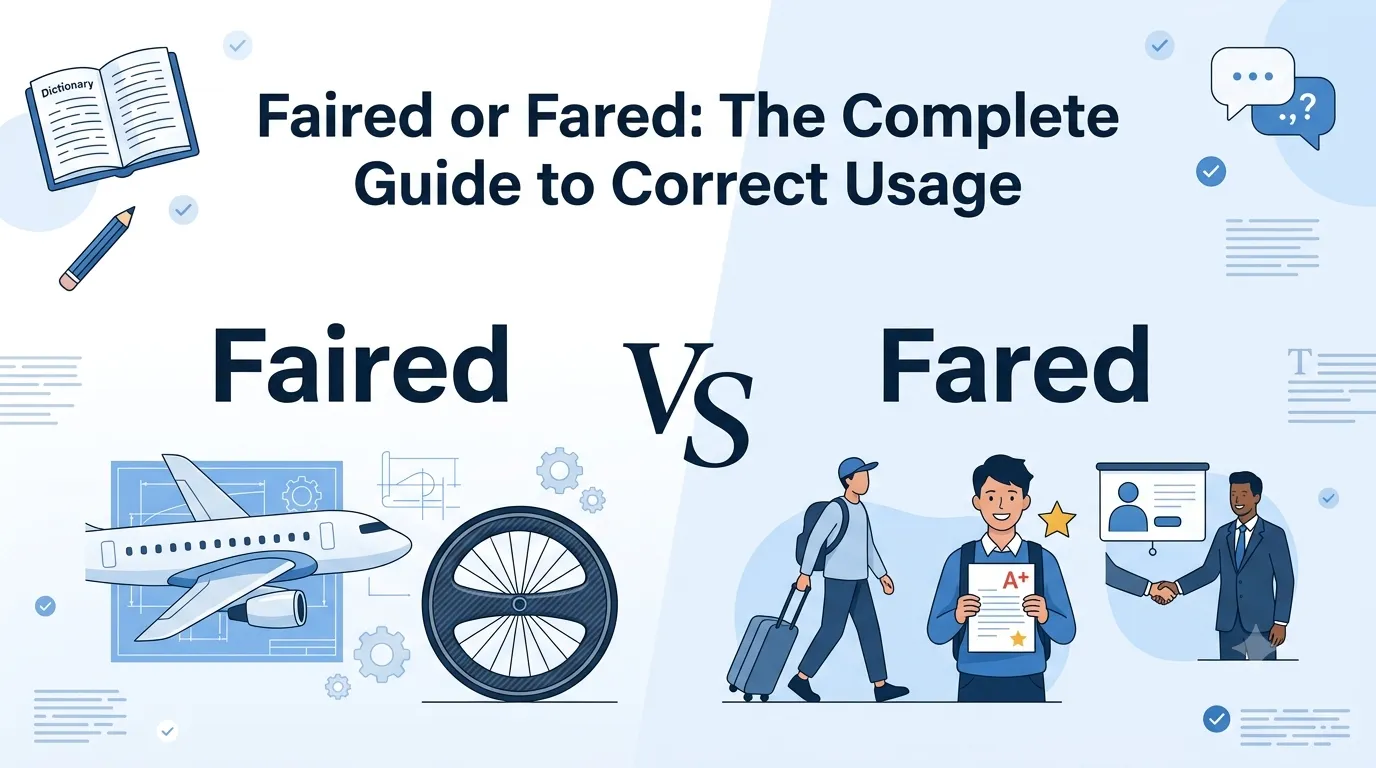
Fared is the correct word when talking about how someone performed, managed, or got along. Faired is a real word too, but it is rare and usually relates to making something fair or smooth, or to attending or taking part in a fair.
A few years ago, I was editing a blog post from a talented writer. Everything looked great until I reached one sentence: “The team faired well during the tournament.” I paused because I had seen this mistake many times before. It is one of those spelling mix-ups that even skilled writers make.
The confusion is easy to understand. Faired and fared sound exactly the same when spoken. Since English has many words that sound alike but have different meanings, it is easy to pick the wrong one.
If you have searched for faired or fared, you are probably wondering which spelling is correct. Maybe you are writing an email, a school paper, a report, or even a social media post. You want to sound clear and professional.
The good news is that the difference is simple once you know it. By the end of this guide, you will know exactly when to use fared, when faired is appropriate, and how to avoid this common writing mistake forever.
Faired or Fared – Quick Answer
Most of the time, fared is the word you need.
- Fared means performed, managed, or got along.
- Faired is much less common. It usually means made fair or smooth or relates to a fair in special contexts.
Examples
✅ She fared well in the interview.
✅ The company fared better than expected this year.
❌ She faired well in the interview.
Fared Meaning
The fared definition is that it means performed, managed, or got along in a particular situation.
Fared is the past tense of the verb fare. It means performed, managed, succeeded, or got along in a particular situation.
When people ask “How did you fare?”, they are asking about your performance or results.
Examples:
- The students fared better after changing their study habits.
- The new product fared well in the market.
- The restaurant fared poorly during the first few months.
The Origin / Background of Faired or Fared
Understanding where these words come from makes them much easier to remember.
Where Fared Comes From
Fared is the past tense of fare.
The verb fare has existed for hundreds of years. It originally meant to travel or to go through life. Over time, its meaning expanded to include how someone performs or succeeds.
Examples include:
- How did you fare on the exam?
- The business fared well despite the economy.
Where Faired Comes From
Faired comes from the verb fair.
This verb is rarely used in everyday English. In technical fields, such as engineering, boat building, and aviation, to fair means to smooth surfaces so they fit together neatly.
Example:
- The builder faired the wooden panels before painting.
Because most people rarely see this meaning, they often assume faired works everywhere. It does not.
What Does Faired Mean?
The faired meaning is related to making something smooth, shaped, or aligned, especially in technical fields.
Faired is the past tense of the verb fair, although this use is uncommon in everyday English. In technical fields such as engineering, aviation, construction, and boat building, to fair means to smooth, shape, or align a surface so that it fits properly or improves performance.
For example, a builder may fair wooden panels before painting, or an aircraft technician may fair a surface to reduce air resistance. Outside these specialized contexts, faired is rarely used.
This is why many people mistakenly write faired when they actually mean fared. If you are talking about how someone performed or managed in a situation, the correct spelling is fared, not faired.
Faired vs Fared: What’s the Difference?
The fared vs faired difference is simple: fared relates to performance or results, while faired refers to making something smooth, shaped, or aligned in specialized contexts.
Although the words sound alike, their meanings are completely different.
| Term | Meaning | When to Use | Region/Context |
|---|---|---|---|
| Fared | Performed or managed | Success, results, progress | Worldwide English |
| Faired | Made smooth or made fair | Technical work, engineering, boat building | Specialized fields |
Use Fared When Talking About Performance
Examples:
- She fared better than last year.
- Our school fared well in the competition.
- The new restaurant fared surprisingly well.
Use Faired Only in Special Situations
Examples:
- The mechanic faired the aircraft surface.
- The craftsman carefully faired the wooden hull.
These uses are uncommon outside technical writing.
Fared Better or Faired Better?
The correct phrase is fared better.
Use fared better when you mean that someone or something performed more successfully or achieved better results than before or compared with someone else.
Correct examples:
- She fared better on her second driving test.
- Our team fared better this season than last year.
- Small businesses fared better than expected during the holidays.
The phrase faired better is almost always incorrect because faired does not mean performed or succeeded. It is only used in specialized technical contexts, such as engineering or boat building, where fair means to smooth or shape a surface.
Quick tip: If you can replace the phrase with performed better, then fared better is the correct choice.
Which Version Should You Use?
For almost every writer, the answer is simple.
For Students
Use fared whenever discussing grades, exams, sports, or results.
Example:
I fared well in my science test.
For Business Professionals
Choose fared when writing reports, emails, or presentations.
Example:
Our sales team fared better than expected.
For Journalists
Use fared when reporting performance.
Example:
Local businesses fared well after the holiday season.
For Engineers, Builders, or Boat Designers
You may use faired, but only if you are talking about smoothing or shaping materials.
For Most Readers
Whenever you mean performed or managed, always choose fared.
Common Mistakes with Faired or Fared
These mistakes appear often in blogs, emails, and student writing.
| Mistake | Correct |
|---|---|
| She faired well. | She fared well. |
| The company faired poorly. | The company fared poorly. |
| How have you faired? | How have you fared? |
| They faired better than expected. | They fared better than expected. |
| Our team faired in the finals. | Our team fared in the finals. |
Why Does This Happen?
- Both words sound the same.
- Spell check may not catch the error because faired is a real word.
- Many people have never learned the rare technical meaning of faired.
Easy Memory Trick
Think of this sentence:
How did you fare?
If you are asking about someone’s results, use fare and fared.
Faired or Fared in Real-World Examples
Professional Email
Our department fared well during the first quarter and exceeded every target.
News Headline
Local Businesses Fared Better Than Experts Predicted
Social Media Post
Happy to say I fared much better on today’s driving test!
Formal Report
The organization fared well despite several economic challenges during the reporting period.
Technical Manual
The technician faired the metal edges before applying the protective coating.
Faired or Fared: Data, Trends & Usage
People search faired or fared because it is a common spelling confusion.
Search Intent
- Primary intent: Informational
- Secondary intent: Grammar help and writing improvement
Who Searches for This?
- Students
- Bloggers
- Business professionals
- Job seekers
- ESL learners
- Teachers
- Editors
Where Is Interest Highest?
English learners around the world often search this topic because both words sound identical.
Native speakers also make this mistake, especially while typing quickly.
Why Does It Matter Now?
Online writing has become part of everyday life. Emails, resumes, reports, and social media posts all require clear communication. Using fared correctly helps your writing look polished and professional.
Faired vs Fared Comparison Table
| Term/Variant | Meaning | Region/Context | Best Used When |
|---|---|---|---|
| Fared | Performed or managed | Standard English everywhere | Talking about results or success |
| Faired | Smoothed or shaped | Technical fields | Engineering, construction, aviation, boat building |
Frequently Asked Questions
Q: What does fared mean?
A: Fared is the past tense of fare. It means someone performed, managed, or did in a particular situation.
Q: How do you use fared correctly?
A: Use fared when describing results or performance. For example, Our team fared well in the tournament.
Q: Faired vs fared: what’s the difference?
A: Fared relates to performance or success. Faired refers to making something smooth or fair and is mostly used in technical fields.
Q: Is fared acceptable in formal writing?
A: Yes. Fared is perfectly correct in business reports, academic papers, newspapers, and professional emails.
Q: Which version is correct: faired or fared?
A: If you mean performed or managed, the correct spelling is fared. Faired is only correct in its rare technical meaning.
Q: Where does the word fared come from?
A: It comes from the verb fare, an old English word meaning to travel, proceed, or get along. Today, it usually refers to performance or outcomes.
Q: Can faired be used in everyday conversation?
A: Usually, no. Most everyday conversations require fared. Faired appears mainly in engineering, aviation, construction, and boat-building discussions.
Conclusion
The difference between faired and fared is much easier than it first appears. If you are talking about how someone performed, succeeded, or managed in a situation, the correct word is fared. That is the spelling you will use in almost every email, article, report, or conversation.
Faired is also a real word, but it belongs to a much smaller group of technical uses. Unless you are writing about engineering, aircraft, boats, or construction, you will probably never need it.
Remember these three simple tips:
- Fared = performed or managed.
- Faired = made smooth or fair in technical work.
- When in doubt, ask yourself, “Am I talking about results?” If the answer is yes, choose fared.
Now you know exactly how to use faired or fared with confidence. Bookmark this guide so you never second-guess these words again, and share it with someone who has made the same mistake.
Read more: Elicit or Illicit: The Complete Guide to the Difference

I have been writing about English spelling and word usage for the past five years. My goal is to give readers a clear answer without overwhelming them with complicated rules. At WordsCombo, I focus on making everyday English easier for everyone.