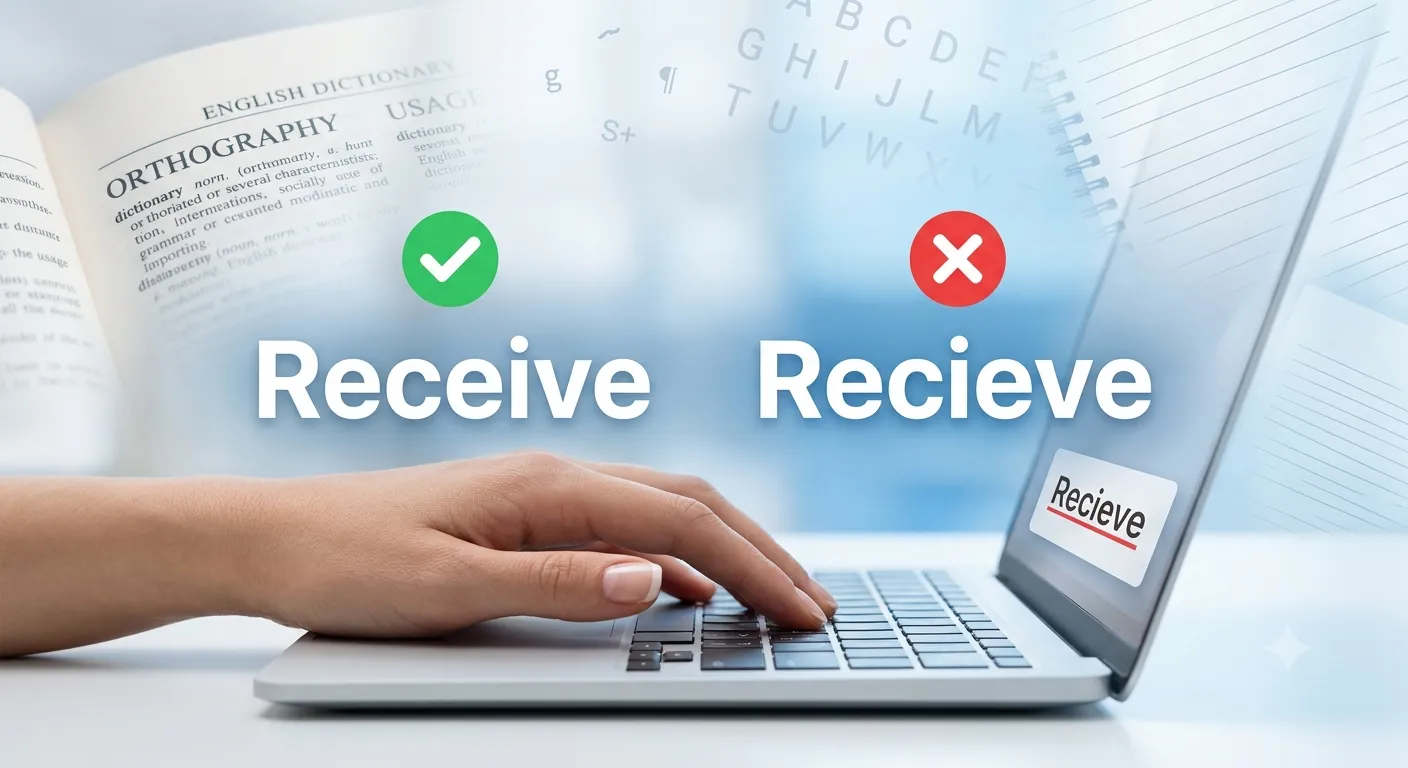
Receive is the correct spelling in English. Recieve is a spelling mistake. If you want to write about getting something, always use receive.
I still remember marking a student’s essay years ago. The writing was excellent, but one small mistake appeared again and again. The word was “recieve.” It looked right at first glance, yet it was wrong every time. Since then, I have noticed this same error in emails, resumes, school assignments, and even business reports.
If you have ever paused before typing receive because recieve looked correct, you are not alone. Thousands of people search for this answer every month. The confusion happens because English spelling does not always follow simple rules. Words borrowed from different languages often break patterns, making them hard to remember.
The good news is that this mistake is easy to fix once you understand why it happens. In this guide, I’ll explain the correct spelling, where the confusion comes from, and how you can remember it forever. By the end, you’ll never have to second guess receive again.
Receive or Recieve: Quick Answer
The correct spelling is receive.
The spelling recieve is always incorrect in standard English.
A simple way to remember it is the famous spelling rule:
“I before E, except after C.”
Since the letter C comes before the vowel pair, the correct spelling becomes receive.
Examples
✅ I received your email this morning.
✅ Did you receive the package yesterday?
❌ I recieved your message.
❌ She recieved an award.
Whenever you write this word, always choose receive.
The Origin and Background of Receive
The word receive has a long history. It entered English through Old French and originally came from the Latin word recipere, which means “to take back,” “accept,” or “get.”
Over hundreds of years, English kept much of the original spelling. That is one reason the word looks different from many other common words.
The biggest source of confusion comes from the letters “ei.” Most people naturally want to write “ie,” especially because many English words use that pattern.
For example:
- believe
- field
- chief
- piece
Because of these familiar words, your brain may automatically type recieve instead of receive.
The classic spelling rule helps here:
I before E, except after C.
Since receive follows the letter C, the letters switch to EI.
Although English has many exceptions to this rule, receive is not one of them. It follows the rule perfectly.
Receive or Recieve Explained: The Key Difference
The difference is simple.
| Term | Meaning | When to Use | Region/Context |
|---|---|---|---|
| Receive | To get, accept, or obtain something | Always | Worldwide English |
| Recieve | Incorrect spelling | Never | Considered a spelling mistake |
There is no difference in meaning because recieve is not a real English word.
Correct Examples
- I received your payment.
- We receive hundreds of emails every day.
- She was happy to receive the award.
- Did you receive my invitation?
Incorrect Examples
- ❌ I recieved your payment.
- ❌ We recieve many orders.
- ❌ He recieved a gift.
- ❌ Please recieve this letter.
Every English dictionary accepts receive as the standard spelling.
Why Do So Many People Write “Recieve”?
There are several reasons.
1. English Spelling Is Tricky
Many common words use IE.
Examples include:
- friend
- piece
- belief
- chief
People naturally expect receive to follow the same pattern.
2. Fast Typing
When typing quickly, many people reverse the letters without noticing.
3. Pronunciation Doesn’t Help
Both spellings sound exactly the same when spoken.
Unlike some spelling mistakes, your ears cannot tell you which version is correct.
4. Memory Mix Ups
People often remember only part of the rule:
“I before E…”
They forget the second part:
“…except after C.”
That second part is exactly why receive uses EI.
Which Version Should You Use?
The answer is easy.
Always use receive.
Here is practical advice for different readers.
For Students
Use receive in homework, essays, exams, and research papers.
Teachers treat recieve as a spelling error.
For Job Seekers
Always write receive on resumes, cover letters, and emails.
Correct spelling shows attention to detail and professionalism.
For Professionals
Business emails, reports, invoices, and contracts should always use receive.
A simple spelling mistake can reduce credibility.
For Writers and Bloggers
Search engines and readers expect the correct spelling.
Using receive improves trust and professionalism.
For Global English
Whether you write American English, British English, Canadian English, or Australian English, the spelling remains the same.
✅ Receive
There is no regional variation for this word.
Quick Memory Trick
Whenever you stop to think,
Receive has a C before EI.
Or remember the classic rhyme:
I before E, except after C.
Since receive comes after C, the letters must be EI, not IE.
One small trick can save you from making this mistake for life.
Common Mistakes with Receive
Even though receive is a common word, many people still misspell or misuse it. Here are the mistakes I see most often and how to fix them.
| Mistake | Correct Form | Why It Happens |
|---|---|---|
| ❌ recieve | ✅ receive | The letters I and E are reversed. |
| ❌ recieved | ✅ received | The base word is already misspelled. |
| ❌ recieving | ✅ receiving | The spelling error continues into the ing form. |
| ❌ Please recieve this. | ✅ Please receive this. | The word must always be receive. |
| ❌ I have recieve it. | ✅ I have received it. | Wrong spelling and incorrect verb form. |
Tips to Avoid These Errors
- Pause before typing the word.
- Remember: C comes before EI.
- Use your spell checker, but don’t depend on it every time.
- Read your writing once before sending it.
A few extra seconds can save you from an embarrassing mistake.
Receive in Real World Examples
Seeing a word used naturally makes it much easier to remember.
Professional Email
Dear Sarah,
I received your proposal this morning. Thank you for sending it. I will review it and reply by Friday.
News Headline
Local Hospital Receives Major Donation for New Children’s Wing
Social Media Post
I finally received my new laptop today. The wait was worth it!
Formal Report
The finance department received all required documents before the submission deadline.
These examples show that receive fits naturally in both formal and everyday writing.
Receive or Recieve: Data, Trends & Usage
The spelling question “receive or recieve” is one of the most searched English grammar topics online.
Search Intent
- Primary intent: Informational
- Secondary intent: Educational
- Audience: Students, job seekers, writers, professionals, and English learners
Who Searches This Most?
People who commonly search this topic include:
- Students writing assignments
- ESL (English as a Second Language) learners
- Job applicants
- Bloggers and content creators
- Office professionals
Regions with High Interest
The question appears frequently in countries where English is widely spoken or learned, including:
- United States
- United Kingdom
- Canada
- Australia
- India
- Pakistan
- Philippines
Why It Matters Today
More communication now happens through emails, messaging apps, social media, and online work. A simple spelling mistake can affect your credibility. Knowing the correct spelling helps you write with confidence in every situation.
Receive vs. Recieve: Comparison Table
| Term/Variant | Meaning | Region/Context | Best Used When |
|---|---|---|---|
| Receive | To get, accept, or obtain something | Standard English worldwide | Always |
| Recieve | Incorrect spelling | None | Never |
This table makes the answer simple:
Always write “receive.” Never write “recieve.”
Frequently Asked Questions
Q: What does receive mean?
A: Receive means to get, accept, or take something that someone gives or sends you. It can refer to gifts, messages, emails, payments, awards, or information.
Q: How do you use receive correctly?
A: Use receive whenever you talk about getting something. For example: “I received your email yesterday.” Avoid using recieve, because it is incorrect.
Q: Receive vs. recieve: what’s the difference?
A: The only difference is spelling. Receive is the correct English word. Recieve is a common spelling mistake and should never be used.
Q: Is receive acceptable in formal writing?
A: Yes. Receive is the standard spelling in formal and informal English. It is appropriate for business emails, reports, academic papers, and official documents.
Q: Which version is correct: receive or recieve?
A: Receive is always correct. The spelling recieve is considered an error by dictionaries, teachers, and professional editors.
Q: Where does the word receive come from?
A: Receive comes from the Latin word recipere through Old French. Its spelling reflects its historical roots, which is why it uses EI after C.
Q: Can receive be used in professional communication?
A: Absolutely. It is commonly used in emails, contracts, reports, invoices, customer support, and workplace communication. Using the correct spelling helps you appear professional and detail oriented.
Conclusion
The confusion between receive and recieve is common, but the answer is simple. Receive is the only correct spelling in English. Recieve is always a mistake.
Remember these key points:
- Receive is the correct spelling.
- Recieve should never be used.
- The word follows the rule: “I before E, except after C.”
- Correct spelling improves your writing, whether you’re sending an email, writing an essay, or preparing a report.
The more often you use receive, the more natural it will feel. Soon, you won’t need to stop and think before typing it.
Now you know exactly how to use receive—try it in your next email, assignment, or social media post. If this guide helped you, bookmark it and share it with someone who still writes “recieve.”
Read more: Themself or Theirself: Understanding Pronoun Use

I started writing about English word differences after years of teaching students who kept making the same mistakes. My focus is on making spelling rules feel simple and easy to remember. At WordsCombo, I turn confusing word pairs into clear comparisons.