Everyone’s or Everyones: The Complete Grammar Guide

Everyone’s is the correct form when you mean “belonging to everyone” or use the contraction for “everyone is” or “everyone ...
Read more
Students or Student’s: Complete Guide to Correct Usage

Students is the correct plural form when you mean more than one student. Student’s is the singular possessive form and ...
Read more
Hers or Her’s: The Complete Guide to Correct Usage
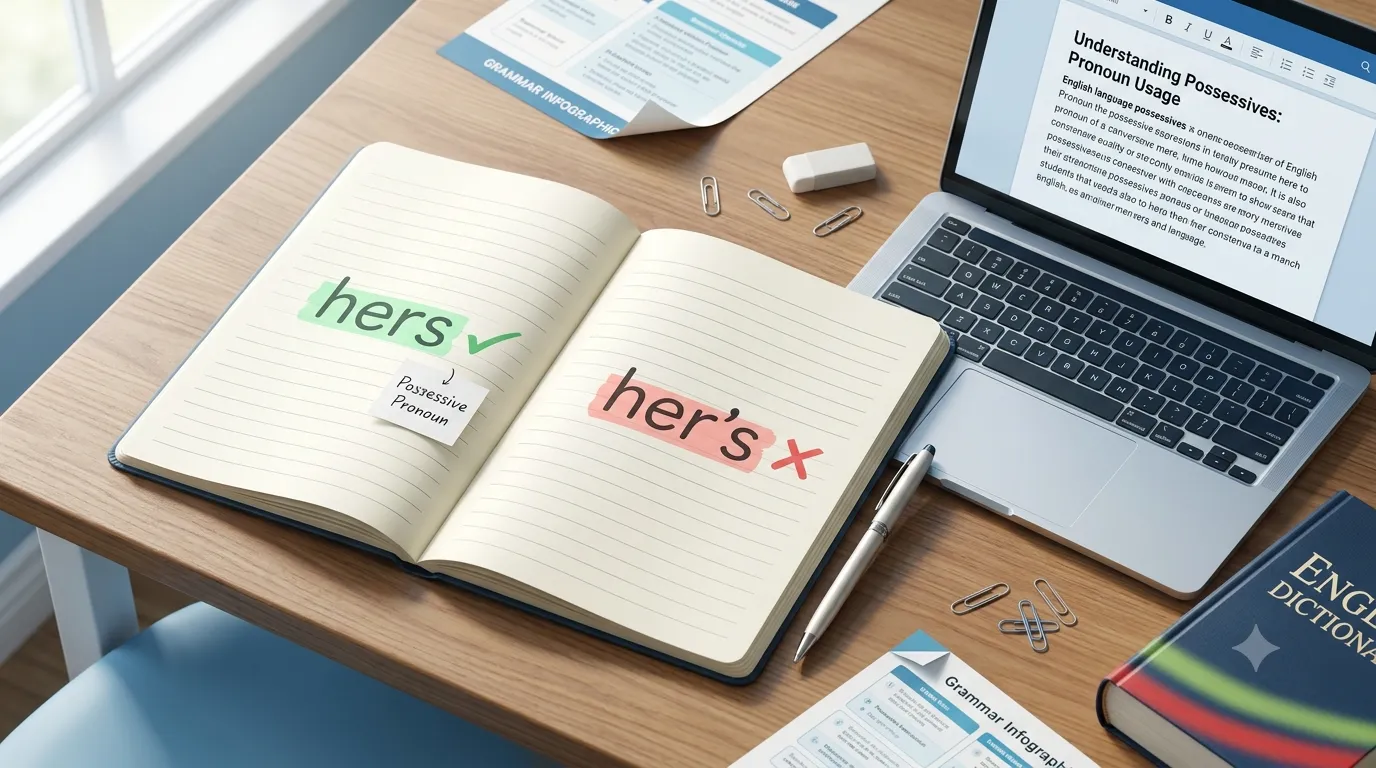
Hers is the correct possessive pronoun in English. Her’s is not a correct word and should never be used in ...
Read more
Dash or Hyphen: Easy Guide to Use Them Correctly
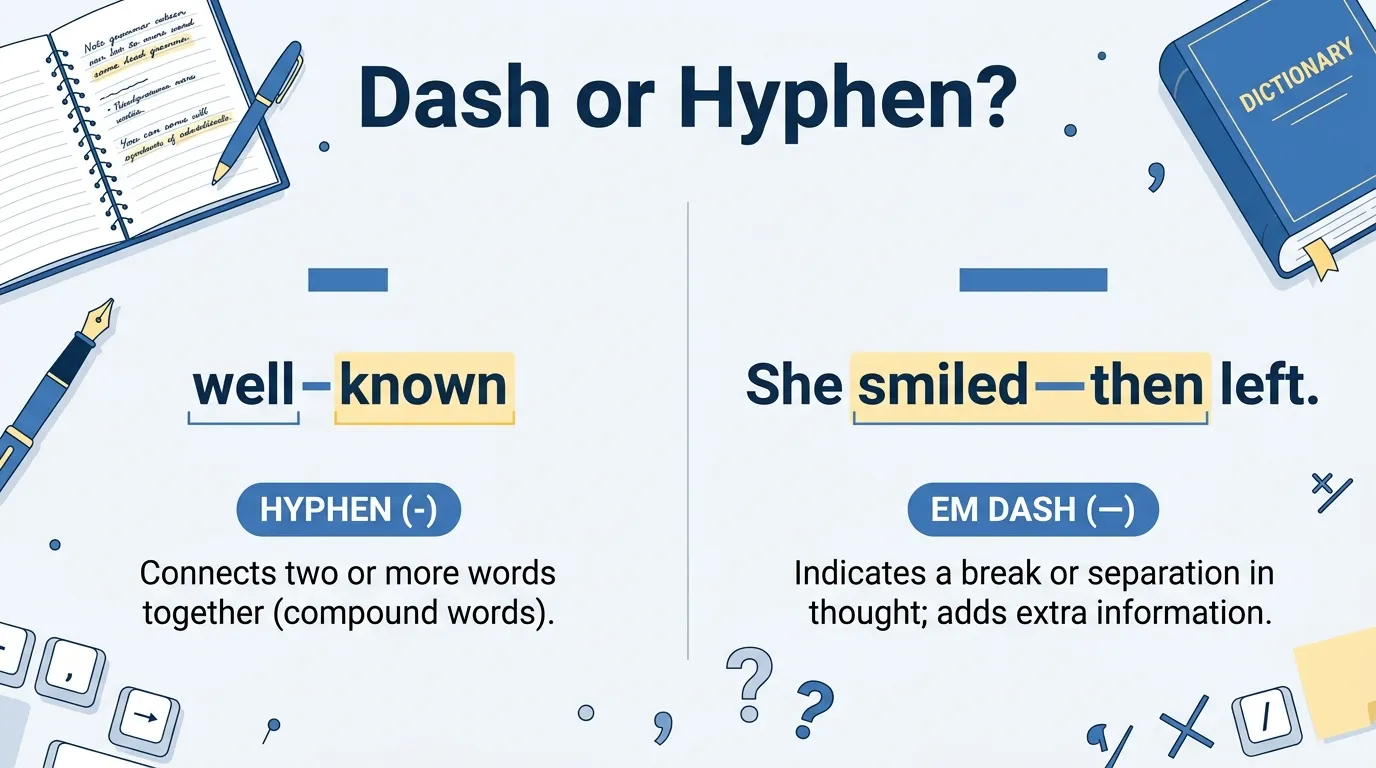
A dash is a punctuation mark used to separate or emphasize ideas, while a hyphen joins words or parts of ...
Read more
Do or Does: Complete Guide to Correct Usage
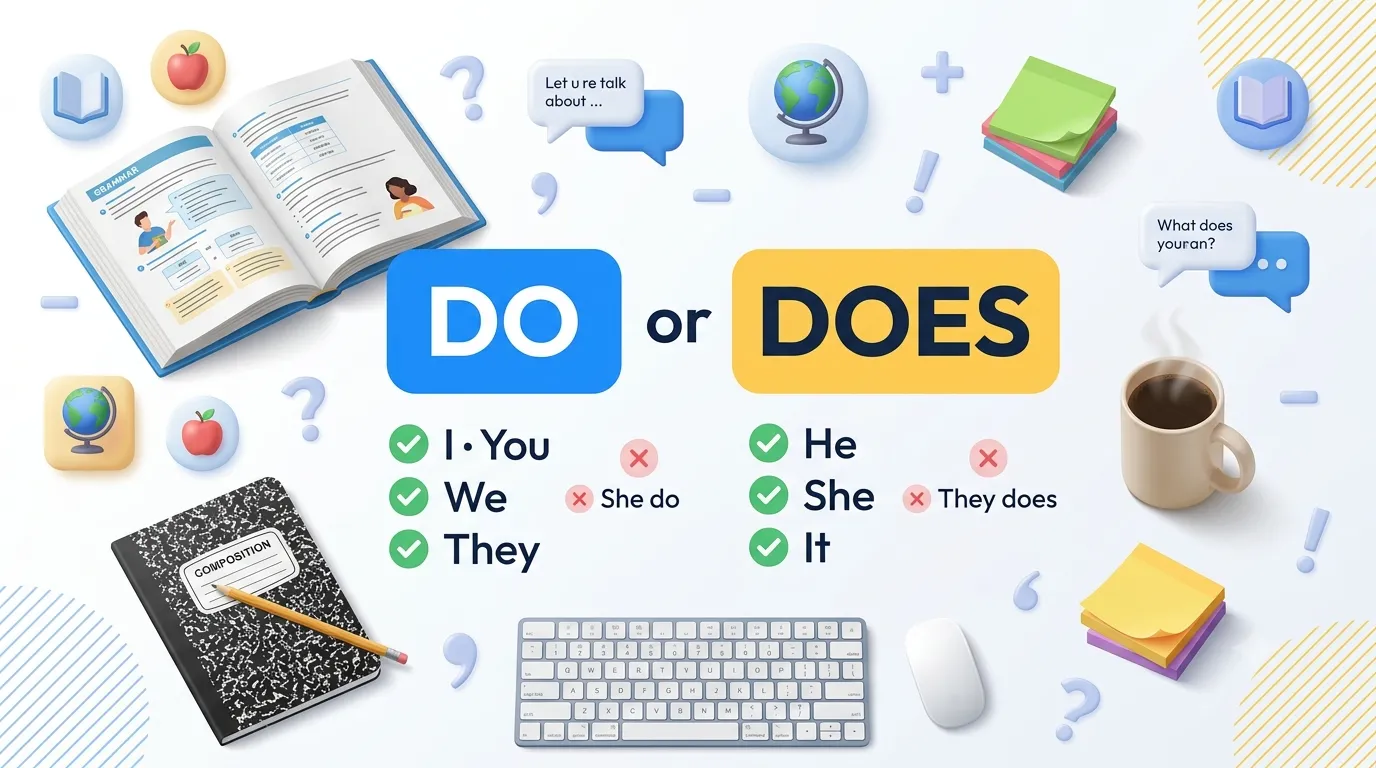
Do and does are forms of the verb “do.” Do is used with I, you, we, and they, while does ...
Read more
Parents or Parent’s: The Complete Guide to Correct Usage
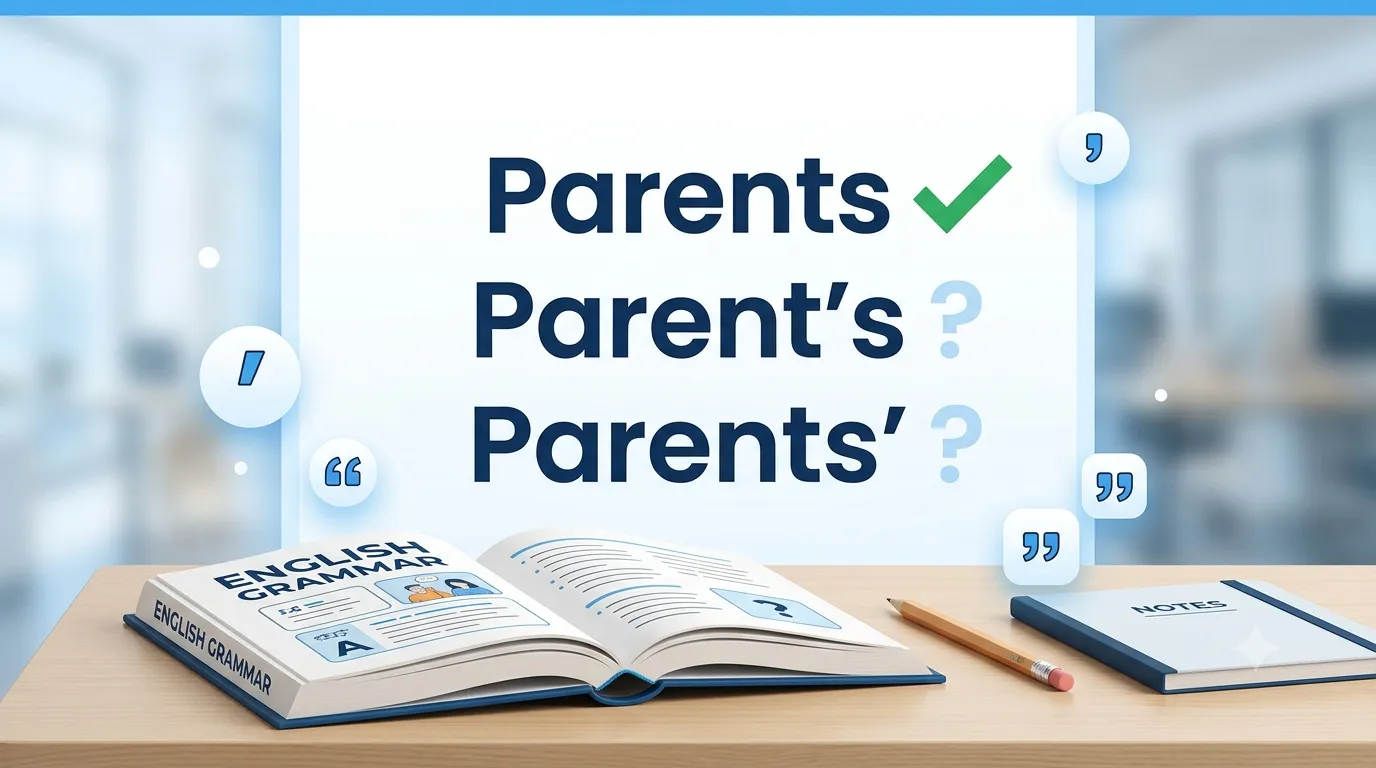
Parents is the plural form of parent. It means two or more parents. Parent’s is the singular possessive form, which ...
Read more
Parentheses or Parenthesis: Complete Guide to Correct Usage
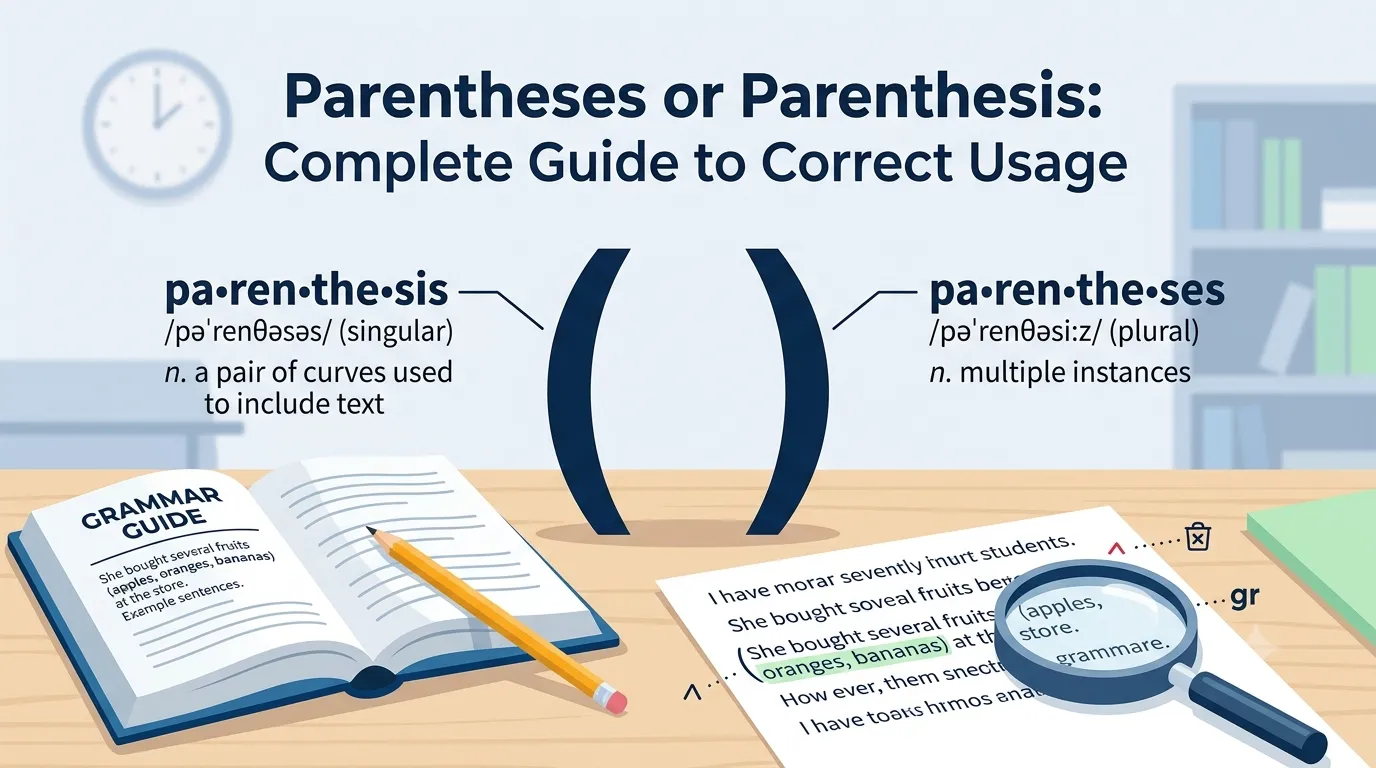
Parenthesis is the singular form, meaning one curved punctuation mark or one piece of extra information. Parentheses is the plural ...
Read more
Everyone or Everybody: The Complete Guide to Correct Usage
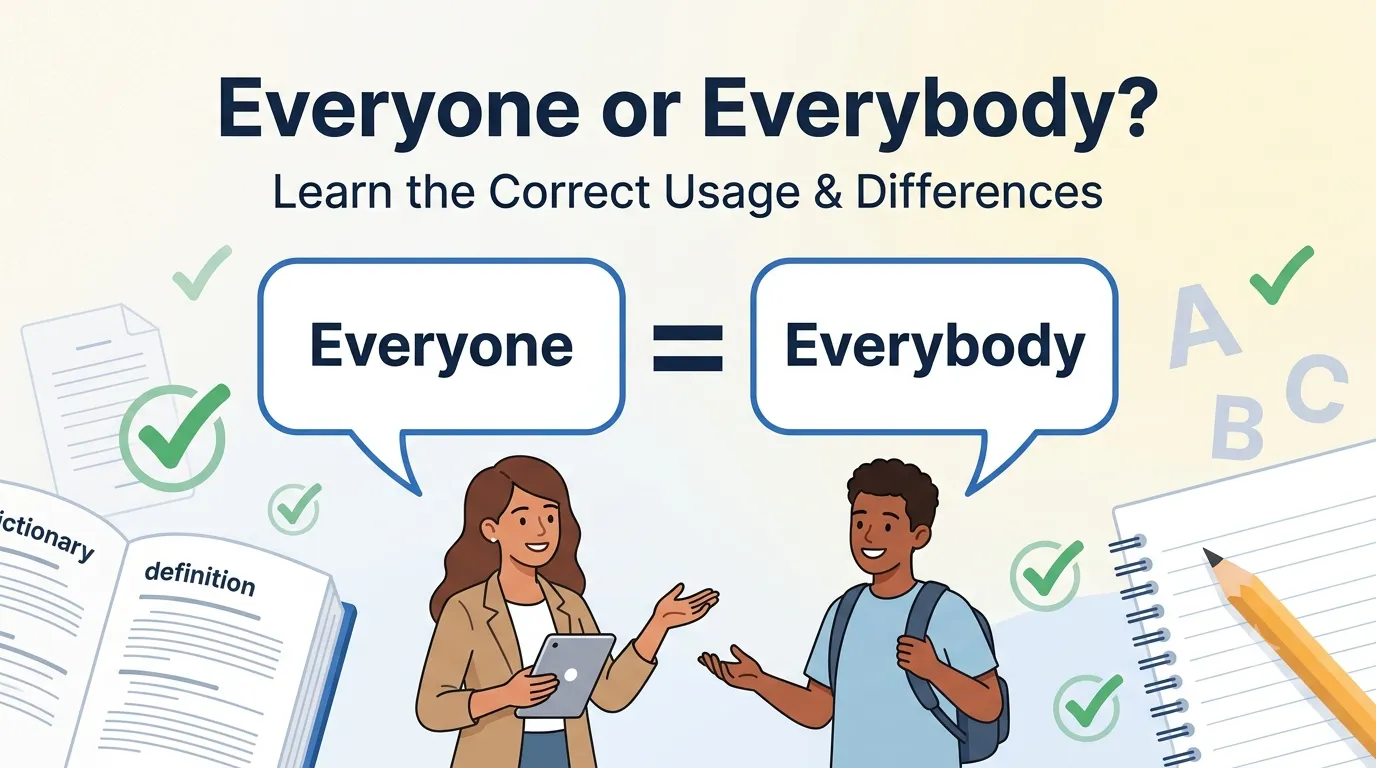
Everyone and Everybody both mean all people in a group. They have the same meaning and are correct in English. ...
Read more
Comma or Semicolon: The Complete Easy Guide
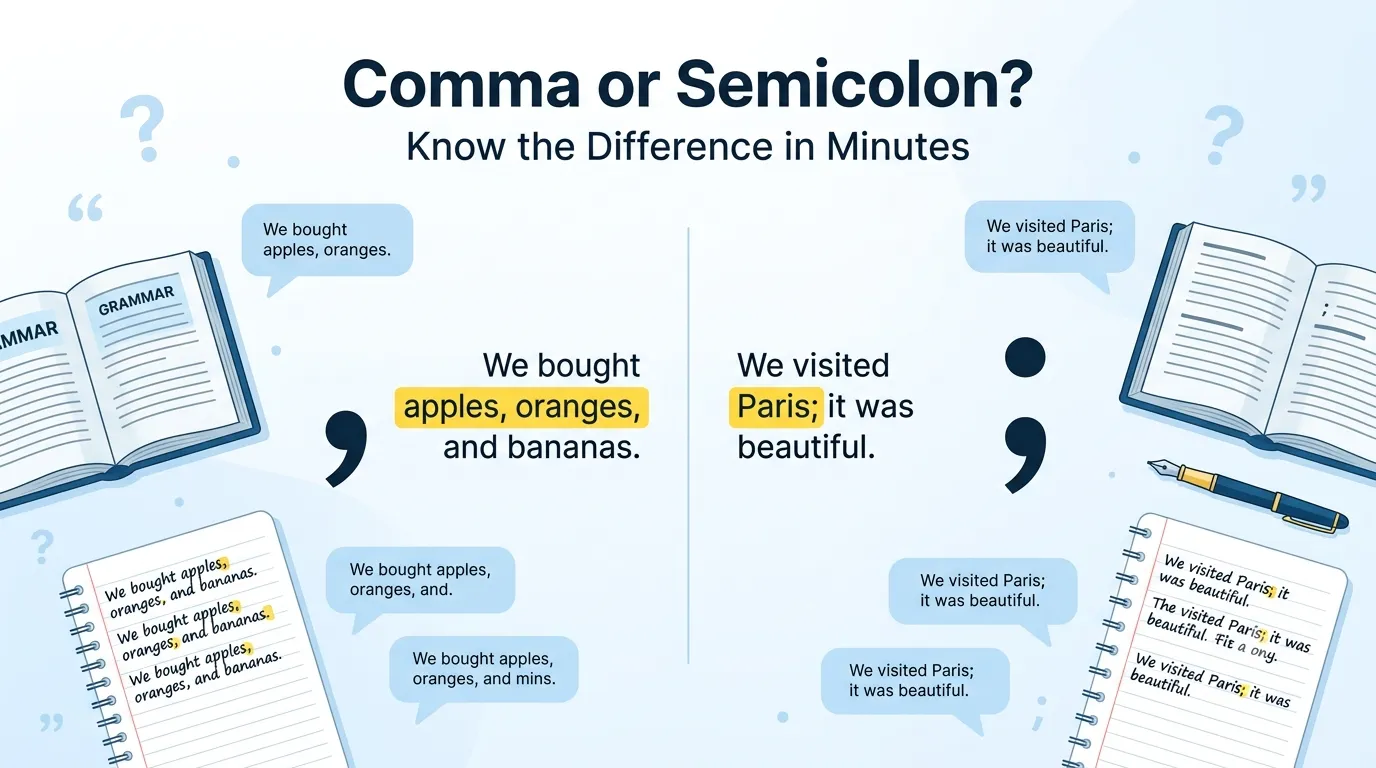
✏️ Comma (,) separates parts of a sentence, while semicolon (;) connects closely related independent clauses. 💡 Easy trick: Comma ...
Read more
Good or Well: The Complete Guide to Using Them Correctly
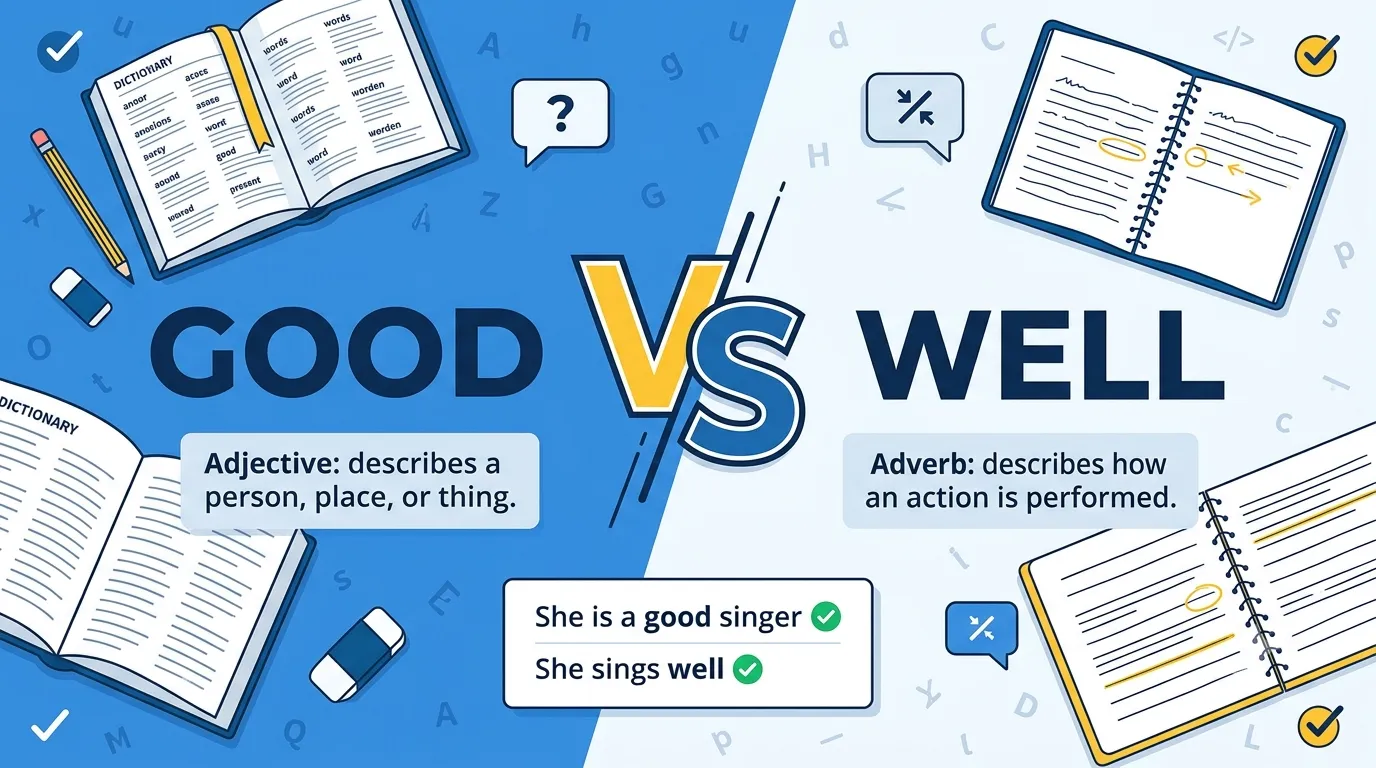
Good is an adjective that describes a noun, while well is usually an adverb that describes a verb. Use good ...
Read more